
My 2025 Year in Review: Ten years in

A neat little mall space in Brussels

My business and my book, Fearless Salary Negotiation, both turned 10 this year. This is my 11th annual Year In Review, and my first was My 2015 Year in Review: Using the stair-step approach.

I feel sort of at a loss as to what to say about that. Ten years feels simultaneously like such a long time and like no time at all. I’m really glad I have written these Year in Review posts every year because so much of it seems like a blur. It’s interesting to look back at the goals I set, which ones I hit, which ones I missed (most of them), and how they have changed over time.

My first Year in Review posts did not have forward-looking goals and only talked about goals I had set along the way while writing my book and working on other projects. Starting in 2016, I began to set annual goals and they were all business-focused. Those are pretty enlightening.

Over time I started incorporating a “Personal” section into my reviews and the relative “Personal” versus “Business” proportions have moved around over time.

In 2022, I only set one goal for 2023: “Survive to 2024”. And I did! A 100% success rate on 2023’s goals!

Now I’m writing about 2025 and it’s such a relief to say that this year was my second best revenue year ever. My best-ever year was 2021, and 2025’s revenue came in over 90% of 2021’s, which is pretty amazing because 2021 was off-the-charts good.

Personally, this was also a very good year. That is true in general, but of course having the business up and running again has eliminated a huge source of stress—rather than continuously watching my bank account shrink and wondering if my business would actually rebound, I am just sort of living life while I operate a business. The difference is night and day.

As ever, I focused a lot of time and energy on fitness-type stuff: pickleball, weightlifting, and yoga. Yoga has tapered to once a week, but weightlifting continues to be a three-days-a-week endeavor. I play pickleball as much as I can, but I also practice a lot via drilling or working with my Pickleball Tutor.

Ok, onto the detailed recap…

2025 Goal review

This year was hit-and-miss on the Goal front. I’m ok with that. I see my annual goals as a way to start the year off with something to focus on so I don’t start with a blank slate. My annual goals are less like train tracks and more like starting blocks.

I think last year’s goals were effective in this way. The misses are fine, and pursuing the goals was beneficial.

50% business growth

This was a stretch goal because I increased it by 50% in 2024, and I honestly didn’t think I would get all the way there this year. I actually exceeded this and ended around 70%.

I’m very happy with this and I hope it is a sign that my business is back up and running with my new and improved focus on high earners buoyed by a slow, steady transition to a luxury brand.

Build at least one new revenue stream

Miss. But that is mostly because I could sense that the business was coming back online at full force and that made additional revenue streams less urgent. Focusing on building the core business, which is the way I make my living, seemed prudent and still does in hindsight. Many of the revenue streams I had in mind last year also didn’t necessarily align with the luxury brand I have been building, so it just did not make sense to pursue them.

Improve to at least a 4.5 in pickleball

This was a pretty ambitious goal and I technically missed it: I’m not at 4.5 yet, but I’m around 4.25 or so.

Be more generous

It is interesting that this is so vague because I have found new ways to do this by both continuing things I already do and by adding new things. I’m not going to elaborate because it feels pretty self-serving, but in terms of evaluating this goal, I feel like it went pretty well.

Find one new go-to dish to cook

Miss. Well, technically I made a couple new things this year and they’re really good, but they were baked goods and not “dishes” per se. This goal was meant to be for an entree of some kind and I definitely missed on that.

This is fine. Cooking is time-consuming and I just chose to spend time elsewhere.

2025 Year in Review – Business
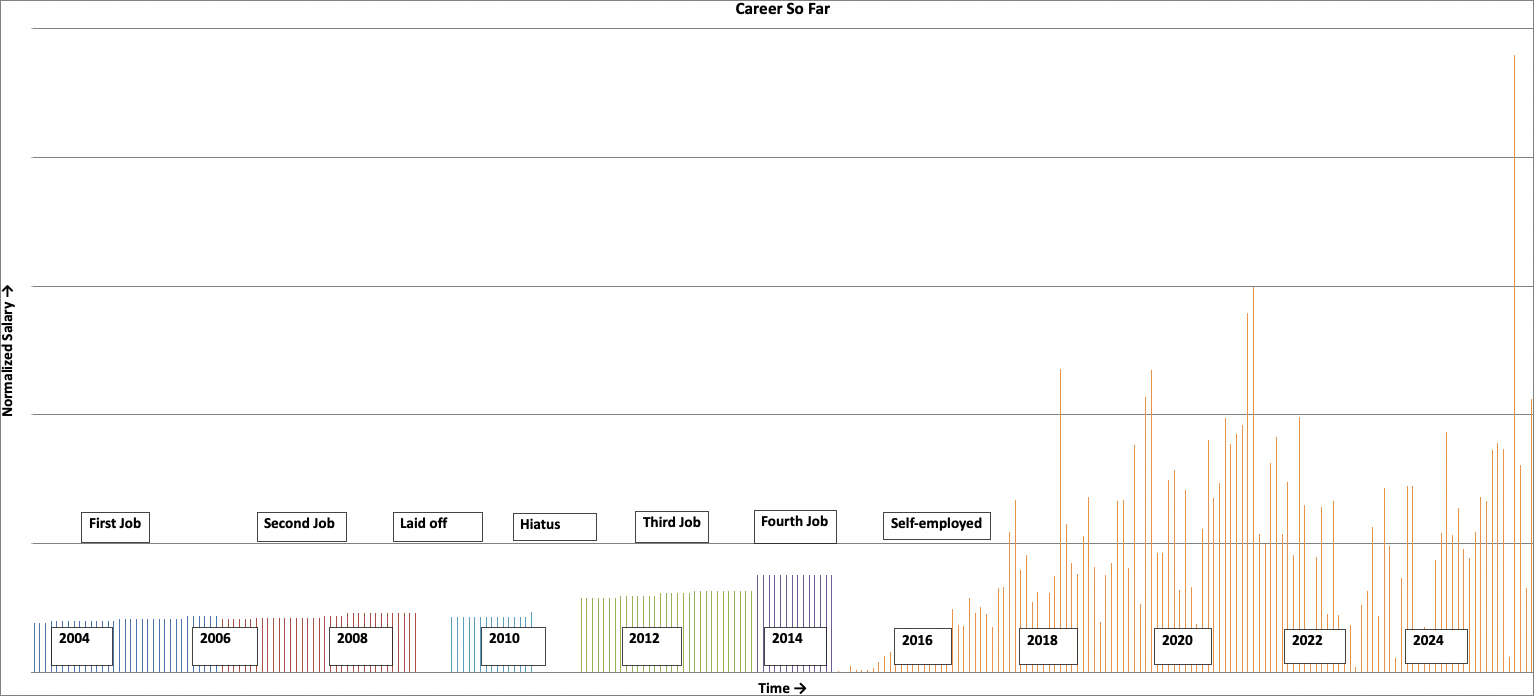
Career earnings to date through 2025

Well, that escalated quickly.

I felt like I was being a little optimistic with a 50% YoY growth goal, and I ended up around 70%. I set that goal around Christmas last year (2024) after a busier-than-expected December so I thought I may have been feeling optimistic. Nope—I actually under-shot.

This December was really busy as well. Not sure what’s going on there, but it seems like I might need to update my impression of the seasonality in my business to account for faster-paced Q4s.

I have learned to be cautious about extrapolating short-term results into long-term trends, so I’m withholding maximum optimism for at least one more year. But if 2026 is as good as (or better than) 2025? Safe to say the business is back and better than ever.

Stats

Here are the stats that I typically track:

  • Visits to FearlessSalaryNegotiation.com: 87,000 (down from a reported 160,000 in 2024)
  • Unique page views: About 140,000 (down from about 250,000)
  • Total email subscribers at the end of the year: About 22,000 (down from about 24,000)
  • Product sales through the site: About 25 (slightly up from 20)
  • Coaching applications: 95 (up from 80)
  • Coaching clients: 26 (up from about 17)
  • Coaching conversion rate (from prospect to client) was 27% (up from 21%)
  • Coaching revenue was up about 77% year over year.
  • Overall revenue was up 70% year over year.

For a long time, my business literally ran on SEO, but the bottom fell out alongside the Big Tech layoffs in 2022. Simultaneously, there was an influx of other companies creating content that crowded out my own content.

While it’s discouraging to seemingly lose something I worked so hard to build, the important thing to recognize is that the stats I really care about are the ones that are improving. Obviously, the one that matters most is overall revenue, which grew by 70%. And that follows from the increase in coaching clients and an increase in average revenue per client.

Yes, website traffic is down, my email list is smaller, and product sales are down, but those are essentially legacy stats that were much more important when I was running a higher-volume business. Early on in the business, I literally kept an eye on stats like “revenue per unique organic visitor”, “revenue per email subscriber”, and “modal time between email subscription and product purchase”.

As I have shifted to the luxury strategy, the stats have shifted to look more like a luxury business, namely “average revenue per client”. I like this stat because it also tracks directly with “average additional earnings for my clients”, which is the primary value proposition for my business.

Zooming out, my net revenue this year was almost 94% of what it was in 2021, which was my best year ever. But my coaching revenue this year was about 5% higher than it was in 2021 while product revenue and partnership revenue dropped off by quite a bit. That’s pretty much exactly what I would expect to see for a business transitioning from a higher-volume model with a mix of products and services to a luxury model that is laser-focused on high-end services.

I spent many years building up my SEO profile, and that served me well. Now I am building a luxury brand, which I believe will serve me better.

I also still get quite a bit of use from the SEO work I did because it turns out that LLMs like my content and I have booked clients via ChatGPT’s and other LLMs’ recommendations. I also have many more “returning client” and “referral” entries than I ever have before. It used to be that “Google” was almost always the source for new clients, and now there’s a much broader mix of things.

New “best month ever” mark

My previous best month happened in November 2021, breaking the record set in October 2021. September of this year is my new “best month ever”, exceeding October 2021 by about 60% and getting pretty darn close to matching the previous best two months combined. Some of that is just random timing—I happened to have my biggest result fee yet and that client decided to just pay everything in September—but timing is always a factor that affects monthly swings for the business. My worst month this year was August for the same reasons.

Pretty neat to go from “My business is struggling. Here’s my plan to save it.” two years ago to “New best month ever by 60%!” this year.

The fiduciary-ness of it all

Last year, I briefly mentioned that I had a very big negotiation that didn’t close when we were right at the finish line. I was pretty sure that was not because of anything I did, but just because the two parties were not going to find a mutually beneficial agreement.

Still, I couldn’t help but wonder: “Did I screw this up?” I was pretty sure there were a couple moments where I could have facilitated an agreement, but I did not think the available agreements aligned with my client’s priorities or were in my client’s best interests.

I am very lucky that I got to talk with that client recently (because he referred someone else to me) and he confirmed that he was extremely happy with the outcome and felt that everything we did was perfect and that the result was totally acceptable and even ideal.

I don’t always get such clear feedback on difficult situations, and I’m grateful that I got that feedback here.

My North Star is to do what’s best for my clients, behaving as ethically as possible. That doesn’t always lead to the best short-term result for my business, but I believe it will drive better long-term results.

The focus on high earners and executives is paying off

A couple years ago, I started to push hard to move my business to a luxury brand focused on helping high earners and executives.

The first big shift was to “high earners”, which I designated as folks making $400,000+. At the time, that felt like a pretty big risk: While I had worked with a number of people in that income range, I had mostly worked with people making less than $400,000.

“Are there really enough people making that kind of money who I can help?” That was my main concern, and it’s always a risk when niching down.

Turns out that yes, there are plenty of high earners and they’re eager to work with a professional salary negotiator. That shift was very slow and intentional, but it is absolutely working and it was the right move.

Slowly moving to luxury

I continue to make incremental changes to the business to shift more and more toward a luxury brand and experience. I’m going to unpack that a little bit for posterity, but also for those who might be curious what I’m up to.

One slow-burning change has been a continual simplification of pretty much everything. For example, the Fearless Salary Negotiation homepage used to be a longer-form page with lots of social proof, links to articles, product offerings, etc. Now it’s an extremely short page that is laser-focused on who I am, who I help, and how I help. There is a singular call to action: “Contact me today”.

That’s it. Very simple and direct. People who see that either think, “This is for me and I want to talk to Josh!” or they don’t. Most people—the vast majority of people—who see my homepage will probably decide that I am not the person they’re looking for. That’s by design and it seems to be working very well.

I have also drastically simplified my overall menu of offerings from my book, several other products, and a few variants on my services down to … well, down to basically one service: Salary Negotiation Coaching for High Earners. In 2025, I slowly pared back my website so that it’s harder and harder to find or buy products of any kind. Soon, I plan to just eliminate those options entirely and totally exit the product (or “info-product”) business.

The one exception is Salary Negotiation Mastery, which I still offer as an alternative to working with me for people who aren’t ready yet. Again, this is an example of simplifying and shortening. That sales page used to be a long-form info-product sales page and now it is not. I will probably tweak this over time, but I like the shorter, more focused page.

Here is how I would describe the higher-level meta strategy for this change: At first, I thought of my business exclusively as a high-volume product business. Then I added coaching. Then I flipped the overall concept to be a coaching business that also sold products. Those products and the coaching itself were essentially a “product ladder”, which would enable people to find a low-cost, high-value entry point (usually a free download) and use that to validate the value of my work. Eventually, those folks would hopefully buy a product, then possibly another product or a more expensive product. And sometimes those folks would hire me to coach them—the top of the product ladder.

Now, I see my business as a very specific, narrow offering of “Salary Negotiation Coaching for High Earners”. That’s it. I am the best at what I do, and I’ve helped hundreds of people significantly increase their earnings for over a decade now. For people who want to work with the best, I’m here to help. Once we talk, I’ll either recommend you work with me or that you don’t. For those who are good candidates for my service, but who aren’t quite ready to work with me, I offer Salary Negotiation Mastery.

Other shifts I’ve made over the past year or two to support this luxury focus are:

  • A simplified Negotiation Fee structure that is identical for everyone: $4,000 Strategy Component, 10% Improvement Component
  • I don’t collect any fees until after our work is complete
  • We start working when you sign my Letter of Engagement
  • There is no application or other barrier to talking to me—anyone can book a call with me to explore working together
  • You hired me to help you optimize your offer and de-stress the negotiation process, and that’s what I’ll do

I have now had several people say, “I looked at the options out there, and I know you’re more expensive, but I want to work with you because you’re the ‘executive comp’ guy.” That’s a very strong signal that I’m moving in the right direction.

Completing the shift from “Done With You” to “Done For You”

That last bullet point above is another important shift that I’m working on right now, and is worth elaborating on.

Everyone is familiar with “Do It Yourself” (AKA, DIY). There’s also “Done With You” (DWY) and “Done For You” (DFY). Those three are basically service tiers from “you’re on your own” to “everything done on your behalf”. In general, luxury brands are focused on “Done For You”, and they sometimes actively exclude any kind of DIY or DWY. In extreme cases, there is literally no customization or customer input at all—they either buy the product or service as-is, or they do not. That would sound something like, “We make 100 of these per year. They cost $100,000 each. If you would like one, then send us a deposit and we will put you on the list for the next available slot, which is in three years. The deposit is non-refundable. There is no customization, and there are no refunds or returns. Let us know if you would like to proceed.”

At first, my business was almost exclusively DIY (products). I say “almost exclusively” because I was available for email support and am sort of compulsive about helping people and replying to queries in my inbox, so I would still help people if they needed it, but mostly thought of my offering as DIY.

Then I started offering coaching, which I approached with a DWY mindset: I was the coach, which meant that I would try to get the best result, consult with clients along the way, and try to teach them how to do what I did so they would learn a new skill. This followed very nicely from all of my products, which were teaching them a new and valuable skill.

Over the past couple of years, as I have shifted more and more to a luxury offering, I have also shifted to a DFY approach. My clients interact with recruiters, CEOs, Hiring Managers, etc., but those interactions are more or less scripted by me for their benefit. I still collaborate with my clients because I need to know what they know, but I am more focused on de-stressing a difficult situation and getting them the best result than I am on teaching them how to negotiate on their own. I think the clients I was working with years ago wanted that—to learn how to negotiate—but I do not think the clients I work with now really care about that. They’re busy and not looking to learn a new skill; they just want to optimize their comp package before they sign on the dotted line.

This is one of the more challenging parts of this transition just because I like teaching people so much. I still do teach them things, but that is not my focus. This is a logical place to end up, though: Even thinking back on my first-ever coaching client—who had a copy of my book and whose spouse I had coached while I wrote my book—when I asked her why she hired me instead of just doing it herself, she said, “I just wanted you to tell me exactly what to do for my situation.” She did not say, “I wanted you to tell me what to do and teach me how to do it.” I did that on my own as a value-add while I grew the business. I think that feature just isn’t needed anymore, and might even be a detractor for people considering hiring me.

2025 Year in Review – Personal

What a great year! Obviously, the success of the business makes this easier, but that’s never a guarantee. In many ways, this year was more of the same, which is great.

Lille, France – My first vacation in a couple years

Thanks to the previously-reported business slump, I had not been on vacation in more than two years. This summer, I finally felt like I had enough margin (both time-wise and financial) to finally take a trip.

It helped that I had a bazillion unused Amex points, giving me lots of free flight options.

I have some friends who lead a study abroad program In Lille, France every summer, and they invite me to go hang out there every year. I finally took them up on it and joined them for about 10 days.

It was exactly the kind of vacation I like and just what I needed. I got an Airbnb right across from the Lille equivalent of Central Park, and spent a lot of time walking around the city and writing in the park. I wrote treatments for three book ideas I had been batting around and used ChatGPT to decide which project might be best to pursue. I narrowed it down to two projects, which are both promising in different ways.

I also ate some pretty good food and really enjoyed just hanging out in France where the sun set every night around 10:00 PM. I say “pretty good” food because the food was not what most people probably think of when they think “France” (because they’re probably thinking, “Paris”). Lille is way up in the north of France, very close to the Belgian border, so the food is very Flemish and heavy. That’s probably great in the winter, but really heavy Flemish stew with cheese-and-cream-forward dishes don’t hit the same when it’s 85 degrees outside and there’s no air conditioning to be found.

Still, the town was amazing and I got to go see a World War 1 cemetery and memorial in Belgium, which was awesome. I also spent a couple days in Brussels, where I enjoyed one of the best Italian meals I’ve ever had (sounds weird, but there just happened to be some Italian ex-pats who opened a restaurant there, and it was amazing).

Hopefully I’ll get at least a manuscript for one of those writing projects done this year, though I’m not sure this rises to the level of a goal for 2026. We’ll see.

While I’m here, a little easter egg for the few people who actually read these Year in Review posts. The two main book ideas I’m batting around are:

  • A book about building a luxury business for people who may not be at all familiar with luxury brands or how they work. There are a few good textbooks about luxury brands, but there aren’t really any modern how-to books. I think I could write a decent book on how to build a luxury business.
  • A book about how to be hospitable, specifically for introverts. That’s intentionally ambiguous as it would be about how an introvert can be hospitable, but also how to be hospitable to introverted people.

If either of those sounds particularly interesting to you, let me know. If neither sounds particularly interesting to you, let me know.

A neat little mall space in Brussels
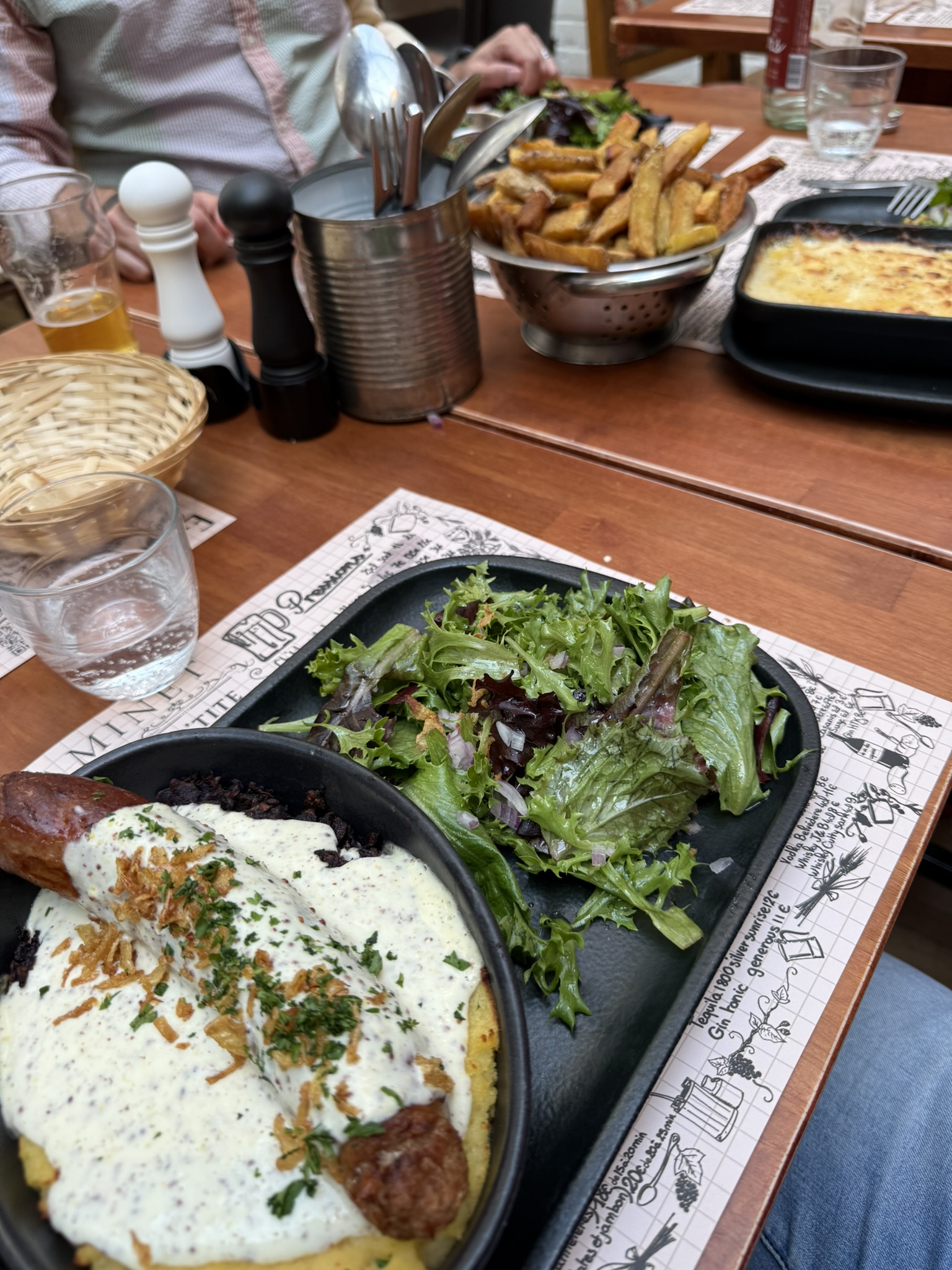
A neat little mall space in Brussels

The Welsh fare in Lille

The Welsh fare in Lille

The view from my Airbnb in Brussels

The view from my Airbnb in Brussels

My Airbnb in Lille overlooking the park
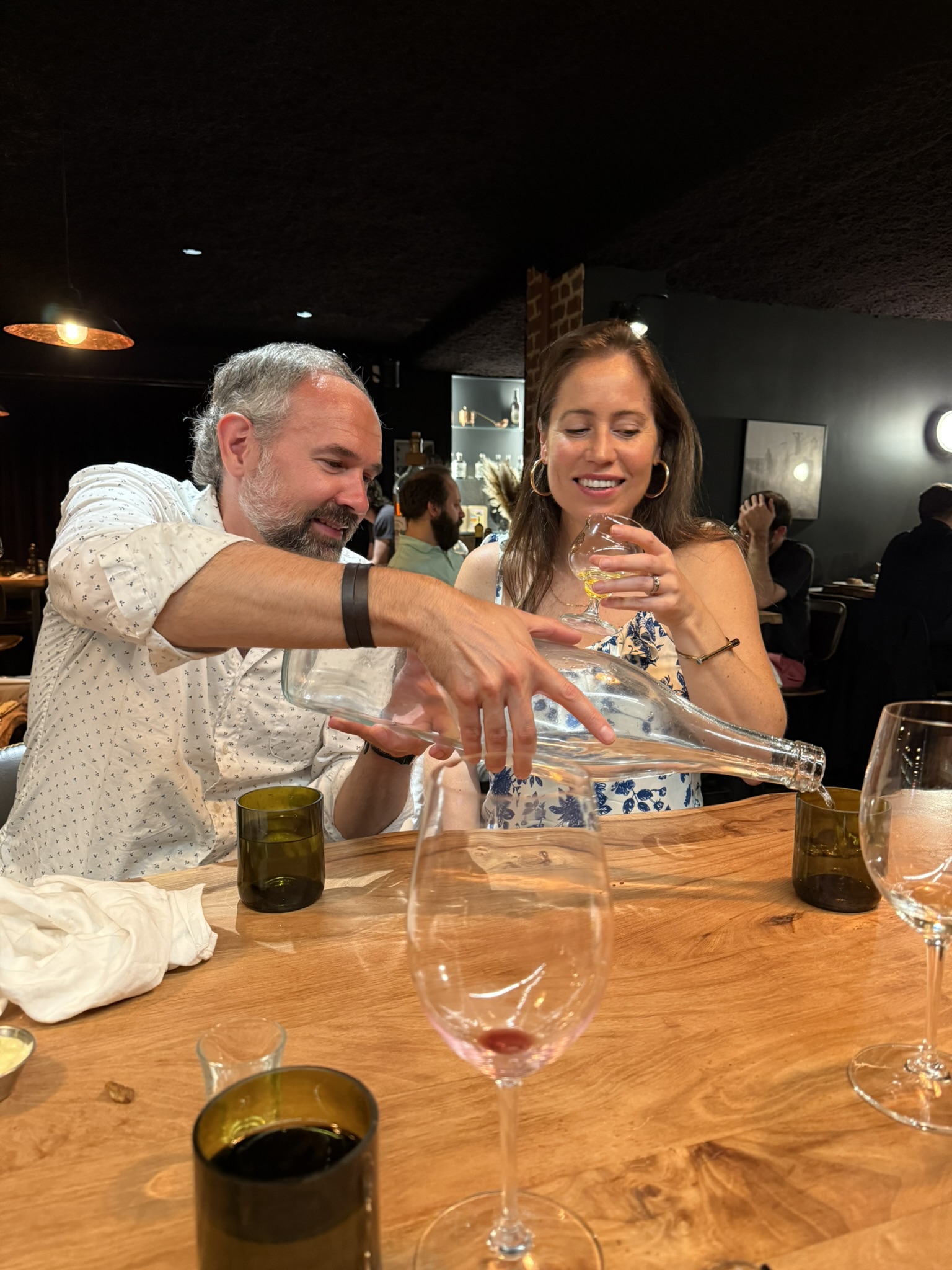
My Airbnb in Lille overlooking the park

My gracious hosts

My gracious hosts

The World War 1 Memorial in Belgium
The World War 1 Memorial in Belgium

Another shot of my Airbnb in Lille

Another shot of my Airbnb in Lille

One of the best Italian dishes I've ever had

One of the best Italian dishes I've ever had

A street in Lille

A street in Lille

Pickleball progress

My current goal is to get to 4.5 and my stretch goal is 5.0. Pickleball ratings are basically on a bell curve, meaning that marginal increases get harder and harder to achieve the higher you are on the scale. Getting from 4.0 to 4.5 is not easy but is significantly easier than 4.5 to 5.0. So any progress is meaningful.

I have been really grinding to improve my game. That means a lot of practice on my Pickleball Tutor, focusing on specific shots to improve weaknesses and gaps in my game. That work is paying off, but it’s slow progress.

Bottom line is that it’s just difficult for me to improve because I had no racket sport background before I started, and because of all the depth perception and light-contrast issues I’ve written about before. There is virtually no part of improving at pickleball that is natural or easy for me, so I just have to grind away to make small improvements.

Which is fine. As long as I’m improving, I’m good. At least twice this year, I played in a game with someone who hadn’t seen me play in a long time and they later said something like, “Whoa. He’s way better than he used to be.” That slowly opens doors for me to occasionally get into better games (as a backup to a backup or something), which will help me improve a little faster.

Third shots

One thing that was holding me back in 2024 was my third shot. I was just doing it wrong. Sometimes, it would be pretty good, and other times it would be really bad. So I had to break it down completely and rebuild it. That took … a while. I estimate that I hit 10,000+ third shot drops on the Tutor to get it grooved in.

Now it’s one of my best shots. It’s very reliable and I can use it as a way to manipulate point structure.

Other shots

My dinking has also gotten very good, especially on the left side. I can pretty much move the ball around wherever I want, often hitting a series of shots to set up a winner for me or my partner. That’s pretty cool.

My serve is my best shot and has been for a while, but other shots are starting to catch up.

I’m to the point where I’m just selecting one weakness at a time and working on it until it’s no longer a weakness. For example, I realized that my volley dinks weren’t great because I had never really worked on them. I got good at dinking because I drilled with a partner who is very good at pickleball and dinking. That’s good because I can handle aggressive dinks, and dink patterns that move me around a lot. But because he’s so good at dinking, he rarely gave me volley-able dinks to work with. I’m just used to having to let his dinks bounce because I would normally be reaching too far to volley them.

Well, the games I play often have many volley-able dinks. But since I hadn’t worked on that skill, I would just have to let them bounce anyway, which is a sort of double-whammy: I missed opportunities to volley and take control of the point and I was often back-footed because the ball traveled so far.

After five or so sessions on the Tutor, my volley dinks improved dramatically and are no longer a weakness. It’s a very subtle thing, but meaningful.

Now I’m working on resetting from the transition zone. That’s just a gap that I have never spent time on. Now that I’ve worked out some other weaknesses in my game, this is a glaring weakness that needs to be addressed.

Slow and steady.

Joining an advisory board for a startup

I wasn’t sure whether this would be considered “Personal” or “Business”, so I’m just putting it here.

A friend of mine has a seed-stage startup called Rovex and he asked me to join his advisory board, specifically to advise on business and negotiation strategy. This is cool because it’s a nice example of doing something for fun that turns into something more.

Since my friend had the idea to start the company, we’ve talked about the concept, execution, roadmap, all that stuff. And as he began hiring for key roles, he would loop me in to talk about which roles to focus on and how to think about compensation.

Obviously, my day job is helping candidates negotiate job offers that are extended by businesses. But this is a chance to flip that on its head and consult with a company on how to think about compensation for early-stage hires.

On its face, this might seem like a sort of conflict of interest, but my philosophy has always been that compensation done right is good for everyone—the candidates accepting the jobs, and the companies employing them. Candidates get paid what they’re worth, and companies get good candidates and have lower attrition rates in the long run.

For an early-stage company, incentive alignment is extremely important. That means sometimes coming up with creative compensation packages that align everyone’s incentives in a productive way.

This is just a natural extension of what I’ve been doing for a decade. Advising on the business side is really fun as well. It’s cool to have an indirect impact on what could eventually be a big tech company.

The Gator Basketball team is good again!

Almost exactly a decade after Billy Donovan moved to the NBA, Gator Basketball is finally good again! What Todd Golden has done in just three years is really remarkable. He had never even won a Tournament game before, and then he ripped off six straight to win the Natty.

His approach to coaching is extremely analytical, which I love, and he is excellent at developing players. It’s been a long, long time since I had anything good to say about Gator sports, so it’s nice to have another Title to celebrate.

2026 Goals

Ok, it’s time to look ahead to 2026. I’ll keep it pretty brief this year, I think.

Maintain or grow the business

I was pretty darn busy this year, and my business isn’t really designed to “scale” per se, so shooting for another 50% year-over-year growth year might be a little ambitious.

There is a path to growth, but that would be via two potential mechanisms:

  1. More clients. I was consistently busy and close to capacity for a good amount of the year, but not at capacity.
  2. Larger average deal size. This is sort of happening naturally, but working on bigger deals could bump revenue. I might be able to induce this to happen quicker, but I think it’s naturally happening on its own and I’m inclined to just let it happen organically.

Improve to 4.5 at pickleball

This is doable this year. I pretty much know what I need to improve to get there, and going from 4.25 to 4.5 is not a huge leap. I’ll be disappointed if I don’t hit this, and I think there’s a chance I exceed it by a little bit.

I suspect that somewhere around 5.0 is my ultimate ceiling, but we’ll see.

Write a manuscript

I have two book ideas that I’ve been knocking around. Both of them would be fun to write, but they are very, very different. So I just need to pick one and work on it. I think I’ve made that pick and started one manuscript a few months ago, but I’m not so deep into it that pivoting is off the table.

Find one new go-to dish to cook

Re-upping this from last year because I just didn’t get it done. I have actually set up a little learning plan with ChatGPT to teach myself the basics of cooking, so I just need to follow that plan.

I can make pretty good dishes, but they’re all just me executing a good recipe as opposed to me knowing how to cook. My plan with ChatGPT will make me a more competent cook.
Keeping small pains from becoming big problems

I usually run three days a week, like clockwork. Monday is a track workout, Thursday is a short run, Saturday is a longer run. It usually adds up to about 10 miles a week unless I’m training for something (like a 10k race or a 15k with the flu).

Here we are on January 16, and I haven’t run at all this year. Last time I ran was December 29, 2018, about six weeks after I finished my first Half Marathon.

It’s really frustrating, but it’s also necessary.

I have been battling a couple of overuse injuries for a few months, just sort of hoping they would work themselves out if I kept training with good form. Sometimes that works, sometimes it doesn’t. This time it didn’t work and it made things worse.

I noticed I was struggling to keep up a good pace, and that maintaining good form was more and more challenging as I tried to compensate for various aches and pains. It started getting more difficult.

I should’ve stopped running right after the Half Marathon, but I was too stubborn.

Now it’s time to pay the piper. What would’ve been a week or two of rehab has probably ballooned into a month, all thanks to my stubbornness.

I’ve been thinking a lot about how there’s a fine line between “Just tough it out!” and “Why didn’t you stop before you hurt yourself?!” It’s really hard to see that line in real time, and it seems like the only way to really know where the line is is to look backwards and find it.

But I also think that identifying that line is a skill that can be honed over time.

The best way I know to hone that skill is to constantly monitor pain points: Is it better or worse than last time? How hard is it to aggravate it? Can I work around it? What’s the upside to continuing? What’s the downside if this turns into something bigger?

I’ve been doing this with my business lately and it has helped me identify some small pains that I can resolve before they become big problems. That makes things easier for me and better for my customers.

You can use this sort of analysis with your career. Small pains often become big problems if left untreated, so it’s worth identifying those small pains and thinking about solutions before they become big pains.

It’s the beginning of a new year, so this seems like as good a time as any to start planning ahead to make 2019 more productive by finding and fixing small pains before they become big problems.

Take a few minutes and ask yourself, “What are some small career pains that could become a big problem if I don’t handle them now?” You might find some easy wins with a big payoff for very little effort.

My 2018 Year In Review: Finally making a good living

It’s been three years since I quit my day job to build the Fearless Salary Negotiation business. It’s finally paying off.

I didn’t think this year would go so well for my business, especially considering that I was almost out of runway only 18 months ago. But my 2018 income is very close to what it was when I quit my day job in 2015, and now I have the freedom, flexibility, and personal satisfaction that comes with making a living from something I built from scratch.

The decision to double down on salary negotiation coaching in 2017 continues to pay dividends as I work with more clients and raise my rates to capture more of the value I create with my work.

That’s the business side of things.

Personally, things are great. I’m fortunate to have a very close group of friends. I’ve gotten better at running, and I’m pretty good at making omelettes. Of course there are things I would like to work on for 2019, but 2018 was amazing!

Here’s a Table of Contents so you can jump to wherever you want…

2018 Goal Review

So how did I do this year? Let’s take a look at my 2018 Goals.

Make a good living

The goal was I want to make $10,000 per month in net revenue in 2018. More specifically, I would like to do that by selling $5k in products and booking $5k in coaching per month for the year.

I missed this goal, but not by very much. And each $5k sub-goal is pretty close to what I actually did.

The difference between hitting and missing this goal comes down to a consulting retainer that ended in September after about a year. If that kept going, I would’ve made it.

I also could’ve made it if October wasn’t so horrible revenue-wise.

To be honest, this is bonkers to me. I didn’t actually think I might hit this goal—I just wanted to make sure I set an ambitious-but-achievable goal to maximize my earning potential in 2018.

I did hit a secondary goal, which was to double revenue year-over-year from 2017 to 2018. I did that from 2016 to 2017, and it seems like “do twice what I did last year” is a reasonable goal that can be achieved through good planning, execution, and moderate growth.

More traffic

The goal was I would like to build my organic search traffic to 100,000 unique visitors a month.

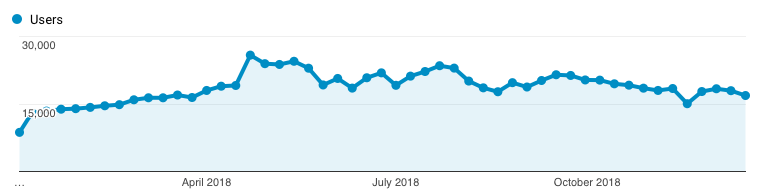
This one is interesting. I did hit this goal, but then traffic fell off and settled in around 80,000 visitors a month.

2018 Organic Traffic

The good news is that with more traffic came more revenue, so there was a direct benefit to this goal.

Improve at Sales

Here’s that goal: My goal is that 2% of email subscribers become paying customers within the first 30 days.

This was a huge miss. HUGE miss.

That’s the bad news.

The good news is I did build one funnel—the one that gets the most traffic—that pretty consistently converts 1% of subscribers to customers for a $47 product.

So there’s a lot to build on there.

Help other businesses get more search traffic and email opt-ins

Ehhh, I did some of this but not very much. I worked with a few clients to tweak their SEO, and I worked with some clients on their content strategy. But I just didn’t feel motivated to push this part of the business.

I think there are still things to focus on in my core business and I didn’t want to get too distracted.

Running goals

  • 10k – Sub-8:00 pace Hit it with a week to go in 2017
  • 5k – Sub-7:00 pace (currently 7:14)
  • Mile – Sub-6:00 pace (currently 6:08) Ran a 5:54 mile in August
  • 400m – Sub-60s pace (currently ~64s~ 62.75s)

I’ll write about this later, but I also ran a PR for 15k and finished my first Half Marathon.

A detailed 2018 Year In Review – Business

At the beginning of this year, I felt like the trajectory was in the right direction, but I still had some concerns. I started the year in a bit of a cash crunch as I was still digging out from the financial hole I dug to get through 2017.

To free up cash for 2017 taxes, I had parked some expenses on a 0% credit card. It looked like I would be able to pay it off before the interest rate jumped in August, but it would be close. I also decided all 2018 taxes would be taken off the top and held in a dedicated account so I wouldn’t have to scramble to pay taxes this year.

Saving ahead for 2018 taxes plus paying down that 0% card meant 2018 could be sort of a financial grind. I knew that was likely when I made those decisions in 2017, and now it was time to pay the piper.

January was mediocre, but then things took off: February was my best month ever, and March, April, and May were all consecutively better.

By June, I was out of the woods and starting to replenish my savings. It was almost exactly one year from “Uh oh, I might have to get a day job.” to “This seems to be working and I have some room to breathe again.”

With the exception of a horrible October, the second half of the year was great (but not quite as strong as Q2). I may be doing enough business that I’m able to spot some seasonality, but I’ll have to wait and see.

For now, things are good with the business and I finally feel like I can relax a little and enjoy what I’ve worked to build over the past few years.

Salary negotiation coaching

In June of 2017, I repositioned myself as a salary negotiation coach for experienced software developers. Before that, I was basically positioned as an author who also did some coaching.

That shift in focus is what saved my business.

I kept pulling on that thread in 2018 and it continues to pay off in a few ways.

First, I’ve gotten more and more reps negotiating job offers with big tech firms, so I know their playbooks. This has made me more confident and gives me the tools to pitch my coaching offering more effectively.

Second, I’ve been able to raise my prices so I earn more for my work by reaching a more experienced market where my work has more value. Basically, I’ve enabled more and more experienced software developers and senior managers to find me when they have job offers, and their job offers are usually very substantial, which means their improvements are often substantial.

The combination of those two things is what has really enabled my coaching business to take off.

I also really like what I do. It’s fun to help people who’ve worked so hard to build a valuable skill set actually capture more of the value of the skill set they’ve built.

Product sales

Selling digital products is at once a boon to my business and an enigma. Traffic and sales were up this year, but I continue to suspect that I’m selling far less than I should given my traffic levels, and the quality and value of my products.

This has to be a focus for me in 2019. With over a million visitors to my site in 2018, I should be selling a lot of products.

Email list growth

I hit some pretty big milestones this year. I was this close to hitting 35,000 email subscribers before I pruned almost 10,000 subscribers. Since I started building my list in January 2015, I’ve had more than 60,000 people join my list. About 20,000 of those unsubscribed over time, and I pruned another 12,000 or so.

The churn is normal. The pruning is sort of controversial among my peers. But the bottom line is I had a ton of people on my list who were not opening or interacting with any of my emails, and I don’t think it’s good for anyone if I keep emailing those folks.

So I’ll end 2018 just shy of 30,000 active email subscribers. That’s crazy to me. I had 600 subscribers after my first full year doing this. Now I get more than that in a typical business week.

Now I just need to get better at aligning my product offerings to my email subscribers’ needs.

Consulting retainer

I also had a fun opportunity to consult with a very successful business. It was an unusual arrangement without any real parameters: Just come hang out, observe what we’re doing, and make suggestions to help us improve.

It worked really well for a while and it was a ton of fun, but the business itself eventually became so active that I found myself lost in the shuffle. I would love to do more of this sort of thing, and it’s good to have this experience so I can help define the desired outcomes—for myself and for the business—of this sort of engagement better in the future.

Essential Salary Negotiation Email Pack

Last year, I made a small product called The 15-Minute Counter Offer. I was trying to learn more about how I could help folks finding FearlessSalaryNegotiation.com when they needed help negotiating a job offer.

What I found was that most of those people were in a real hurry—they had just a few hours from the time they found myself site until they had negotiated their offer.

So I built The Essential Salary Negotiation Email Pack to help with their specific needs in a very short timeframe. That product, plus The Salary Negotiation Crash Course—a more in-depth-but-still-streamlined, end-to-end job offer negotiation course, offered as an upsell to the email pack—made almost $12,000 in 2018 and I didn’t start selling it until April.

This is by far my most successful new product and I hope to create a similarly successful offering for folks who aren’t sure how to ask for a raise in 2019.

Overall stats

Here are some high-level stats for 2018 (all as of December 26):

Traffic

There were 1.023 million New Users on FearlessSalaryNegotiation.com, and 90% of those were from organic search traffic.

My email list

Here’s an updated list of end-of-year email subscribers:

December 2015: ~700
December 2016: ~2,500
December 2017: ~11,500
December 2018: ~28,500

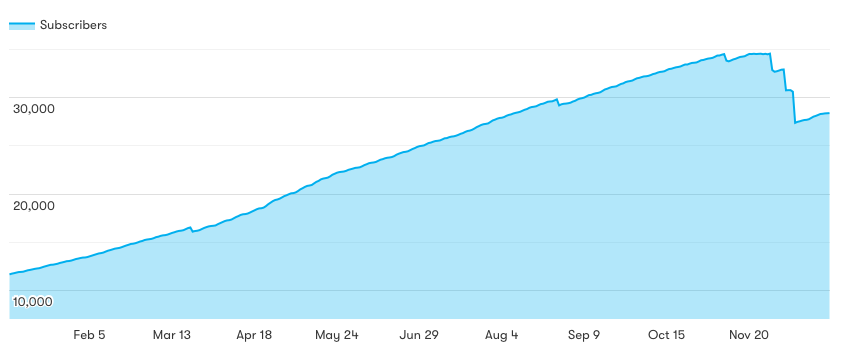
In 2018, I had 24,300 new email subscribers, but since I pruned about 12,000 recently, active email subscribers is “only” 28,500.

Here’s a graph of my email list growth in 2018:

2018 Email List Growth

No hockey stick this year—just consistent growth.

Conversion rates

They’re basically the same as they were last year—about .4% of email subscribers purchase something from me in the first 30 days. The consistency is a little deceptive as I did significantly increase conversions for one funnel, and I also significantly increased opt-ins for all other funnels.

Last year, I said, “If I hit [5% opt-ins and 2% conversions] by the end of 2018, I should be able to hit my revenue goals.”

On one hand, it’s really frustrating to see such a huge miss. On the other hand, I almost hit my revenue goals anyway, so if I actually find a way to get those sorts of conversion rates I’ll be doing very well.

A detailed 2018 Year In Review – Personal

Two things stand out when I think back on this year: traveling and running.

Travel

2012 was the beginning of a years-long plan to build a business and stop working for other people. That’s vague, but it’s about as specific a plan as I had in mind.

I started by getting a good-paying day job to leverage my prior career experience and newly-acquired MBA. I used that income to start paying down debt as aggressively as I could, and I began slowly acquiring the basic skills I would need to (eventually) build a successful business.

For the next few years, I was either paying down debt or saving up a runway while basically working seven days a week on my day job and side projects.

In 2015, debt free and comfortable with my runway, I quit my day job to focus full-time on building a business. For a little over two years, I worked really, really hard seven days a week. I think that sort of work was necessary to build the basic infrastructure of my business, but it was also very taxing.

In 2017, I decided the seven-days-a-week schedule needed to end, so I sort of re-entered normal society and focused on community. Either the foundation I had built would facilitate a real business or it wouldn’t—it was time to find out.

So I stopped working so much, but I still wasn’t earning enough to take non-business trips or anything like that. I had to pass on a number of super fun trips to avoid burning too much of my savings.

That changed in 2018 as my business actually started to take off.

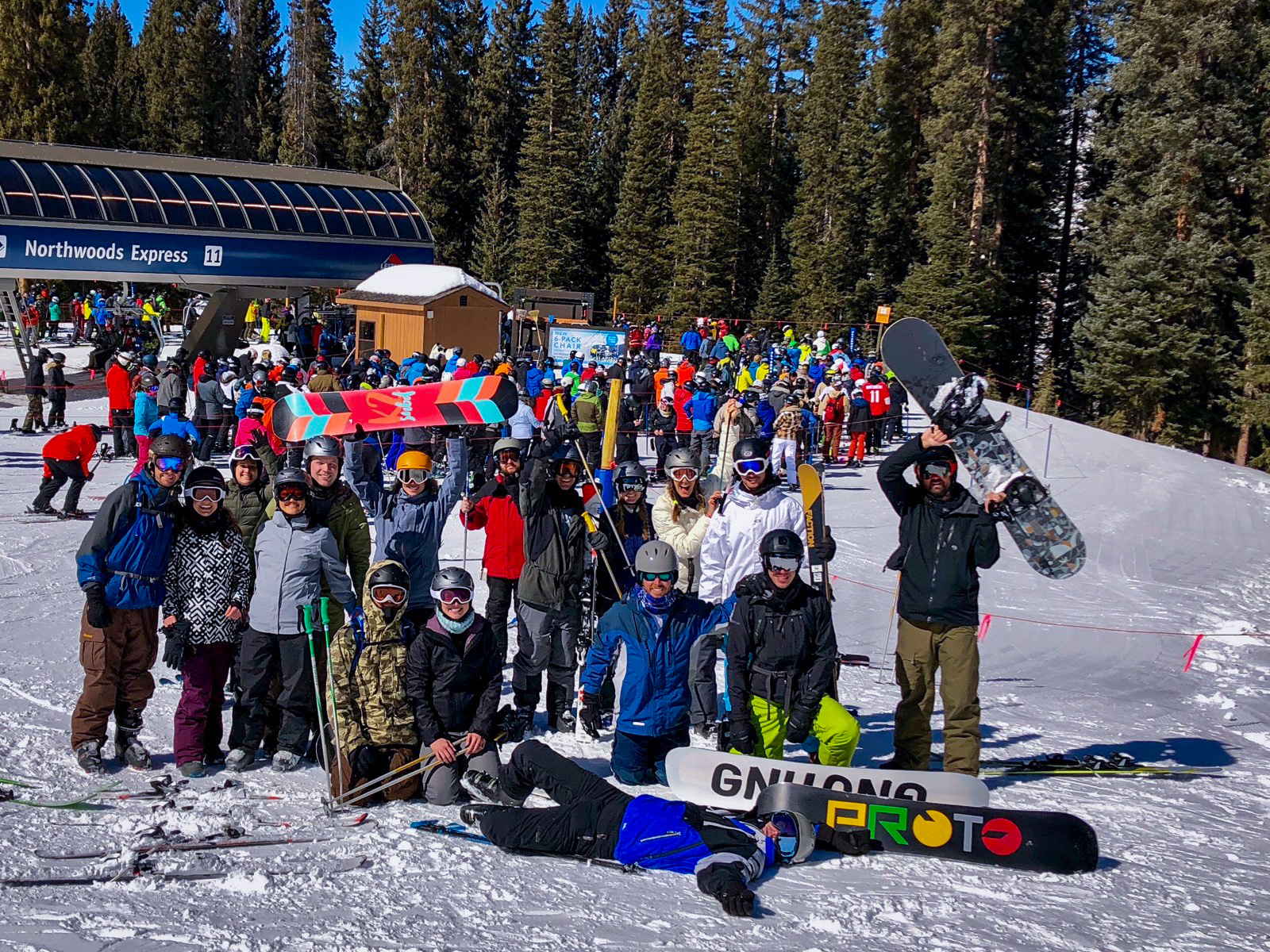
Ski trip

I went skiing for the first time since high school and I loved it. My friends go on a ski trip every year, and I was always a little jealous I couldn’t make it. But I also remembered absolutely hating skiing, so it didn’t sting too badly to miss that part.

I figured I would give it a shot this year, mostly so I could say, “See! I went skiing and it’s still awful!” But it turns out I really liked it, and that getting ski lessons is actually very useful. Who knew?

I had a blast and I can’t wait to get back out there in 2019.

Our group at Vail

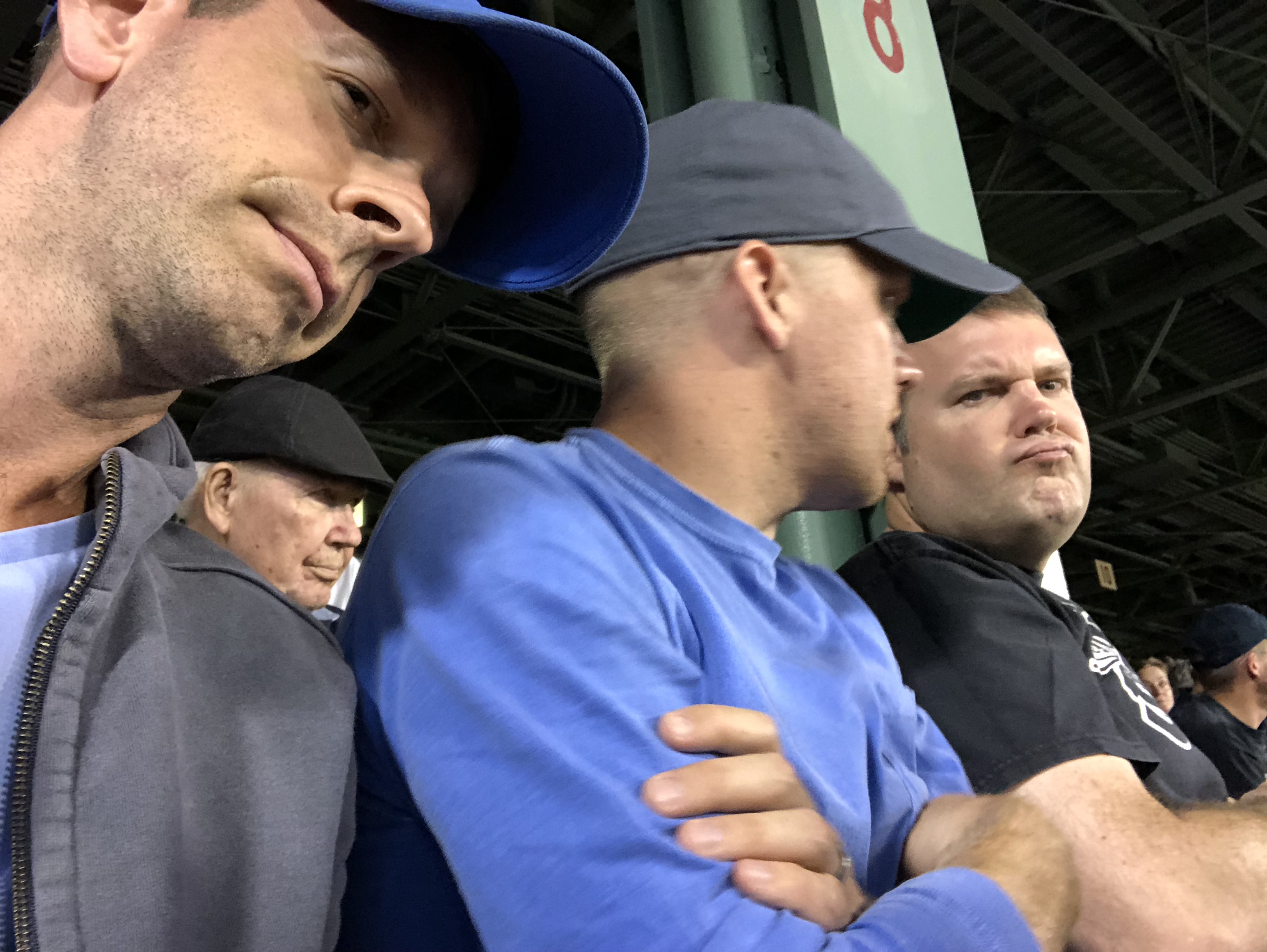
Boston

I also went to Boston with a couple college buddies in June. It was amazing. I hadn’t taken a trip like that in a very long time, and it was everything I hoped for.

Classic Allen face

I have a lot of “Allen makes this face at a sporting event” photos

Running stuff

At the end of 2017, I asked “Am I a runner now?” In hindsight, that question was pretty naive. The answer is vey clearly no.

Runners run a lot more than I do. I am a hobbyist and I made progress on my hobby this year.

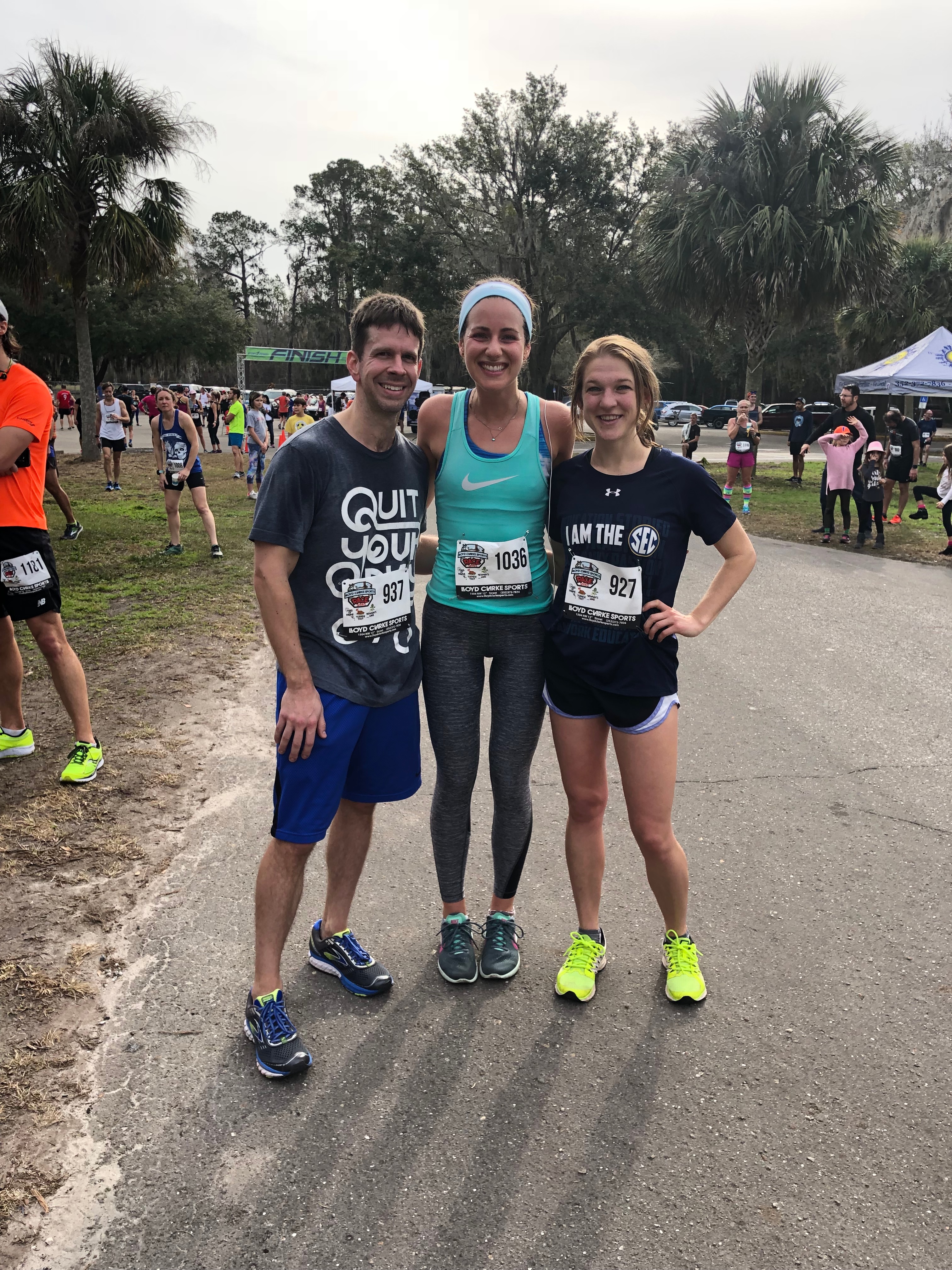
My first 15k

In January, I ran my first 15k and it did not go well. Turns out that running a 15k with the flu just isn’t a great idea. But I finished and my time wasn’t terrible (for a guy with the flu).

My first 15k

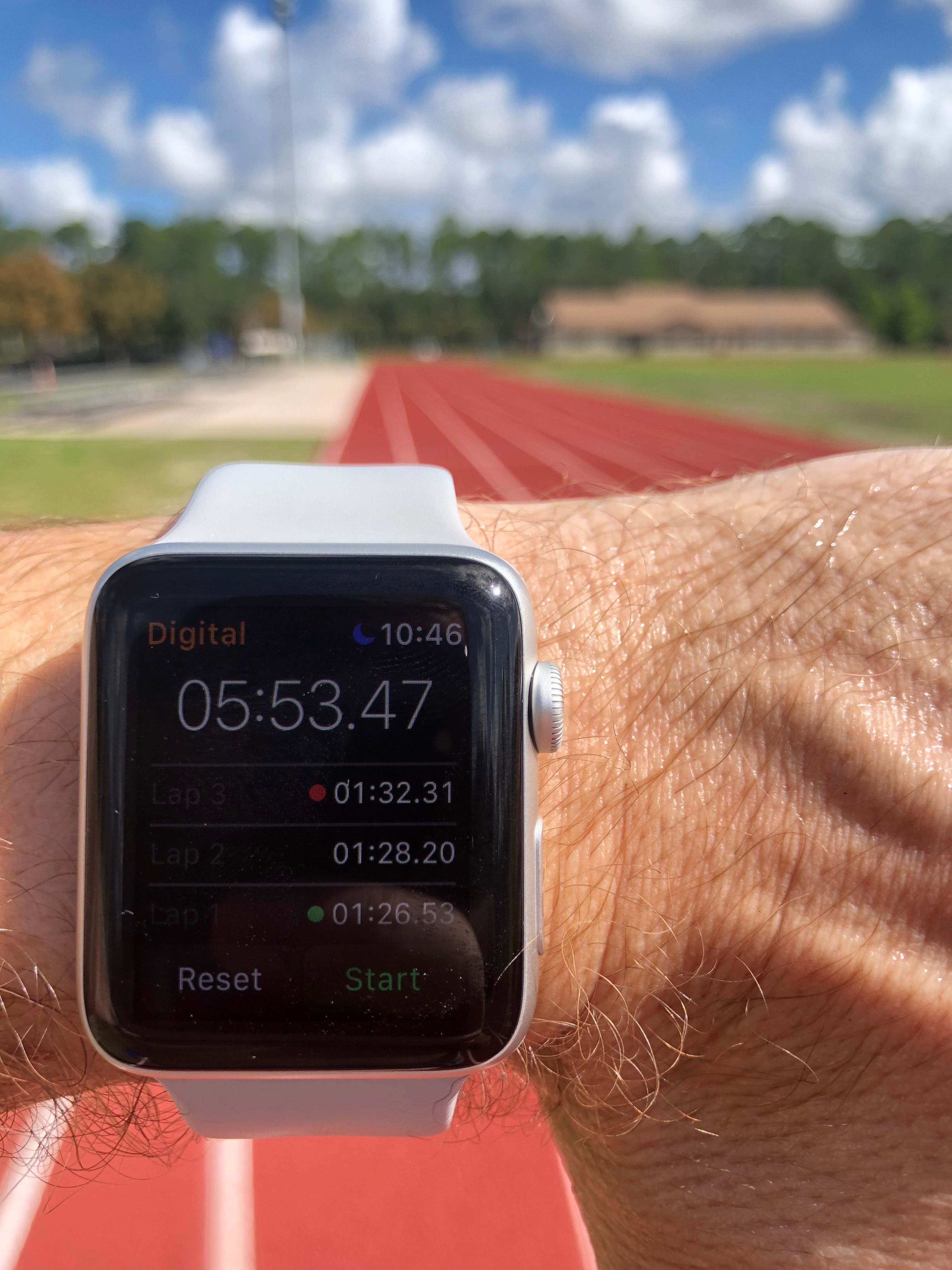
Sub-6:00 mile

One of my original running goals was to run a sub-6:00 mile. It took me a few tries and about 18 months, but I smashed that goal with a 5:54 in August.

My six-minute mile time with 400m splits

This may have been my most satisfying PR yet because it as almost exclusively mental. I had to try and fail a few times to understand exactly how to run a fast mile, but once I understood it I was able to knock it out.

15k PR on a training run

I was prepping for a Half Marathon and I ran an 8:00-flat pace 15k. This wasn’t even on my list of goals, but it felt pretty good. When I started running at the beginning of 2017, I set a goal of running this pace for 10k. So it’s cool to run that time for a longer distance.

15k training run - 8:00 pace

My first Half Marathon

I was planning to run a Half Marathon earlier in the year, but the aforementioned flu ruined my training and I bailed. Plus, the Half I was going to run would be during the winter and the weather was going to be awful.

A wise friend told me, “Do you really want your first Half Marathon to be a miserable experience? Why not just wait for a better one?” So I did.

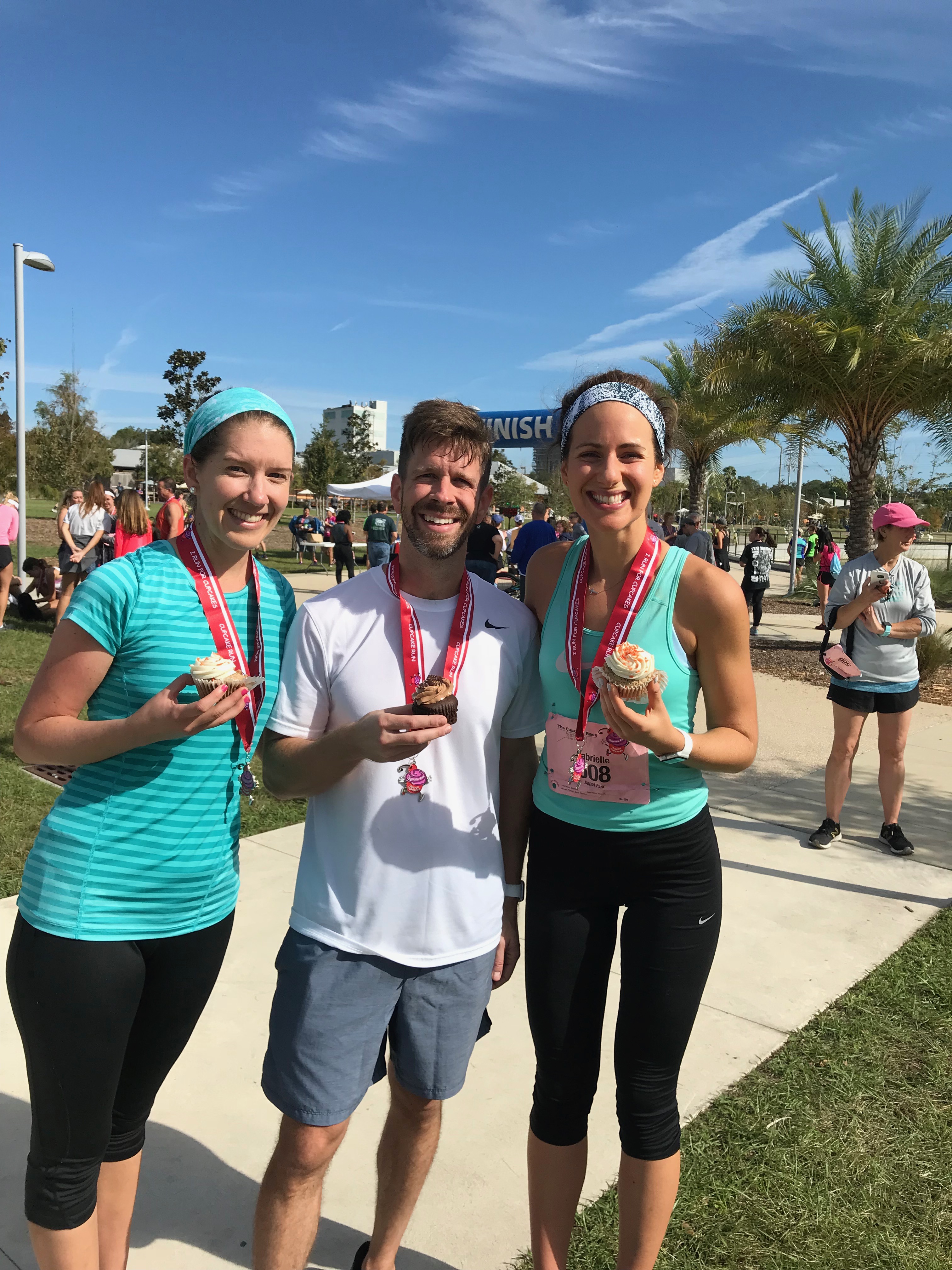
I ended up running a Half in sunny, 60º weather and it was a pretty good experience. The one hitch was that the course was only 12.1 miles, so I literally had to go the extra mile to finish.

At least we got cupcakes at the end.

My first Half Marathon (with cupcakes!)

I ended up with a pretty good pace of 8:24. I was very happy with my race strategy as I felt I did the best I could, and I’m certain I could go quite a bit faster with better training.

That said, I doubt I’ll run too many more Halfs. I’m glad I did it, but it really took a toll for like two weeks after the race.

2019 Goals

I’m going to keep things pretty simple this year.

Double revenue again

I have no idea if this is possible or how I will do it, but I don’t think it’s a crazy goal.

Can I double product revenue? I think I can, although I don’t quite know how. I have the traffic and products to do it. There are also a lot of sub-goals that I won’t write about here, but which I think will help with this high-level goal.

Can I double coaching revenue? Yes, by more consistently booking clients and continuing to raise my rates.

This year, I earned pretty much what I earned in my last year of full-time employment. That feels amazing. But I didn’t quit my day job to make the same money I made before. I quit my day job to earn multiples of what I was earning before (among other things). So I want to continue pursuing that as long as it doesn’t require me to return to being a hermit.

Sub-7:00-pace 5k

I’ve been chasing this one for a while, and I probably should’ve tried to knock this out when I ran the sub-6:00 mile earlier this year. Unfortunately, I was battling some injuries and decided to slow down before I really hurt myself. I would like to check this one off the list.

Sub-60-second 400m

I’m honestly not sure if I can do this or not. For one thing, I’ve got nagging injuries that basically prevent me from sprinting. But if I can get healthy, I think I’ve learned enough about proper running that I can do this.

This wasn’t one of my original running goals (I wasn’t sure I’d ever break 70s), but I think it’s still an achievable stretch goal. Or maybe it’s not. I dunno.

More trips

I travel to relax, and I’d like to do that more this year.

I’d like to take another trip with the Boston crew this summer. That trip was a lot of fun and I think the three of us are pretty much an ideal traveling group.

A trip to Europe would also be great—I miss Italy—but I don’t have anything specific in mind yet.

How salary negotiation coaching is like cooking a tricky pasta recipe

My favorite Italian recipe is technically called Penne allo scarpariello, but I just call it “the penne dish”.

A couple of friends brought it back with them after they spent a year living in Salerno, Italy. I was hooked the first time I tried it, so I asked them for the recipe.

Here are all the ingredients:

  • Penne pasta
  • Campari tomatoes
  • Parmesan cheese
  • Butter
  • Salt
  • Red pepper flakes

And here’s the basic process to make it:

  • Cook the tomatoes in butter
  • Remove the peels when they break
  • Add salt and red pepper flakes
  • Add grated parmesan and a little more butter
  • Cook the pasta
  • Mix the pasta and sauce
  • Eat

The penne dish

It’s delicious! And the process to make it is pretty simple…assuming you know what you’re doing.

As you can see, there are only six ingredients, and yet I ruined it the first couple times I tried to make it on my own. Both times, I missed something small that ended up being a big problem.

So I went back to my friends and asked them to show me how they did it.

I immediately realized where I had messed up: The first time, I had the heat just a little too high, and I overcooked it; the second time, I had the heat a little too low and the cheese didn’t melt properly so it had a funky, gritty texture.

Now I can make the penne dish in my sleep and it’s perfect every time. My friends love it and I love making it.

But when I share the recipe with other people they never try to make it. Even though there are only a few ingredients, it’s too intimidating knowing that there are subtle things you have to get just right in order for it to work.

So I always offer to show them how to make it—just like my friends showed me—pointing out the subtle things along the way. Then they get it.

Salary negotiation is exactly the same way

I wrote the book on salary negotiation—it’s called Fearless Salary Negotiation and thousands of people have read it and used it to make more money.

It’s a detailed recipe with a few simple ingredients for getting paid what you’re worth. And it works for a lot of people who have used it to earn a lot more throughout their career.

But sometimes there are more nuanced situations where a subtle tweak here or there can have enormous benefits. And sometimes, people just prefer to have someone else—an expert—do the work for them.

My very first paid coaching client already had a copy of my book, but she still reached out and asked if I would help her with her salary negotiation. I was a little surprised that she reached out, but I knew I could help so we got to work.

We were able to improve her job offer by several thousand dollars, and I was really happy for her. But I couldn’t quite understand why she reached out and asked to pay a steep fee to work with me rather than just buy my book.

I had to know why she hired me instead of trying a DIY approach, so I asked her, “Why did you hire me instead of just reading my book?”

Her answer gave me everything I needed to know to build a thriving coaching business: “I just wanted you to do it for me.”

That’s why I offer one-on-one full-service salary negotiation coaching for experienced software developers. For those who just want someone to do the work for them, and for folks who can stand to make a lot more money with a subtle tweak to my salary negotiation recipe, salary negotiation coaching is an amazing value.

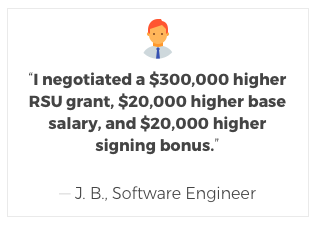
I recently worked with J.B., an experienced Software Engineer who had a strong offer that we turned into an amazing offer:

Testimonial from J.B., a Software Engineer

And the best part is that I love negotiating job offers, so it’s a lot of fun for me while being valuable for my clients.

If you or someone you know might benefit from salary negotiation coaching, here’s where you can learn more and apply for a 15-minute intro call:

>> Learn more about salary negotiation coaching

Where was this video BEFORE my first time skiing?

I couldn’t see through all the snow spraying me in the face, so I just closed my eyes and waited for impact. Another skier was trying to stop before he ran me over, and he barely missed me. I had fallen – again – and couldn’t get up.

This was my first ski lesson. It was not going well.

Even better, the skier trying to avoid me was my good friend and instructor, Scott. He was much better than I was and he didn’t have much patience for teaching a newbie how to ski.

I would just sort of point myself down the mountain and try to maintain some control while zipping down in a straight line. When I eventually got to the bottom, I would either coast to a stop or intentionally wipe out to avoid hitting anyone.

It was awful, and I was content to never ski again.

Then my friends convinced me to give it one more shot, on powder this time. So I’m heading to Colorado next week to try again. They insist it’ll be a lot more fun than I remember.

We’ll see!

It’s a big investment—time and money—for something that could turn out to be really un-fun. So I put on my “learn a new thing, even if it might be unpleasant” hat and started doing some research.

I found this fantastic video on YouTube—it’s exactly what I needed:

How to ski | 10 beginner lessons for the first day of skiing

What impressed me most is how the instructor anticipates almost every fear that I have about skiing. “How do I turn?” “What if I fall?” “What if I accidentally end up on a slope that’s uncomfortably steep?”

He’s been teaching for so long that he’s heard all of those concerns before. His list of “10 beginner lessons” probably came directly from hundreds of terrified students who have said, “What if I fall? How do I get up again?!” as they pictured themselves stuck on the side of a mountain, people zipping by as they struggle to stand up, for hours and hours and hours.

After watching that short video, I have enough confidence to give it a shot. I’m still going to take lessons the first day, but I’m a lot less worried about embarrassing myself than I was before.

Most people feel the same way about getting a raise. Maybe they tried it once before, but it didn’t go very well. So they gave up and decided to just wait for their next raise to come along whenever it happens to come along.

Sometimes, they don’t even get that far—the idea of asking for a raise and having to defend their request may be so daunting that they never even try.

Does that sound familiar?

Now it’s February again and most companies are gearing up for performance evaluation season.

You know you’re underpaid, and you want to do something about it, but you don’t know where to start. Last time you tried, nothing came of it, so why try again?

This year can be different with Get Your Next Raise, a simple way to learn the 7 key things you need to get your next raise.

I’ll be your expert instructor showing you how to get your next raise in just 7 short video lessons with clear action items to help you make steady progress to your goal.

I’m opening up registration soon, and you can get an exclusive launch-day bonus when you join the early access list! ?Ready to finally get paid what you’re worth?

>> Join the early access list for Get Your Next Raise

My first 15k race didn’t go well

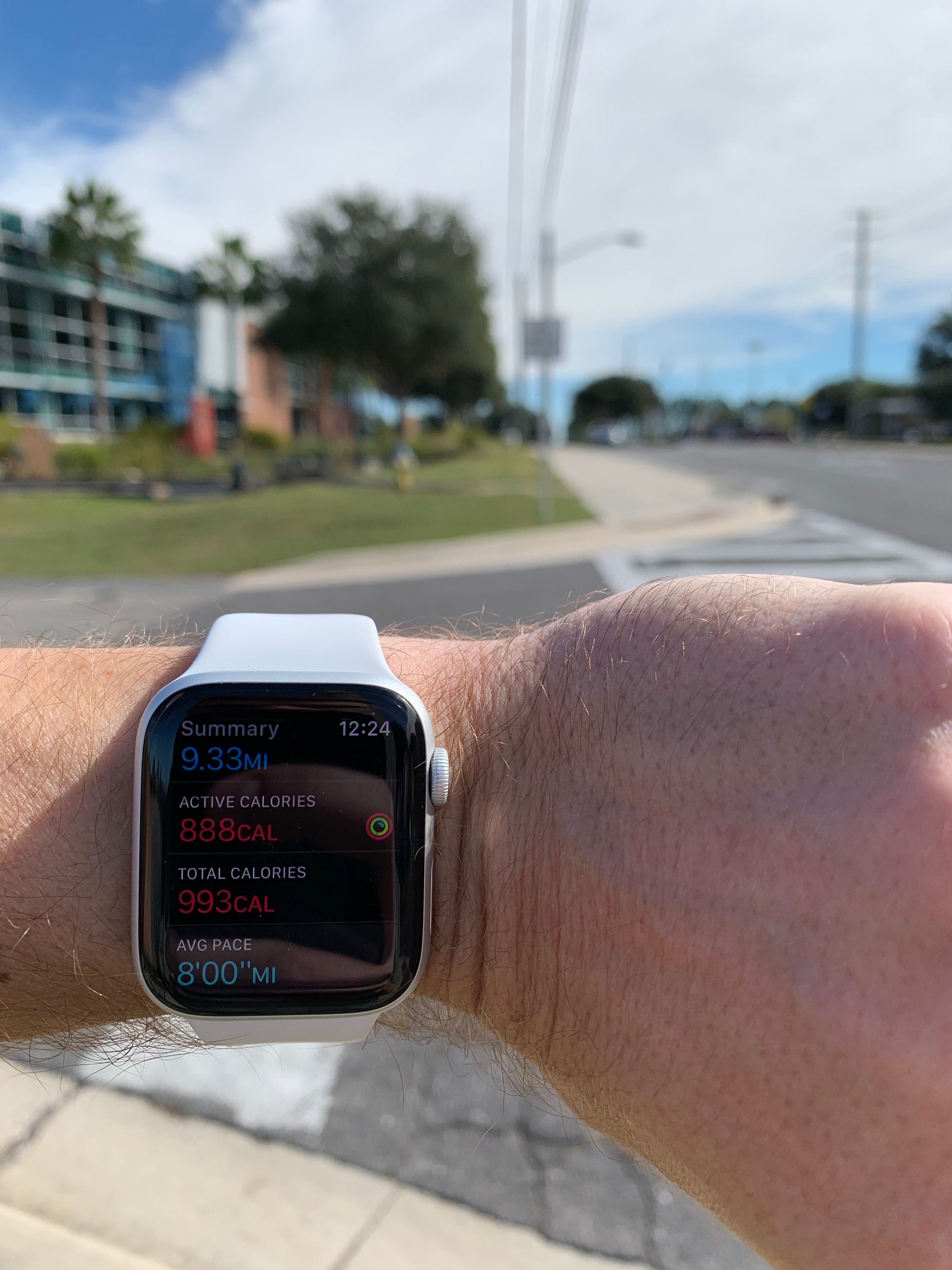
I ran my first 15k (9.3 miles) this weekend, and it didn’t go as well as I’d hoped. The official race results say it took me about 1 hour and 20 minutes to finish with a pace of about 8:38 per mile.

At first, I was pretty upset with myself because I hoped to be much faster. I tried to go faster, and kept telling myself, “Ok, it’s time to start moving!”… but that extra boost just never came.

Then I talked to a friend of mine, and he reminded me of a pretty important detail: I was recovering from the flu, so I was probably dehydrated and of course I didn’t run a very fast race. I probably shouldn’t have run at all, so finishing with a decent time was actually a great result.

The more I thought about it, the more I realized there were a lot of positive things about the race, even if I didn’t run a great time. I ran the race with two friends, and it was fun to see them run well and to encourage each other. I ran further than I’ve ever run before, and I felt pretty good despite the flu. I even experienced my first “runner’s high”, which I previously thought was just a myth.

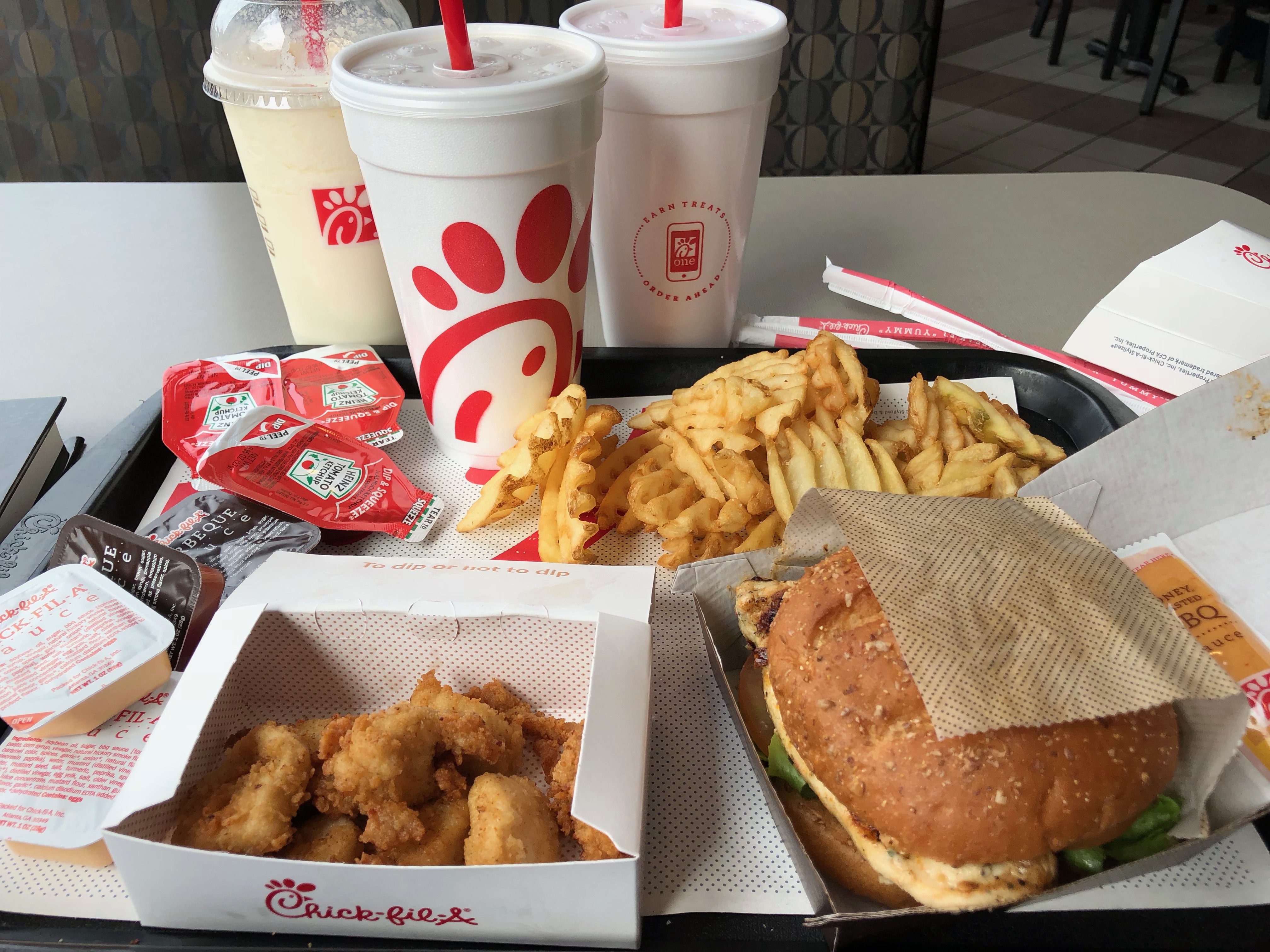
Plus, I went to Chick-Fil-A for my post-race meal, and I ordered enough food to feed a small family.

My post-race meal at Chick-Fil-A

There were a lot of positive things about the race, even if my time wasn’t what I had hoped for.

Sometimes the value in doing something is the thing itself.

I think this applies to our work, too. It can be tempting to look for “business value” or “promotion potential” behind every little thing we do, but that takes all the fun out of it.

Don’t forget to look for opportunities to do work that you enjoy, just for the sake of having some fun. Not only does that make it easier to finish the hard things, but you might find a whole new fun dimension that you can add to your work.

Using micro goals to achieve macro goals

Goals are my best tool for staying motivated. I have macro goals—big things I want to accomplish—and micro goals that support those macro goals—small things that give me easy wins while making progress toward my macro goals.

Before last January, I had never really been A Runner™. I had run before, but mostly as a social thing where I would join some friends for a run from time to time. I would also occasionally run for exercise, but that was rare.

That changed last January when a friend invited me to hop into a running group with a bunch of other friends. It was the New Year, and I was feeling that post-holiday sluggishness after eating everything in sight for the past couple months.

“Sure, why not?”

Running is hard, but it was especially hard when I first started. My body just wasn’t used to it, so everything hurt. The only way to keep myself motivated was to set some goals.

My first goal was pretty easy: Run and finish a 10k race with some friends in April. But as that race got closer, I realized I would need to adjust this goal to keep motivated.

I knew that if my only goal was “finish a 10k”, then I would lose motivation after I finished that race.

So I set a new macro goal: “Finish this same 10k race with a sub-8:00-per-mile pace.” Now I had one year to improve my pace by a little more than one minute per mile.

But that’s a pretty daunting macro goal, so I set some micro goals to support it:

  • MACRO: 10k (6.2 miles) – Sub-8:00 pace
  • Micro: 5k  (3.1 miles) — Sub-7:00 pace
  • Micro: 1 mile – Sub-6:00 pace
  • Micro: 400m (1 lap around a track) – Sub-60 seconds

All of these micro goals are challenging, but I don’t think any of them are out of reach—that keeps me motivated to keep training.

A couple weeks ago, I hit my macro goal, so now I need a new one. I haven’t achieved any of my micro goals yet, but training for them directly contributed to finally achieving my macro goal.

That’s the value of micro goals—you can win directly by achieving them, and you can win indirectly by achieving the macro goal they support.

So where do you start?

  1. Stop and think about your current macro goal for your career. If you have one, make sure it’s achievable. If you don’t have one, now is the time to set it. An example of a good career macro goal might be, “Become a people manager in the next two years”.
  2. Once you’ve defined your macro goal, support it with micro goals. These goals are related to your macro goal, but much smaller in scope, and thus easier to accomplish. Using that same example, some micro goals might be, “Take a leadership training course in 2018” and “Find at least one junior team member to mentor this year”.

When you set your macro goal and back it up with micro goals, then you can focus on smaller wins with those micro goals while still making progress toward your macro goal.

This isn’t working

Nick Saban did something truly remarkable on Monday night: He benched his starting quarterback and brought in a backup for the second half of the National Championship football game.

It’s hard to describe how crazy this is – it’s never happened before.

Football coaches are notoriously stubborn. They learn a system that they like, and they hold onto that system at all costs. And this often gets them fired as they start losing games to newer coaches who have figured out how to beat their go-to system.

But Nick Saban isn’t an ordinary coach. He’s probably the best college football coach ever because he’s constantly evaluating the situation and looking for opportunities to adjust.

In this game—the most important game of the season—he evaluated his game plan, said THIS ISN’T WORKING and switched to a completely different game plan at half time.

I call this “optionality” – maximizing the number of options available at any time, and having a plan to choose and execute the right option for a given situation.

This wasn’t some sort of knee-jerk reaction to falling behind: They had practiced for this, and they ran a totally different offense with their backup quarterback in the second half.

AND IT WORKED! His team, the Alabama Crimson Tide, came back and won the game!

Optionality and your career

You knew this tie-in was coming, right?

We can all learn a lot from Nick Saban’s strategy in the National Championship. If I had to sum it up in one sentence, I would say…

Always keep an eye out for new options and have a plan to take advantage of the best options when your current plan isn’t working.
An easy way to increase your career optionality is learning a new skill—a programming language, software tool, or soft skill—so you’re ready for an opportunity that might be available soon. A harder way is to earn an advanced degree (like an MBA) or certification.

This is a big shift in thinking, but it’s worth it: Instead of just waiting for new opportunities to present themselves, you can proactively look for new options to take advantage of them.

That’s how you improve the trajectory of your career.

Fearless Salary Negotiation will show you how to proactively pursue raises and promotions using methods that work. Check it out if you’re due for a raise!

>> Click here to learn more about Fearless Salary Negotiation

Tough career advice over lunch at a cheap BBQ joint

“What are you doing for lunch today? Wanna go to Sonny’s?”

I was a Project Manager on a team of about 8 people at a company of about 30 people.

Still, it was a pretty big surprise that my boss wanted to go get cheap BBQ for lunch.

I had been doing pretty well, impressing clients and even winning some awards. My co-workers seemed to like working with me. I tried to give good input and share my opinions in the right situations.

But I could sense this wasn’t a back-patting sort of lunch—Humble Pie would probably be on the menu.

Sure enough, my boss had one central message for me:

“Your input in our team meetings is often critical but thoughtful. And that’s good—we need that kind of input to keep improving as a team. But the way you share your input and accept feedback could be more collaborative and less harsh.”

He told me my body language was negative. I didn’t seem to be engaging to find solutions so much as simply venting about my frustrations. When my work was scrutinized, I wasn’t open to suggestions that could help me improve.

This was pretty hard to hear, and I didn’t take it well at first (reinforcing his reason for sharing this feedback).

But the more we talked, the more I understood that the actual words I spoke were only part of the equation. We work with people, not robots, so our facial expressions, body language, and tone all contribute to how others perceive us.

I began to see that he was simply advising me to get out of my own way. By seeming standoffish and resisting input, I was making others less likely to offer feedback that could be valuable for me and our team.

I made two major adjustments that I still use today:

  • I forced myself to actively listen to all feedback without passing judgement in the moment.
  • I decided that I would not criticize something without having at least one thoughtful solution to the problem.

If you’ve sat in a meeting with someone who has no idea what they’re talking about, then you know how hard these things are to do in practice.

So it took a while to make these adjustments, but they paid off in spades.

It became easier to solve difficult business problems because I really listened when my colleagues identified things we could improve.

I also found that I had access to more unique opportunities because I became known as a thoughtful collaborator who could work with a team to solve difficult problems. Those opportunities helped me get promoted faster and get better paying jobs with more responsibility.

I’m glad my boss took me to lunch and shared difficult feedback over cheap BBQ that day. My career has been much better for it.

Something to think about

If you took yourself to lunch to share one piece of career advice, what would it be? That might be a good place to focus your energy as we head into the home stretch of 2017.

The Tick-Tock of my BBC News Channel Interview on Live International TV

I got up and went to Starbucks like I do almost every morning. That’s where I go to get some coffee, catch up on the news (specifically, that means reading Twitter), and plan my day. I like having a routine, especially in the morning, because it reduces the number of decisions I have to make when I’m sleepy and my brain isn’t fully functional.

8:00 AM Eastern Time

So I got my coffee, found a table by the window, and popped into Tweetbot to see what was happening. I saw the little dot that said I had a new mention, so I checked it.

That’s what I saw. The BBC? Interesting! I replied right away and we did the “follow each other so we can DM” dance.

8:05 AM Eastern Time

I wrapped up coffee time and headed in to my office, which is about 2 minutes from Starbucks. It would take a few minutes for Tammi to follow me back and DM me, so I figured I might as well move to my office so I could set up for my interview.

At this moment, I wasn’t even sure what kind of interview we were talking about. Most of the time when I get this sort of request, it’s for either an email interview or a phone interview, and those usually end up published online.

So I was thinking this might be a phone interview that might be aired on TV or transcribed for quotes for online, TV, or radio use.

To be clear: I had no idea I was going on national TV soon.

8:17 AM Eastern Time

Tammi DMs me her email address and lets me know that they’re on air in 45 minutes, and would I be free then?

Now I know this is a live interview. I’m still not sure if it’s audio-only or video. I’m assuming audio-only.

8:21 AM Eastern Time

Tammi emails me with a summary of what they’re talking about and asks some questions to give me a sense of what sorts of thing I might be asked on the air.

She also mentions that it would be great if we could do a live interview for TV, and asks if I have Skype.

“…LIVE FOR TV.” ?

I confirm that will work and answer the questions she asked to show that I know what I’m talking about.

As an aside, I’ve found that any time I’m asked questions about my subject, giving very thorough answers is almost always the best way to go. It demonstrates my expertise and gives the asker as much information as they need so that can pare it down to whatever they were looking for. Over-delivering in this particular area has gotten me a ton of good opportunities to contribute to large outlets.

We also exchange a few more emails about logistics like my geographic location.

Meanwhile, I start setting up my office for a Live TV interview. I cleared my whiteboard, raised my laptop on a pile of books so the webcam was eye level, set up two super-cheap desk lamps I keep handy for key and fill lighting, and began testing everything to make sure it looked and sounded ok.

8:34 AM Eastern Time

Tammi asks for my phone number so a producer can reach out to me to start getting ready to go on air.

I continue monkeying with my setup so it looks as professional as possible on such short notice.

8:42 AM Eastern Time

A producer from the BBC News Channel calls me to confirm some details and tell me what’s going to happen.

This call lasts one minute.

I continue fiddling with technical stuff and testing things to make sure everything works. I mess with my bookshelf so it’s not totally barren. I drink water to make sure my throat isn’t dry. I fire up my lights so they can warm up in time. I talk to myself out loud a lot so my voice warms up as well (I’ve been awake for about an hour at this point, so I’m still feeling and sounding sleepy).

I log into Skype and hang out waiting for the BBC to call.

8:58 AM Eastern Time

The BBC calls me on Skype. A different producer this time.

He does some basic checks to make sure everything is ok. I’m on camera now and planted in front of my laptop. I won’t move a muscle for the next 12 minutes.

I don’t see anyone on the other side, but I can hear Shaun Ley interviewing a guest and talking. There’s a commercial playing.

9:06 AM Eastern Time

Shaun Ley is talking about me. Now he’s talking to me, but I can’t see him. All I see is a green dot on my MacBook, and some stars from the bright lights in my face.

Shaun asks me some questions and I answer them while I continue staring at the green dot.

9:09 AM Eastern Time

Shaun and I are finished talking and a producer thanks me for my time. We disconnect on Skype and my 15 minutes is over.

In only an hour and nine minutes, I had spoken with three BBC producers over four different mediums, plus talked with Shaun Ley on Live TV.

But my time with the BBC wasn’t quite over.

1:06 PM Eastern Time

Here we go again!

This one was a slower burn, but the tick-tock is still interesting.

I exchanged DMs with Sophie and sent my phone number so we could chat about the interview.

1:34 PM Eastern Time

Sophie says she’s calling soon.

1:45 PM Eastern Time

Sophie calls for an exploratory chat where she asked several questions about different aspects of salary negotiation and the gender pay disparity.

The interview would be quite a bit later in the day, so I think she was trying to get as much information as possible to enable them to ask questions that dovetailed with their programming while complementing other discussions they would have over the next several hours.

We wrap up after 16 minutes and I’m told the interview should be at 6:05 PM Eastern Time, and that they’ll call me a few minutes before that.

6:01 Eastern Time

A BBC 5 Live producer calls to make sure everything is set up. We do some technical tests to make sure they can hear me and then I am in the queue.

I can hear Stephen Nolan talking with a Sky reporter and the conversation is a little… contentious? BBC News and Sky are competitors, so this is to be expected.

I confess I was a little nervous that I might be walking into a tricky situation, so my guard was up a bit.

The interview with the Sky reporter went a little longer than I expected, but then I could hear Stephen transitioning to our interview.

About 6:15 PM Eastern Time

I’m on! This was a much less difficult interview logistically, but the questions were more challenging. We didn’t have as much time as I expected, but it was a good interview overall.

6:23 PM Eastern Time

The interview was over, the producer thanked me for coming on, and that was it.

Here’s my BBC 5 Live radio interview: