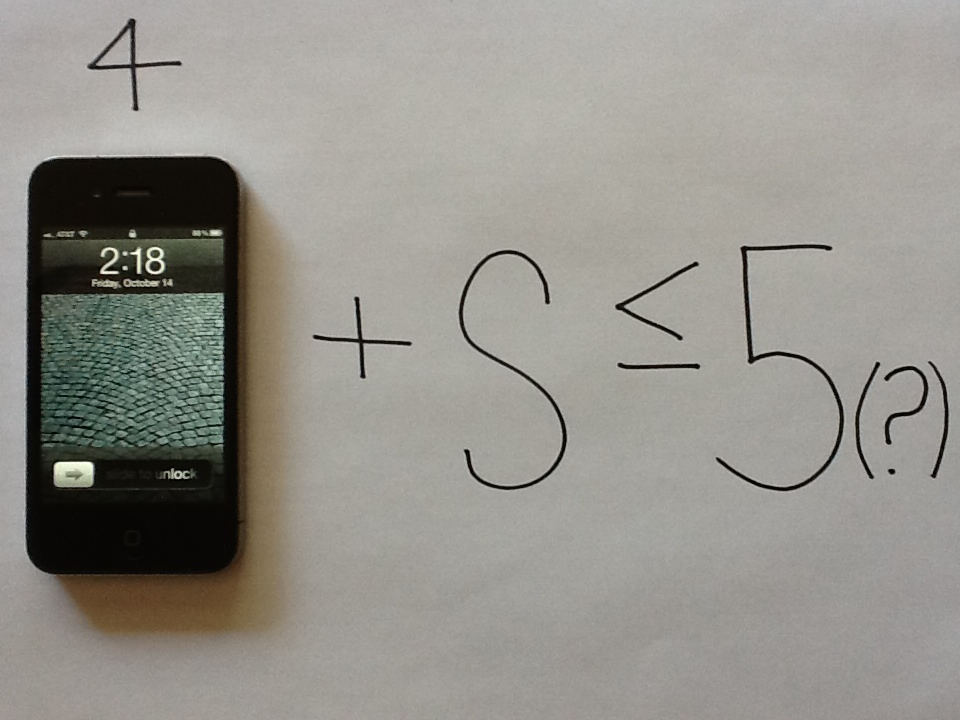
My initial thoughts on the iPhone 4S

NOTE: This post is written mostly from my perspective as an Apple fanboy. Pretty soon, I’m going to do a more detailed post from my perspective as an Apple investor.

Back in June, I wrote about the WWDC 2011 Keynote and how I was ok with it. The basic idea was that I liked Apple’s focus on software since I felt their hardware was already far and away the best hardware out there. Of course, I was mostly focused on the iPhone and most of that post brings everything back to iPhone. Even after my thumbs-up on iOS 5 and the other software improvements they announced (iCloud, e.g.), I was still holding out hope that we might see an iPhone 5 this year. At the time, I was expecting it in September, and now we know that the new iPhone was announced the first week in October.

So how do I feel about the iPhone 4S? Mostly good and maybe a little bit disappointed.

The software

I think Siri is really, really cool. It’s also sort of necessary for the grand Apple revolution I predicted in 2009. I was starting to get a little worried that Apple took a shot at hands-free interaction with Voice Control, and then gave up when it wasn’t a smash hit. I’m glad they’re launching Siri and I think it’ll be a major feature of most hardware in the future.

I’ve already written about how much I like the stuff they’re doing in iOS 5. I like it a lot so far, and I plan to write a bit more about it in a separate post.

The hardware

Many of the iPhone 4S updates are actually hardware–faster processor, more flash memory, better camera (for still and video), better antenna and potentially faster GSM data speeds–but the phone itself looks the same as the iPhone 4. I’ve said a few times that I am constantly impressed with the look and feel of the iPhone 4 (the phone itself and its screen). Over a year after I got it, I would still occasionally look at it and think, “Man, that’s an incredible looking phone.” It just looks good, and I think it’s the best looking smartphone on the market (even now).

I am constantly surprised at the viewing angle and clarity of the Retina display, and I’m frequently grossed out by the terrible screens on some of the giant Android phones. The other day, I saw someone texting on an iPhone and their screen looked terrible. I thought, “Woah. Why’s that iPhone’s screen so yellow and washed out?!” It turned out it was an Android phone (the texting interface on Android and iPhone are very similar) with a terrible screen. Yes, some phones have a larger screen, but their resolution is often the same as or less than a Retina display, the viewing angle is terrible and the colors are just all wrong. With smartphone screens, I’m just not convinced that bigger is better. I’d still take the iPhone 4’s Retina display over any of the 4″+ Android phones.

Still, I confess I was hoping to see a sexy new iPhone 5 announced last week. A bigger Retina display would be really awesome. But bigger Retina displays are hard to make, and they’re expensive, and nobody else is selling them yet. I understand why Apple chose not to go that route yet.

Overall

All in all, I’m almost totally satisfied with the iPhone 4S. I would’ve liked a bigger Retina display, and it would’ve been cool to have NFC for payments and such. But by and large I think the new 4S has pretty much everything I was hoping for: a 64GB option, faster processor, faster data, Siri and iOS 5. I still think iPhone is the best phone out there, and I think Apple is making enough improvements with the iPhone 4S that it will continue to be the best phone for the next year. I think Apple is wisely focused on software this year because that’s where they can make big gains on the competition. By this time next year, the software and hardware on all higher-end smartphones will start to look the same, and then Apple will release the iPhone 5 with a bigger Retina display, more speed, NFC and some other bells and whistles that will once again leave its competitors in the dust. Since the iMac, Apple has been moving slow and steady, consistently beating the competition and out-innovating. That’s what they’re doing with the iPhone 4S, and I think their strategy is the right one.

R.I.P. Steve

Steve Jobs has died. That sentence seems to carry a lot of weight for me personally, and also for a lot of my friends. Twitter went totally nuts when Apple announced Jobs’ death, and I could detect a genuine sadness in many of the tweets. I have recently lost my grandmother and uncle, and their losses still affect me quite a bit. At first, I felt a little guilty for feeling sad that Jobs has died but, the more I thought about it, the more it made sense: The sadness I feel at Jobs’ death is different than the sadness I’ve felt as I’ve lost two of my closest family members.

Here’s why I’m sad that Steve Jobs passed away.

He was a visionary, and I wonder how much more he had to offer. His ideas, his vision, his ability to execute on his vision–those are literally unparalleled. He pushed technology farther, faster than anyone before him. And yet he was only 56. What would he have done with another 10 years? or 20? 30? His loss could be one of the single greatest brakes on innovation that we have ever experienced. And I’m using “we” like “mankind” or “our civilization”. What have we all lost along with the man?

I realize how melodramatic that sounds. Let me put that question a different way: If we made a list of innovators, of people who had the greatest influence on the trajectory of technology and innovation, who caused civilization to change most dramatically, where would Steve Jobs be on that list? He’d have to be at the top, right? Maybe not the top, but at the top. Generally speaking, if that list existed and we just looked it over and asked, “What would we lose if someone at the top of this list died 10, 20 or 30 years before his time?”, what would we say? Think what Einstein could have done with 20 more good years. Newton. Other visionaries and changers of the world. It’s difficult to not feel that my personal quality of life will be less than it would have if Jobs were to live another few decades. I’m not saying this in a selfish, boo-hoo sort of way, but in a wonky, “what sort of things will we never see or experience as a result of Jobs’ untimely death?” sort of way.

I also think that, as with most deaths, Jobs’ passing brings into stark contrast how tenuous life is. It’s a reminder of our own mortality in both a non- and a super-cliché way. He had means that very few people had, and yet modern medicine, money, technology, none of it could keep him alive. There’s a very real sense of, “If Steve Jobs can get sick and die, what chance do I have?” If there was a luminary for material attainment and success, Steve Jobs was it. And it wasn’t enough. We are fragile. As I write this, I feel like I’m sort of peeking down into an existential rabbit hole. I don’t want to go there, but I have to at least look for a while. What did Jobs take with him? What did he leave? Where did he go?

His death is also inspiring. I don’t think there’s any doubt that he loved what he did, and I think that love showed through in everything that he did with Apple. I also think it colored his world and caused him to take specific actions and make specific choices that made his life more fulfilling. That’s really inspiring to me. All that’s left with us is his legacy, which is substantial. His 2005 Stanford Commencement address is an incredible speech, and he backed it up. He encouraged people to do what they loved and to love what they did. His perspective may have indirectly inspired me to quit a job I didn’t like; it may have inspired me to do something that I love instead of something just to make money. How many others has he inspired over the years? He was a visionary, he was inspiring and he will be missed.

2011 Seattle Trip Diary (cont’d)

I ended up getting almost two more days in Seattle after Vancouver, so I figured I should capture that. I didn’t think I should append two more days to a weeks-old post, so I’m creating a new post.

Day 7: I took the bus from Vancouver back to Seattle, arriving around 3:30 PM. That was my first time taking a (non-charter) bus between cities and it wasn’t bad at all. I had loaded up my iPad with some TV shows, and I was still working on “The Big Short”, so I had plenty to keep me busy.

Once I was in Seattle, the food tour continued with a stop at a Vietamiese place called “New Saigon Cafe”. They had really, really cheap sandwiches (like $2.50) that were pretty tasty. Since we had some time to kill, we hit Molly Moon’s on the way back to Case de Huge (@hugepoker‘s place). I went a little nuts, getting a “split single scoop” (which is just a “single”, but two flavors instead of one) plus an extra kid’s scoop. I got Scout Mint, Vivace Coffee and Salted Caramel in a waffle cone. It was delicious.

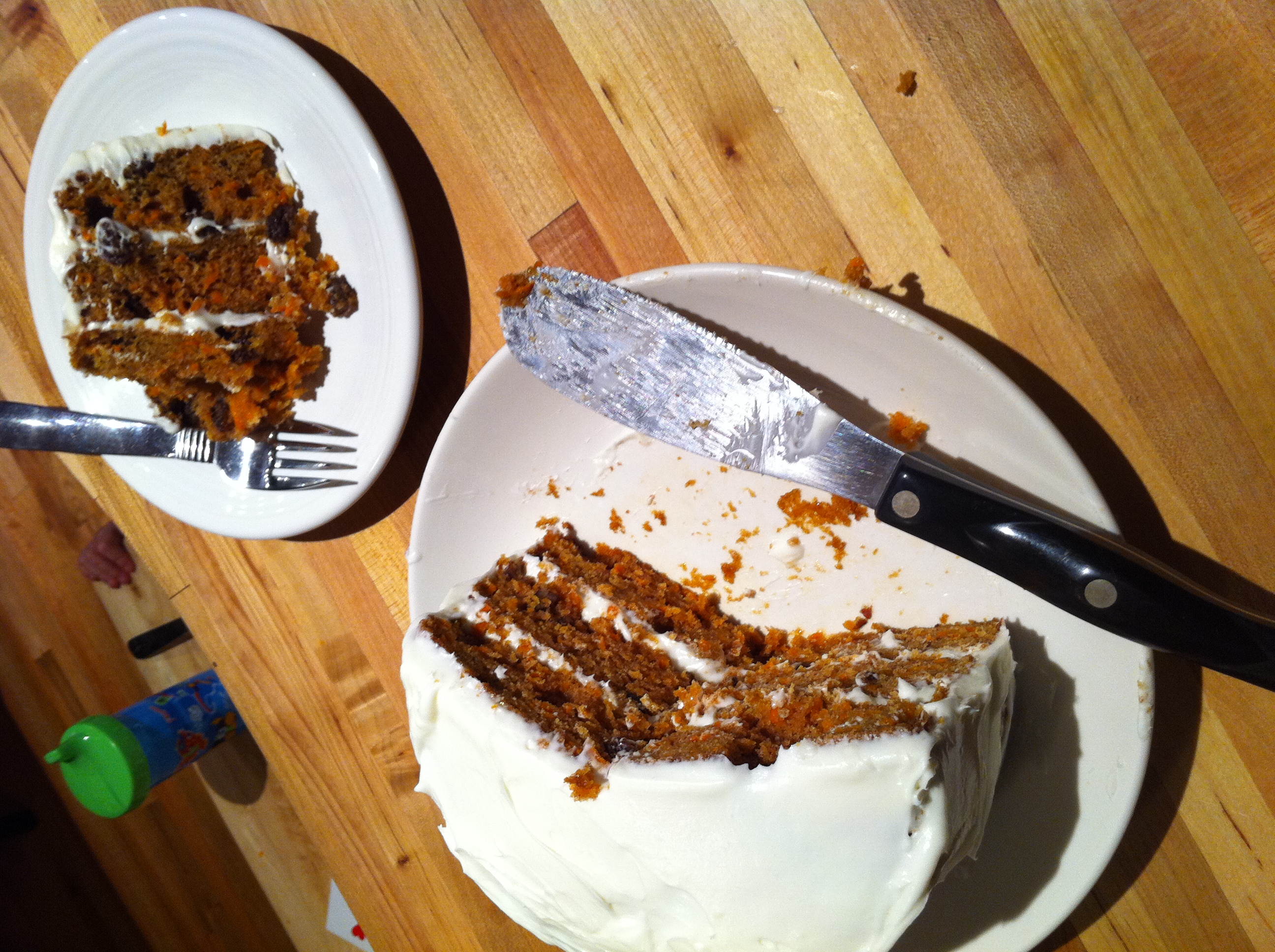
After a quick food-coma nap, I headed over to Dan and Maya’s place, where we had another excellent salmon experience. I’ve already mentioned (in my 2011 Vancouver Trip Recap) that I’ve been inspired to learn how to make delicious cakes, and word had gotten back to Maya, so we made a carrot cake. It was pretty delicious and I learned a lot about cake making.

This cake making thing could be dangerous for me because I’m basically incapable of ignoring any dessert or sweets if it’s in my vicinity. Acquiring the ability to make my own delicious cakes could be the end of me.

Anyway, we had dinner and dessert, and then I went and crashed back at Case de Huge.

Day 8: I started off the day at Lighthouse Roasters, where I did a lot of reading and a little work. Then it was time for lunch.

Some friends of mine are involved with a start-up, and I was invited to tag along to a meeting among a few of the investors. It was really interesting as I got a chance to see and hear how investors think when considering their options for funding a company. I’m really interested in that sort of thing, so it was cool to eavesdrop on a real-life meeting of investors (as opposed to discussing “start-ups” in a business class).

The afternoon was pretty laid back and mostly consisted of walking around Seattle.

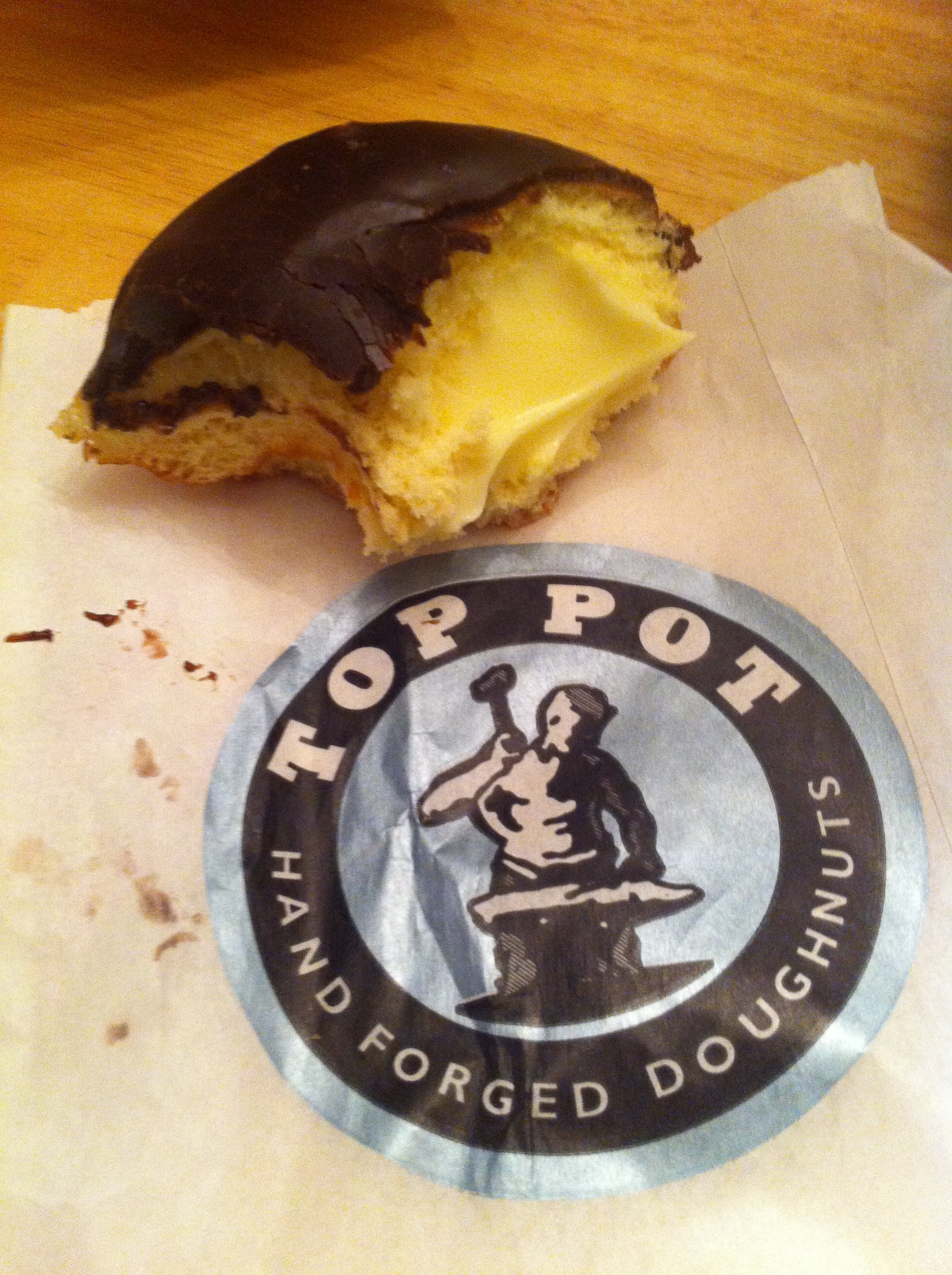
For dinner, the intrepid Jimmy Trent picked me up and I got to have dinner with his family. It was crazy to see how much his kids have grown since I saw them last in Gainesville (in late May). We had some good taco soup and brownies for dessert. Well, the brownies were really our second dessert because Jimmy stopped by Top Pot on the way to his place. He got us all donuts, and mine was a giant Boston Cream donut that looked more like a small cake than a donut.

On his way to drop me off back at Case de Huge, we made a couple stops. First, we dropped by his new employer and church home, Mars Hill Church. He showed me around and got to show off some major renovations they’ve been doing. Next up: more Molly Moon’s!

Then it was back to watch an episode of Dexter with Laurence and wife before getting some sleep before the long (full-day-wasting) trip back to Gainesville.

Things in Gainesville should be pretty typical for a while. I’m still writing a couple of books and working on some of my own stuff for the blog. I should jump right back into the old routine and hopefully we can get one of these books knocked out before the end of the year.

2011 Vancouver Trip Recap

I just got back from a two-week trip to Vancouver, so I might as well recap it for posterity. I didn’t do a “diary” because there just wasn’t enough going on to justify that format. It would’ve all been like, “Day N: Woke up and went to Starbucks to do some work. Talked poker and watched my friends play online. Watched Netflix.” I realize that most of what I write is boring, but even I wouldn’t sink so low as to write that particular diary.

So anyway, I stayed with some friends who recently relocated to Vancouver. I went to Starbucks a lot. I talked about, wrote about, learned about and watched a lot of poker. I specifically worked quite a bit on my heads-up game since I’m writing a book about heads-up strategy and both of my Vancouver friends have had very good results in heads-up play.

Otherwise, I went to see three movies: “The Help“, “Drive“, and “Moneyball“. They all appropriately received good scores on Rotten Tomatoes, so I was looking forward to all of them. “The Help” was a good movie with pretty solid acting. The story was the most compelling part, and it was a good story. “Drive” was excellent. It was violent and dark, but very, very good. Some of the acting was excellent, some was just good. “Moneyball” was really good. It’s a great story (as most of Michael Lewis‘ stories are – I’m reading “The Big Short” right now, and it’s excellent). The acting is pretty good. It’s not terribly wonky or sportsy.

As I mentioned above, I also did a lot of reading. I also watched a lot of Netflix (mostly “Parking Wars” and caught up on TV shows online. “Breaking Bad” is awesome this season.)

I also started watching “Top Chef: Just Desserts“, which is another good show from Bravo. I love desserts, I like reality TV, so this show is pretty much made for me. I decided I want to learn how to make good cakes. I mean, I eat more cake than most people, so why not figure out how to make really good cakes? On the bus trip down from Vancouver to Seattle yesterday, I brainstormed some good cake flavor combinations. The one I’m most interested to try is a ginger cake with green tea icing. Hopefully I’ll get to take a crack at that soon.

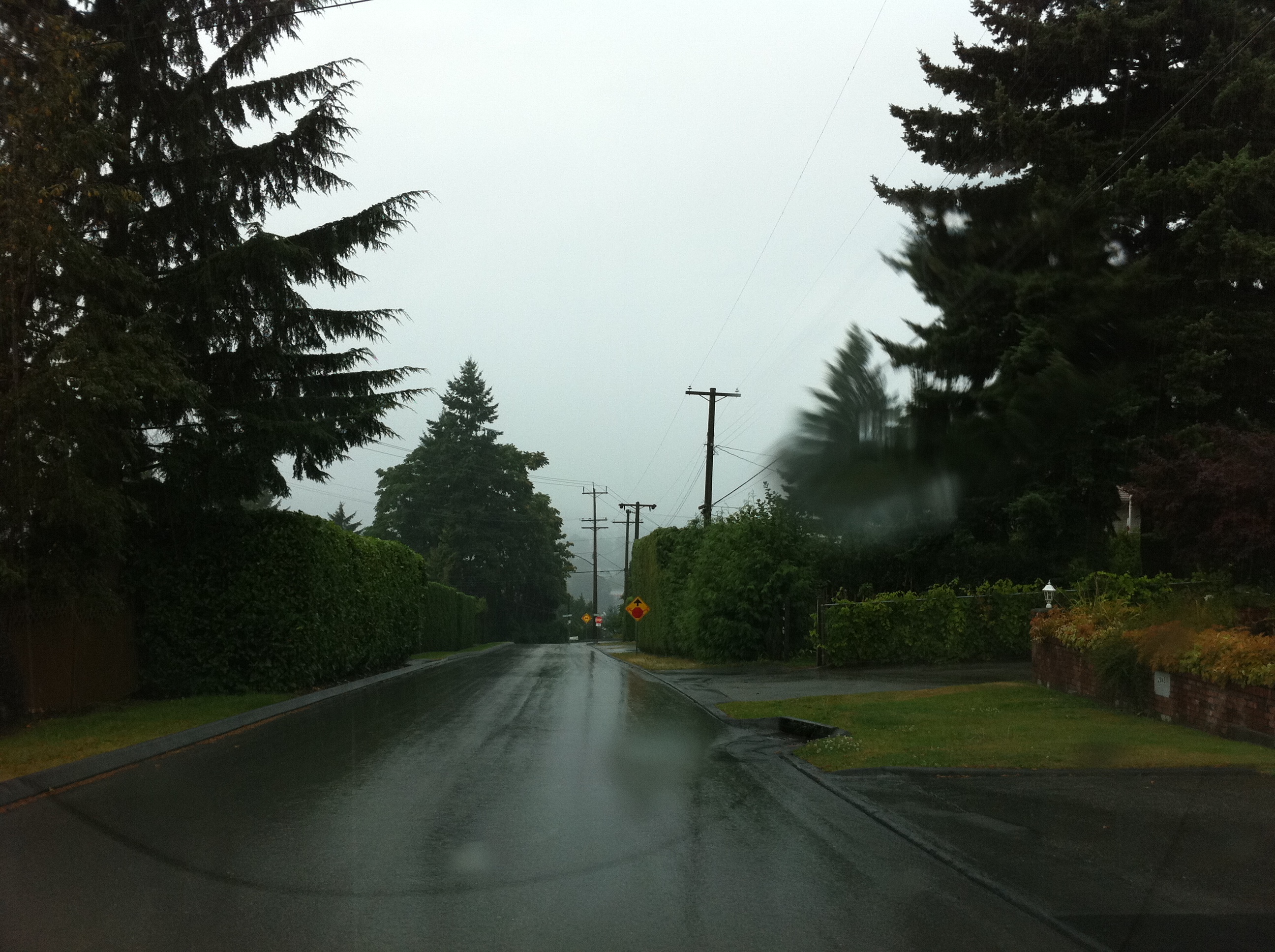
That about sums up my two weeks in Vancouver. It was nice to visit, especially since I’ve never previously been to Canada. As you can see from the pic, it was mostly dreary and rainy, but at least it wasn’t 90+ degrees and humid. Now I’ve got a day in Seattle, then I head back home to Gainesville.

Who’s the chicken NOW?!

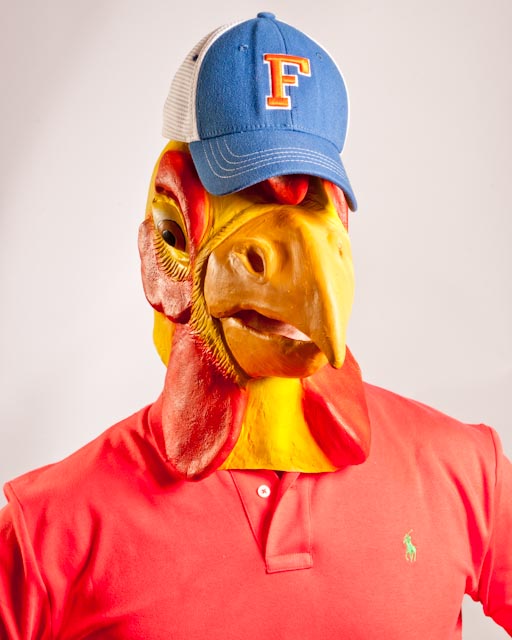
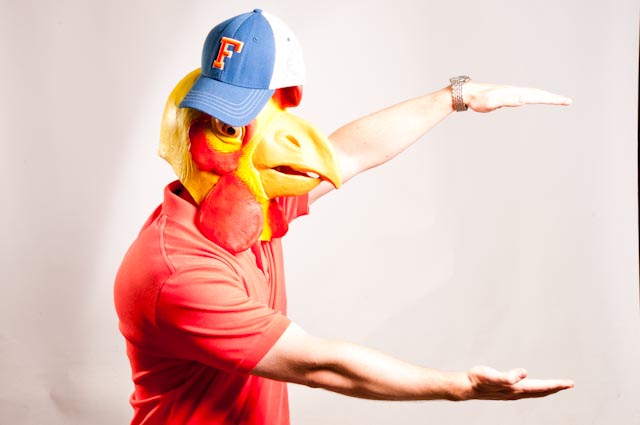
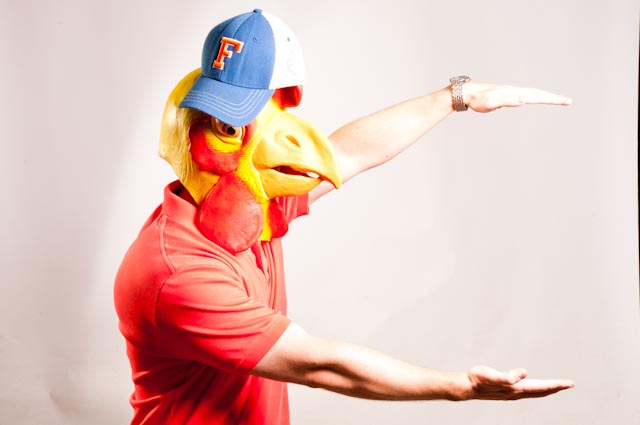
While I was in Seattle, I had a couple of meals over at Dan‘s (of Fat Yeti Photography) place. On the last night I was there, he was giving us a tour of his studio and we ended up doing a quick, impromptu photo shoot (see Day 5 of my 2011 Seattle Trip Diary post for the story). Here are a couple pics he took. I thought they were both pretty funny, and it’s always great to have my picture taken wearing a chicken head.

This one is actually my favorite (and I think everyone else liked it the best as well). I think we all like it because the chicken (I?) looks pretty confrontational.

2011 Seattle Trip Diary

Day 1: Today started pretty rough, but got better as it went on. I went to sleep about 2:00 AM and had to be back up at 4:00 AM. My plane left Gainesville at 5:20 AM and I arrived in Seattle at 9:30 AM local time. The Muckleshoot Casino, where we’re playing three tournaments this weekend, is pretty close to the airport, so Luckbox Larry and I swung by to register for Friday’s $300 tournament (we heard it was likely to sell out). Wow, that sentence was awful. So, once that was out of the way, we headed up to Seattle so I could get settled.

Once I dropped off my stuff at Luckbox Larry’s place, I met Jimmy Trent for lunch at the Green Lake Bar & Grill. It was good to catch up on Jimmy’s life since he and his family relocated from Gainesville to Seattle. After lunch, we met up with the rest of his clan at Seattle’s version of Mochï (I can’t remember what it’s called).

On my way back to Luckbox Larry’s place, I stopped off at Herkimer Coffee (recommended by Jimmy) to pick up a couple lattes (one for me and one for Luckbox’s wifey). I figure I’m basically in the coffee capital of America (the world?), so I might as well sample the goods while I’m in town, right?

By then, my head was more or less spinning because I hadn’t had much sleep. The entire afternoon is pretty hazy, actually. I did some work on the super-long post about the big hand between Vanessa and David and then managed to get a nap on the “Futon Bed”, which is the odd combination of a futon with a giant full-size mattress on top of it. It sleeps normal-er than it sounds, so I was out for an hour or so.

Next up, we all headed off to a Team Huge (Luckbox Larry’s poker-playing crew who often visits Vegas for the 4th of July festivities) dinner party, where we had some chicken stuff, some bread, salad and corn. (Did I mention my memory gets a little fuzzy from the afternoon through the rest of the day?) Then we played a quick little poker tournament (I busted first), and finally left to head back to Luckbox’s place around 11:00 PM. By now, I’d more or less been awake for 24 hours except for a nap on the plane and another nap on the Futon Bed. I guess we drove back home and I went to sleep or something.

Day 2: I originally scheduled this to be an off day so that I could adjust to the new timezone and see a bit of Seattle. That’s more or less how the day turned out. I managed to sleep till about 8:00 AM. I considered this a coup since I was afraid my body would be stuck on East Coast time. I wandered out to find a coffee shop and landed at Lighthouse Roasters. They didn’t have WiFi, but that’s no biggie since I have MyWi on my iPhone. I spent a few hours there (more editing on the Vanessa v. David piece) and then headed back up to Luckbox’s place.

I spent a few more hours getting some work done (including some work for the next phase for this site) and then we went and got takeout at Paseo, which is a kind of Cuban-Caribbean fusion and Freemont institution. In a word: superdelicious. I had the Cuban Roast sandwich and it basically blew my socks off. Then I took a nap.

For the evening festivities, Luckbox and I decided to go play a tune-up $130 tourney at the Tulalip Casino, where they HATE, HATE, HATE bags. All bags. Do not bring a bag to our casino! Uh, so neither of us cashed in that tournament and then we left WITH OUR BAGS. Hopefully my 0/2 start isn’t a harbinger of things to come this weekend.

On the way back to the abode, we stopped in for dinner (?) at Molly Moon’s. I got a 2-scoop waffle cone with Salted Caramel and Maple Walnut. It was incredible, and quite a bit more than I was prepared to eat since Luckbox’s wife was supposed to help out, but ended up bailing because she wanted to sleep instead of eating ice cream at midnight or whatever.

Then I did some reading and went to sleep.

Day 3: We had to be up pretty early today because the $300 tourney started at 10:00 AM and we were about 45 minutes away. We dropped off Alfie and then drove down to the Muckleshoot (with a Starbucks stop on the way). We walked in just as the tournament was getting under way and it was more or less like playing poker in an igloo. I felt I played pretty well, but just ran kind of bad. I took a couple nasty beats (for example, one gentleman check-called my bet with KhQh on a J52 flop and then hit runner-runner hearts to make a flush on the river) and just had trouble getting traction. My final hand, I moved in with JJ to isolate against a late-position short-stack who had already moved all-in. Of course, another dude called my all-in with AK and he hit an ace on the flop. To add insult to injury the short stack also turned a set of sevens (although it didn’t matter for me). So, my streak of sucking at coinlfips continues and I was out somewhere around 175 of 250.

I headed over to Starbucks to kill time and ended up spending about seven hours there. I got some work done, caught up on Big Brother (yeah, I watch that show, Big whoop, wannafightaboutit?), did some reading, and wrote up this here diary.

Once Luckbox Larry busted from the tournament (narrowly missing the final table), we headed back into Seattle to meet his wife and another friend for dinner. We went to May, I great Thai place that was even greater thanks to a Restaurant.com coupon. Dinner wrapped up pretty late, so we promptly headed back to the house and called it a night.

Day 4: Today was the $500 tournament at the Muckleshoot. I’ve been running pretty badly since before I went to Vegas earlier this summer, and I was hoping my luck would finally change today. As it turned out, I was in for more of the same. I ran into a few sets (once with top pair, top kicker in a spot where I could have played for stacks but managed to lose the minimum) and ended up busting on another coinflip (QQ < AK). I think I went out with about 100 left and we started with 230 or so. This coin flip thing is getting kind of ridiculous: I'm pretty sure I've busted in about half of the last 10 tournaments on a coinflip where I was ahead and where I was the one who moved all-in. I keep getting called by overcards and they keep hitting. This isn’t a situation where I’m all-in every other hand. I’m usually all-in and called maybe two or three times per tournament. Today, I was all-in once (the hand I busted). Yesterday, I think I was all-in once (when I busted with JJ < AK) or maybe twice (I don’t remember for sure). In the WSOP Main Event, I was all-in and called twice (once when I actually won a coinflip with 99 > AQ, then on my bust-out hand with AA < KK). I'm just not all-in very often, so to be constantly busting on coin flips (especially where I'm ahead every time) is just really bad luck. Anyway, I feel that I'm playing good poker, and I'm just not getting any breaks. Tomorrow is the $1k main event, so hopefully things will turn around then. The good news is that my bad run isn't affecting my play as far as I can tell. If I keep playing good poker, I should eventually have a nice score. This afternoon I watched the Gator game online, then we went to dinner at Ray’s Cafe. We sat out on the deck, which overlooks Puget Sound. I’m not really one to talk about sunsets, but we got to see a pretty spectacular sunset:

Afterwards, we all went back to the Huge Mansion and sat around talking for a while. I got a salted caramel milkshake from Molly Moon’s and Luckbox made some kind of crazy drink concoction thing complete with rosemary and a bunch of berries–it was pretty darn good.

Time to sleep. I’m going to keep playing good poker, and hopefully I’ll have a nice score in the $1k tomorrow.

Day 5: Today was the $1k Main Event at the Muckleshoot. We were expecting a smallish field, but ended up getting about 155 entrants. This tournament turned out to be a great deal because the casino added $25k to the prize pool. That worked out to $165 or so for each player, which means we essentially played rake-free and had an overlay. Pretty good deal.

WARNING: Things are about to get poker-y here. If you don’t care about poker stuff, scroll down to where you see “BACK TO OUR REGULAR PROGRAMMING”.

The field also turned out to be a little softer than we expected. It wasn’t a crazy donkfest or anything, but there weren’t too many good, experienced players to be seen. My table was a good table (pretty soft) as I saw some players playing really big pots with relatively weak hands like top pair or even second pair. I figured if I could just catch some hands, I’d have not trouble chipping up.

Well, I did catch some hands and they were either second best or got outdrawn on the river. I had a couple funky AJ hands where I was in the blinds against a middle- or late-positionr raiser. Once, I flopped second pair (KJx board) and check-called to the river. The other guy had something like 96s and rivered trip sixes. So, my play was good – I had him betting at me as a big underdog – he just happened to get there. Another time, I flopped top pair, top kicker and check-called a bet on the flop. A king hit the turn, I checked, the guy made a very big bet and I folded. This seems a little tight, but he had already seen me pay off a few times in other hands in similar spots, AND I suspected his big bet meant business. I saw him say something to the guy next to him, and I’m pretty sure the king improved his hand. I also flopped several big draws that didn’t get there. I flopped a gutshot straight flush draw (I had AdTd on a KdQd9x board) and just called bets on the flop and turn because my opponent had raised UTG and was likely very strong. Of course I didn’t improve and had to fold to his bet on the river.

In another hand, that same dude check-called my flop bet when he had Ah8h on a Th9s2s board. I had 8s2s and had flopped a flush draw and he had flopped… ace high. Anyway, he check-called my flop bet with nothing, then he led the turn when another heart hit. I called because I had a gutshot straight draw and a flush draw. My plan was to bet the river if I missed and he checked to me. Then a heart hit the river and he led out again, so I folded and he turned over his flush. What he was doing on the flop, I don’t know. So anyway, that’s how my day was going.

I went into the first break with about 13,000 chips. This was kind of short because we started with 20,000. Obviously, I was short because I’d just been slowly losing chips in the pots I described above. The first level after the break, we would have our first ante level, and I planned to step up my aggression to start chipping up. I had seen some good spots to 3-bet light (or squeeze) and I was going to exploit the next spot I saw. The second hand after the break, I had the button and the player to my right raised to 500 (the blinds were 100/200 with a 25 ante). I 3-bet him to 1,500, the SB cold-called the raise and the original raiser also called. First of all, I should say this was my first 3-bet all day, and my image was pretty tight by this level. So, it’s a little unlucky that both of those players called this 3-bet. The flop was JcJs9c and both players checked to me. I c-bet 2,400 and both players called. The turn was a Ks, the SB checked, the guy to my right bet 11,000, I folded and the SB check-raised all-in. The SB had KK (he turned kings full) and the guy to my right had QcTc (he turned a straight plus a straight flush redraw against the other guy’s full house). The kings full held up. I like my 3-bet (it was a good time to try it), but my c-bet was a mistake: The SB was a tight player and his cold-call pre-flop should have been a red flag for me. After the hand, I knew I’d screwed up with the c-bet because the SB’s range is really small when he cold-calls my 3-bet pre-flop. I had thought maybe he cold-called with something like AK or AQs, thinking he didn’t want to 4-bet, but he also didn’t want to fold. The guy to my right could have had a pretty wide range because he was getting such good pot-odds to call my 3-bet (he had to call 1,000 to win 4,000), and a lot of his range is stuff like AK/AQ/KQ and medium pairs. So I c-bet because I thought there was a good chance they both had either big cards or medium pairs that missed the flop. But, in hindsight, the SB was obviously stronger than that here. It’s a small mistake, but it cost me 2,400 chips and I don’t like that. Also, I know it’s bugging you that I haven’t mentioned my hand – that’s because my hand didn’t matter since I had planned to 3-bet light. But if you must know, I had 8d3d (it was soooooted!).

Ok, so we fast forward two hands. I start the hand with about 8,500. The guy two seats to my right open limps (he’s done this before and I’ve raised his limp before), and I raise it to 700 (blinds still at 100/200/25) with AKo. It folds back to him and he calls. The flop is AT5, he checks, I bet 1,000 and he calls. The turn is a king, so I’ve got top two pair. He checks. There’s about 4,000 in the pot and I have about 6,500 left, so I decide to just move all-in both to protect my hand (there was a flush draw out, and possible funky straight draws) and for value (he might have a weaker ace or funky two pair, and I don’t want him getting scared off if he does have one of those hands and another big card hits the river putting a four-card straight on the board). He thinks for a while and then calls with AJo. So he needs one of four queens to knock me out, and I’m a 92% favorite to double up. If you’ve ever met me, you know that a queen hit the turn and I was out.

So, I played three tournaments at the Muckleshoot ($300, $500 and $1,000). I was all-in and called three times: JJ < AK; QQ < AK; AK < AJ on a AKT5 board. Or, in numbers: 55% favorite; 55% favorite; 92% favorite. I lost all three all-ins. It’s important to note that in all three cases, I was the one who moved all-in and my bet or raise was big enough that my opponent could legitimately fold. Yesterday, I mentioned there may have been another all-in, but I can’t remember it. You may recall that I busted from the WSOP ME with AA < KK (80% favorite) a few tournaments ago, and before that I min-cashed and had three final table bubbles at the Wynn. So I’m on a little bit of a cold streak right now.

BACK TO OUR REGULAR PROGRAMMING

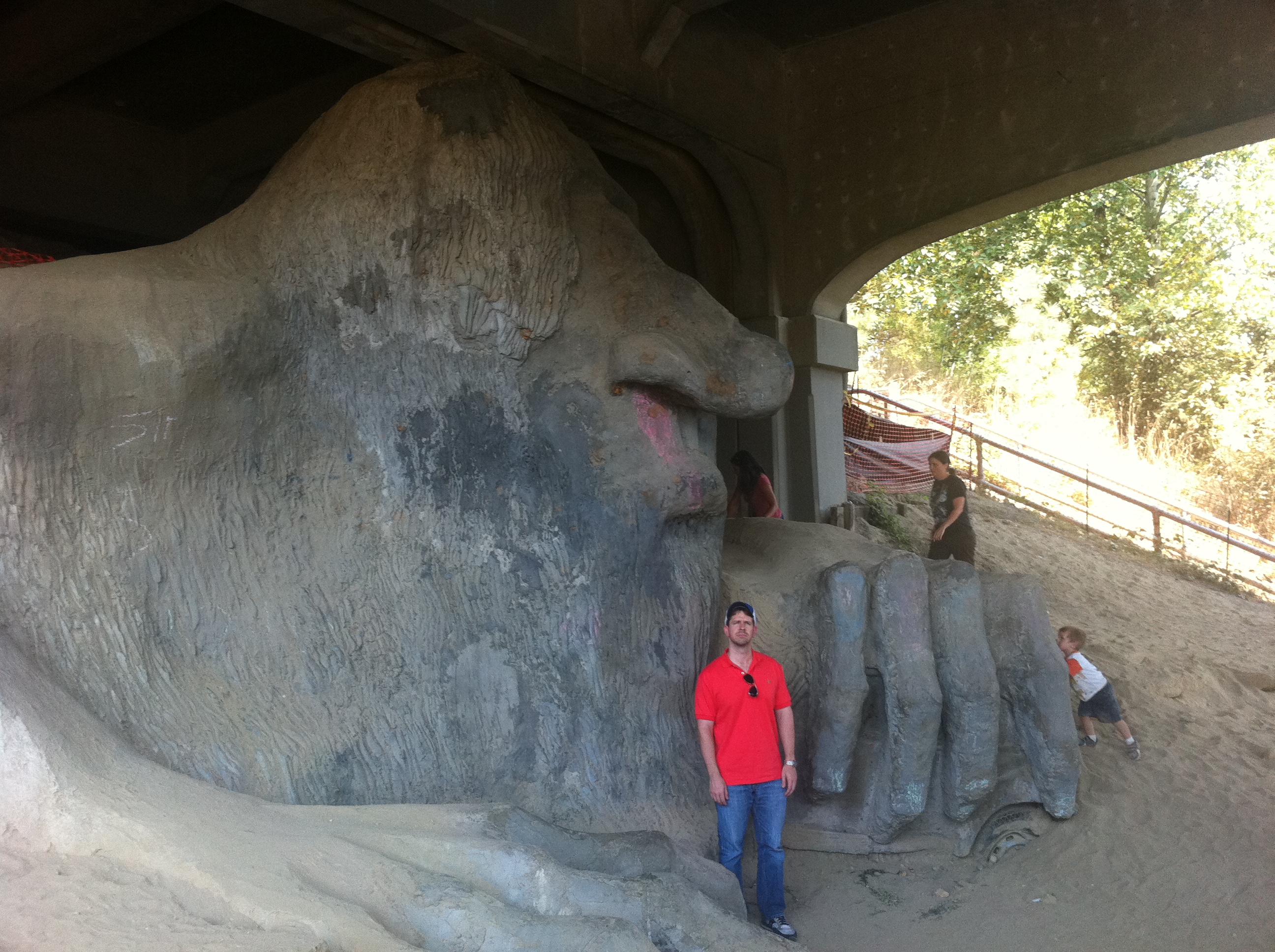
After the pokerz, we headed back into Seattle and took a detour so I could finally meet The Freemont Troll. I’d been hearing about this guy since I arrived in Seattle, so it was nice to finally put the name with a face:

Yeah, that’s a VW Bug he’s crushing with his hand. A real VW Bug.

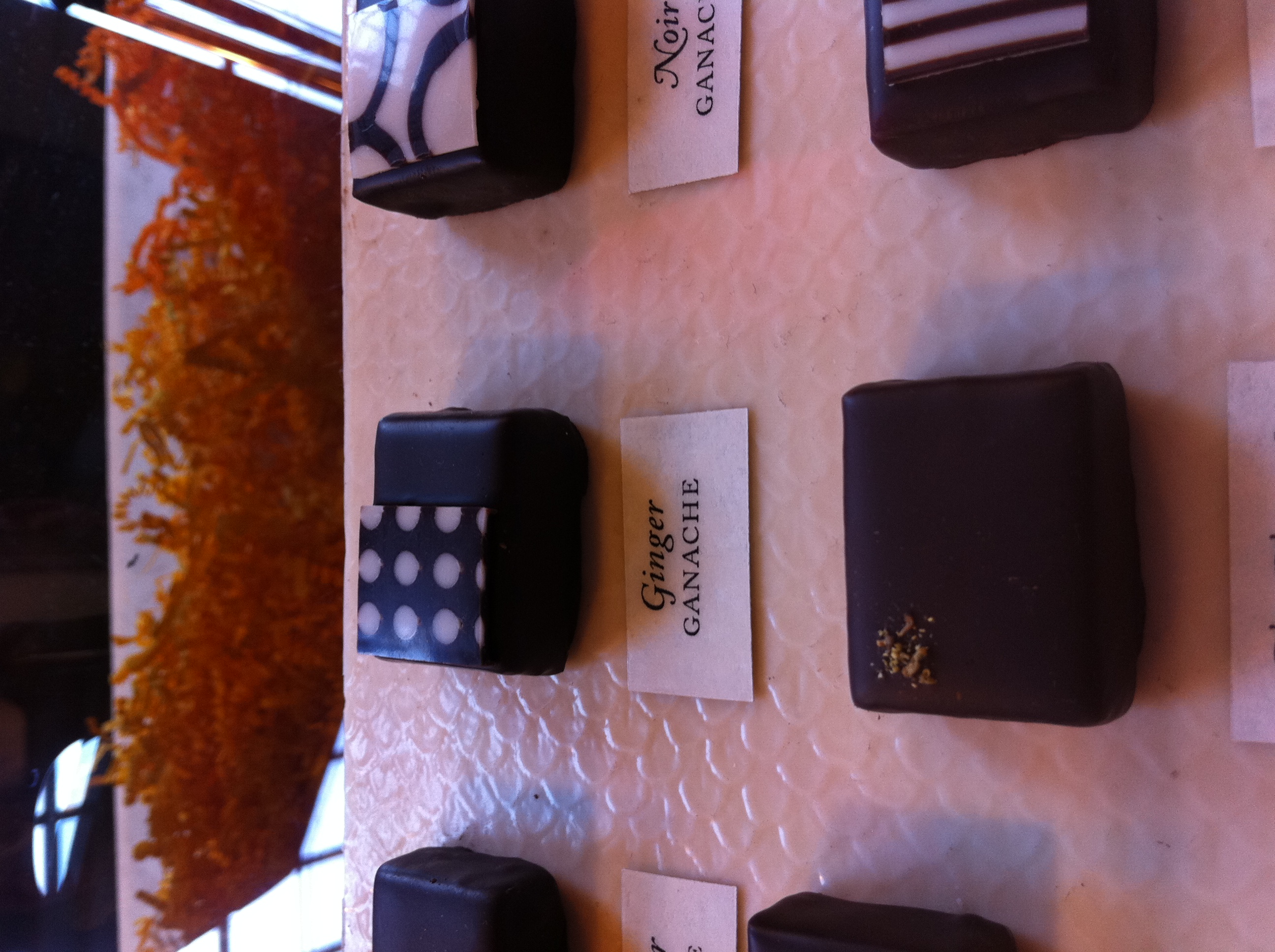
Then, Luckbox Larry and I stopped off at Theo Chocolate to get his wife a birthday present (she was kind enough to let him play the $1k main event on her birthday). Can I just say that Theo Chocolate is an amazing place where they literally just have piles of chocolate sitting around, waiting to be eaten for FREE?! It was a good thing that Luckbox Larry already basically knew what he was getting because I could’ve put away three or four pounds of chocolate with no problem if we’d stuck around long enough. It was awesome. Here’s a pic of a couple of their caramel selections:

Uh, so anyway, then we headed back to the palace and I took a nap while they went for a stroll to the market.

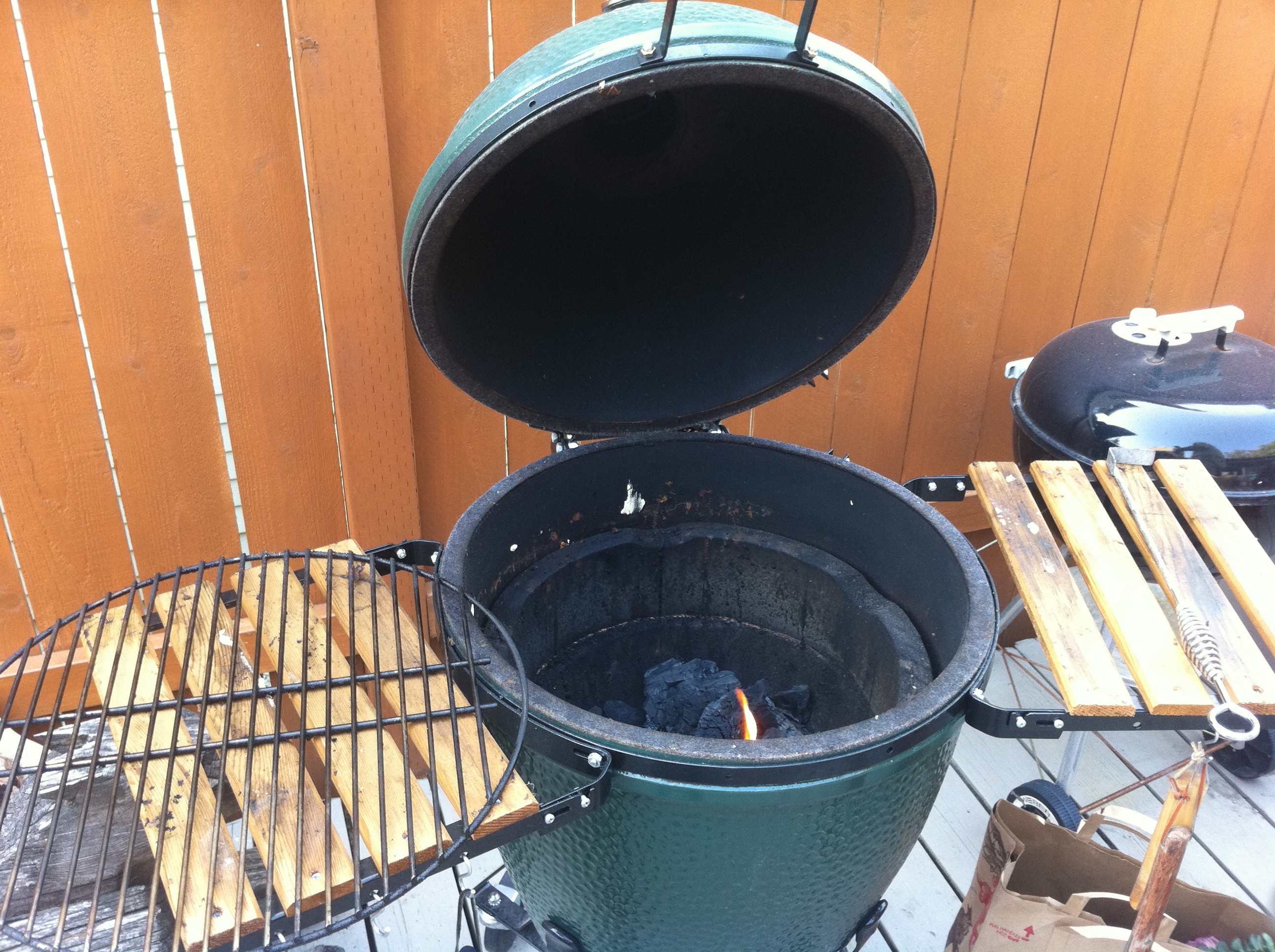
Some time in the evening, we all headed over to Dan (AKA, Fat Yeti of Fat Yeti Photography) and Maya’s place for a birthday dinner for Rachel (Luckbox Larry’s heretofore unnamed wife). I’d say the two highlights were the salmon that Dan cooked on his Big Green Egg (see below) and the S’mores Cake that Maya made (I’m kicking myself that I didn’t get a picture of it).

After dinner and dessert, we all went to Dan’s studio so he could show us some pretty awesome pics of him and some friends shooting giant guns. While we were browsing the gun pics, I scanned the walls and noticed some random-looking pics of people wearing a chicken head mask, but otherwise looking pretty normal. I asked Dan what was up with the mask and he said something like, “Yeah, we like to take pics of people wearing the chicken head. Do you want to take a pic wearing the chicken head?”

“Sure I do.”

That’s just one of two that we did. I’ll post the other one in its own blog post because it’s JUST THAT AWESOME.

Day 6: Today was pretty laid-back since we didn’t have any poker to play. I spent the morning over at Caffe Vita doing some writing and reading. I started “The Big Short” last week, and I’m starting to get into that.

We went for pho for lunch, but I didn’t catch the name of the place. It was good pho. Afterward, we went for gelato at another place whose name I didn’t catch. I had white chocolate and orange (one flavor) gelato and it was really good.

Then we ran some errands on foot, and ended up cruising around for about an hour, going store to store to get stuff done. It turned out to be a pretty good workout, so hopefully I burned off some of the calories I ate for lunch.

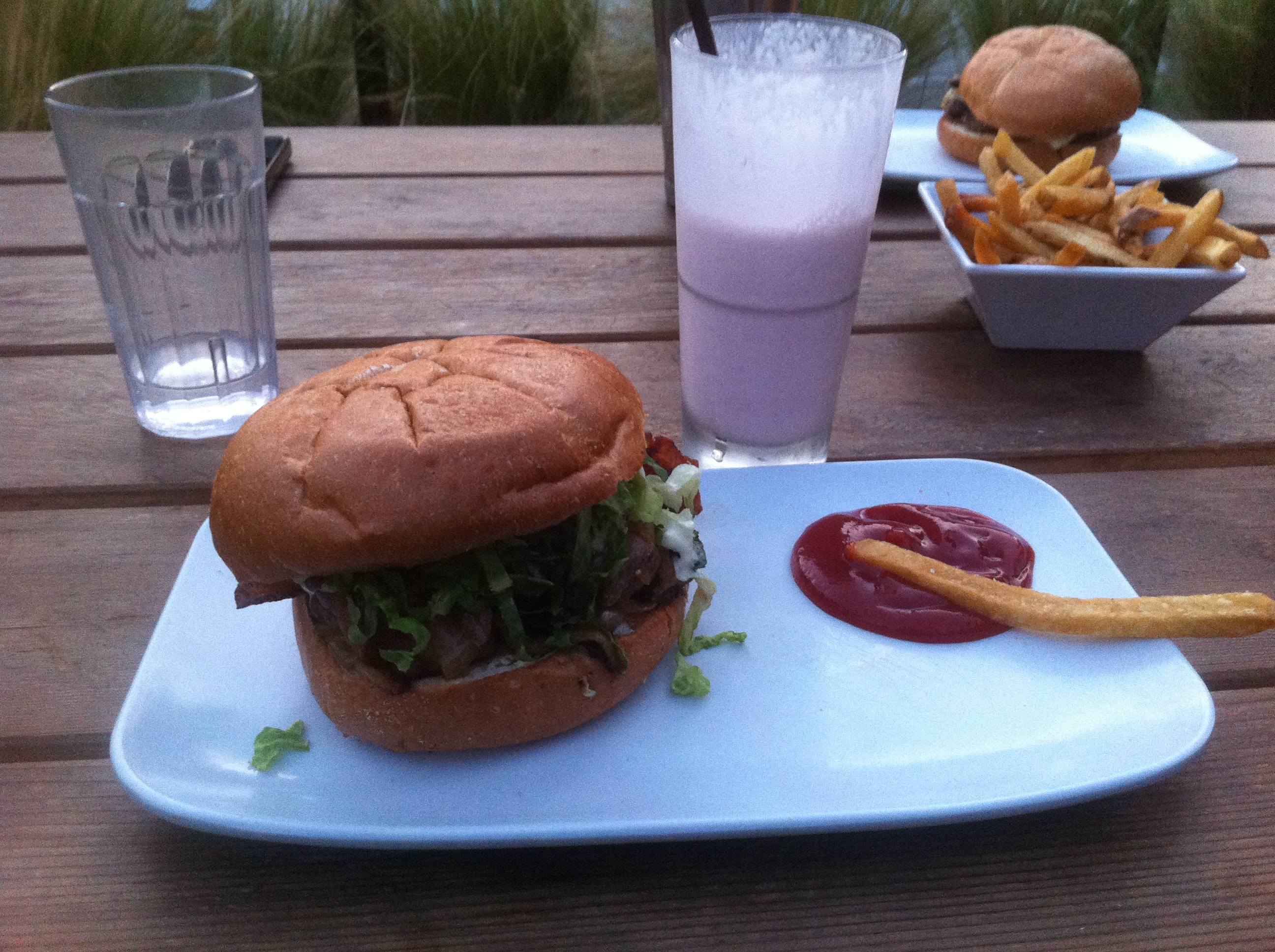
For dinner, we went for burgers at Uneeda Burger, and it was really good. We took Alfie with us, and he was just relaxing on the deck while we ate… until Bentley the local cat came along and started making trouble. Eventually, we ran Bentley off and Alfie stood his ground next time Bentley came around.

We just spent the rest of the evening chatting and I finished up re-packing my stuff for the second leg of my trip. I’m off to Vancouver at 7:40 AM!

David Bach vs. Vanessa Rousso: Day 4 of the 2011 WSOP Main Event on ESPN

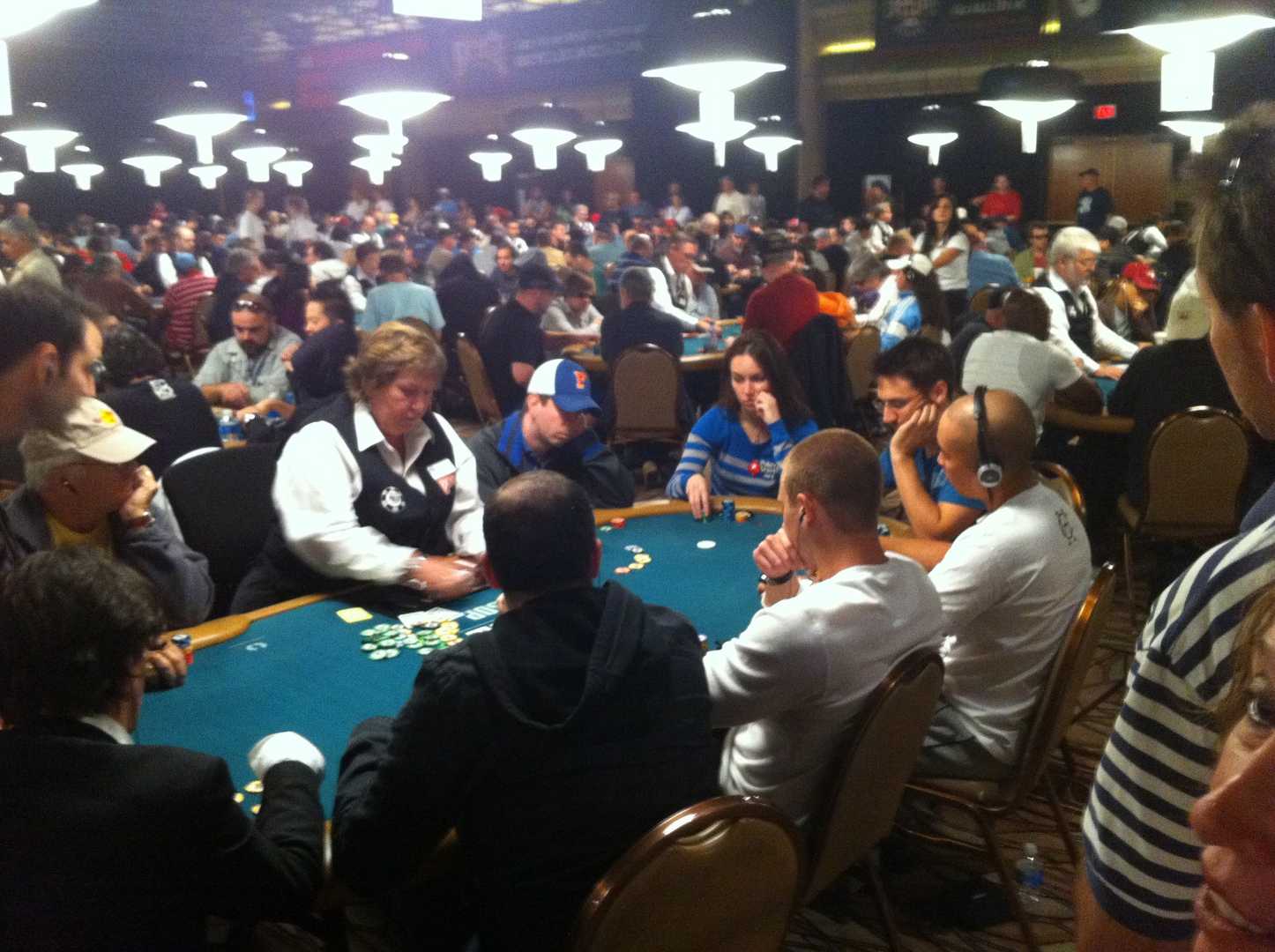
On ESPN’s Tuesday night WSOP coverage of the Main Event, there was a really big hand between Vanessa Rousso and David Bach. I was in the audience when the hand went down. I had several conversations about the hand over the following days, and it turns out this hand is a very, very interesting one.

I haven’t seen too much analysis of this particular hand, and since I was able to talk to several pros about it right after it happened, I figure I should write something up.

DISCLAIMER: These aren’t exclusively my thoughts. I mean, they are now, but my thoughts are really a mishmash of discussions that I had with various people about this hand. So I’m not putting this out there as some kind of original thought, but more just trying to convey a summary of the different conversations I had about this particular hand. Also, full disclosure, I’m co-writing two books with Vanessa right now, so I’m probably biased. I’m trying not to be, but I can’t make any promises. I’ve never met David or Joe.

SECOND DISCLAIMER: I’m not writing this up to show whether or not David, Joe and Vanessa played the hand “correctly”. I just thought it was a fascinating hand and I wanted to dig into it to see if I could figure out what they might have been thinking. There’s no gotcha. I do occasionally state my preference when there are multiple actions to be taken, but I’m not looking to pass judgement on whether anyone made obviously “right” or “wrong” decisions in this particular hand.

Here we go!

Blinds 3,000/6,000/1,000
Average stack is about 300,000

Starting stacks:

David Bach (BB – Big Blind) 456,000: Qh Jh – Known to be a tricky, aggressive player who is not afraid to get his chips in the middle. Was short as recently as a couple levels ago, and recently doubled up through Vanessa with aces against her AK.
Joe Serock (UTG+1 – second to act) 151,000: Tc 9c – He was unknown to me at the time, and I don’t think that either Vanessa or David had much history with him.
Vanessa Rousso (MP – middle position) 732,000: 6d 6h – Has been playing aggressively and steadily chipping up without showing many hands. Has made some difficult calls earlier in the day.

I think a major factor in this hand is the stack sizes relative to the average stack. Vanessa has almost 2.5 times the average, David has about 1.5 times the average and Joe has about half the average. The WSOP Main Event is a very slow structure, which means there’s a lot of room for patient, calculated play. Although Joe is short, he’s not desperate with an M of 8 (or 25 big blinds). David and Vanessa both have very, very comfortable stacks.

Pre-fop: (18,000): Joe raises to 13,000. Vanessa calls. David calls from the big blind. Everyone else folds.

Joe’s raise is a little loose given his chip stack and his position at the table. T9s seems a little light to be raising with his stack in early position. That said, it’s not a bad raise, and a lot of players will make this raise because they trust their post-flop abilities and because of the way the game is played today.

Vanessa’s call is standard. She doesn’t want to 3-bet and give Joe the opportunity to 4-bet all-in (she would have an awkward decision if she 3-bet and then he shoved, and she would probably have to fold after putting about 30k in the pot). She also needs other callers to increase her implied odds to flop a set. Joe’s stack really isn’t deep enough for Vanessa to try to flop a set against him heads-up, although she does have position and she’s getting about 11-to-1 total implied odds if she can get his whole stack. She’s really looking for other callers to increase her potential payoff if she flops a set. She could also look for opportunities to outplay Joe after the flop by leveraging his stack size, which will likely make his post-flop decisions tricky.

David’s decision is very similar to Vanessa’s. Folding would be pretty bad here. I think calling is the best play if he thinks Joe is playing reasonably tight, and since Vanessa has enough chips to comfortably call a 3-bet in position. A 3-bet would be tricky for the same reasons it was would have been tricky for Vanessa. Additionally, David would probably have to contend with Vanessa (who has position on him) if he 3-bet. QJs can flop a lot of big hands, and he’s getting a great price to call (he’s getting about 5.5-to-1).

Flop (46,500): Th 9s 6c. David checks. Joe bets 25,000. Vanessa raises to 50,000. David check-raises all-in for 442,000 total. Joe folds. Vanessa calls.

David has a lot of options when he’s first to act on this flop. He’s flopped an open-ended straight draw, a back-door flush draw, and two overcards. This is a pretty strong hand assuming he’s not up against an overpair, a set, or two pair. Worst case, he’s about a 2.5-to-1 dog, and he could be a favorite against a lot of hands like an overpair, AK, AT, and pretty close to even money against a hand like JT.

He could lead small, hoping to just win the pot immediately or to induce a smallish raise from Joe so that he could then semi-bluff all-in. The small lead (also called a “weak lead” or a “donkbet”) is often perceived as weak (because it usually is), and a lot of good players will automatically raise this sort of weak lead with any two cards, hoping to take the pot away from the leader. I call this move the “bet, 3-bet-shove” and I like to use it with big draws and over pairs against aggressive players. The issue here is that Joe is a little too short-stacked for this move to work effectively.

He decides to check. I doubt he intended to check-raise all-in at this point. He was keeping his options open for a standard check-raise, a check-call, or maybe a check-shove if the action was just right.

Joe flopped top two pair and I’m sure he was throwing a mental parade. With his stack size and this flop, he’s got to be pretty sure he can double up if either of his opponents has some kind of hand. He’s trying to figure out how to get all his chips in the middle as soon as possible. He continues, betting 25k (just over half the pot), which is standard. He’s hoping someone will raise him so he can just get his chips in now, while he’s almost certain to have the best hand.

Vanessa has flopped bottom set and is also probably throwing a mental parade. She has two options: flat-call or raise. There are a few problems with flat-calling. If Joe has a hand, she wants to get him to commit his stack now, before any scare-cards come. She obviously can’t do that by just calling. A seven or eight would almost totally kill her action unless Joe outruns her and makes a straight. There are some overcards that could scare him as well. If he flopped top pair, then he might shut down on the turn if an overcard comes and doesn’t improve his hand.

Another issue is that if she just calls here, then David is yet to act and will be able to call with a lot of funky draws and pretty decent pot odds. He’ll be getting 4-to-1 to call 25k against two opponents. He could definitely call with an open-ended straight draw, but he may be able to call with some gutshot straight draws as well, hoping for good implied odds if he hits the longshot. If she just calls here, David’s going to call with a lot of hands, and there could be a lot of scare cards for both her and Joe on the turn. David has a lot of chips and she needs to make sure she knows where he’s at in the hand if he continues. By just calling, she would allow him to call with a wide range of hands and she wouldn’t get any more information about what he has. There is one potential benefit to flat-calling, though: David is known to be tricky and aggressive and may be looking to check-raise. If he were to check-raise, Joe may go ahead and move his chips in, allowing Vanessa to then move her chips in and shut David out while isolating against Joe.

On balance, the possibility that David would check-raise and re-open the action is pretty small, and the downside of flat-calling is pretty great. She decides to min-raise, which is a common play in her arsenal. Her goal is to isolate against Joe and hope he flopped some kind of hand so she can get him to commit his stack. A secondary goal is to sort of “squeeze” David either out of the pot or into uncomfortable territory. The stack sizes in this hand will make David’s next decision very difficult because of this min-raise. They don’t really show this on the edited broadcast, but David took at least three minutes to make his next decision. He took so long because it was a really tough decision, mostly thanks to this min-raise and the players’ stack sizes.

Vanessa is communicating a lot with her min-raise. It is a small raise in absolute terms, but it essentially commits her to calling if Joe moves all-in. She’s letting Joe know that she’s willing to play for his stack, but she’s also telling David that she has a real hand and that she’s not afraid to commit 130,000 chips with her hand. Her min-raise could also be read as a marginal hand (AT, JJ) that is trying to isolate against Joe’s apparent not-quite-as-good hand. She’s also giving Joe some rope in case he doesn’t believe that she’s committed to calling his all-in because her min-raise is small enough that it might look like she’s just putting in a probe-raise and that she might consider folding if he shoves. If Joe might take this bait, so might David.

Interpreting Vanessa’s min-raise is a critical factor in the hand. If David and Joe read this min-raise correctly, they both wiggle off the hook and save a bunch of chips. If they read it incorrectly, they could get into some pretty deep trouble.

David sees that Joe made a continuation bet (c-bet), and that Vanessa min-raised that c-bet. Joe’s c-bet doesn’t necessarily mean he has a hand. Many players will continue almost 100% of the time. The caveat is that this board should be pretty scary for Joe since Vanessa and David both flat-called and this type of board hits a lot of hands that would just flat-call pre-flop. In general, I don’t think Joe would be continuing 100% of the time here since it’s so unlikely that he’ll get both opponents to fold for one bet on the flop given the texture of the board and their deep chip stacks. He simply can’t afford to use his chips to c-bet in a situation where his c-bet is often unlikely to work. So his c-bet does communicate some strength, but it’s still a c-bet and certainly doesn’t mean that he has the nuts or anything like that. Vanessa’s min-raise could mean a lot of things (as discussed above).

David has a very big draw, so he has a few options.

He could call. Assuming that one or both of his overcards are live, he is getting pretty close to the odds he needs to just call the bet. If he knew for certain that Joe would also just call, then he’d be getting great odds to hit his draw.

The issue is that David can’t close the action. If he calls, Joe can still re-open the action and re-raise, so David can’t just consider his own pot-odds here, but he has to consider that Joe might move in if David just calls. If Joe moves in, then Vanessa can move in and shut David out. This is one reason Vanessa’s min-raise is sort of a squeeze on David–he’s stuck between two players who can keep putting chips in regardless of what David does. So flat-calling Vanessa’s raise really doesn’t look like a good option.

He could fold. He’s in for 13,000 so far, and Joe has shown quite a bit of strength. Despite Joe’s show of strength, Vanessa has min-raised him and appears to have committed herself to calling his all-in if it comes to that. She’s showing that even though Joe is showing some strength, she’s even stronger (or at least she’s stronger than the range of hands she puts Joe on). Their combined show of strength may also tell David something useful: his overcards may not be live. If his overcards aren’t live, then all he has is an open-ended straight draw. He’s definitely not getting explicit odds to call and see only one card with a straight draw, especially considering that his call wouldn’t close the action (so there’s no guarantee he’d even get to see the turn if he put in chips to call).

He could make a standard re-raise. Vanessa’s min-raise is to 50,000, so David could make it something like 125,000 or 150,000 if he wanted. This kind of raise would commit about 35% of his stack and could be dangerous since both Joe and Vanessa have shown strength so far. Joe may be planning to move all-in when the action is back on him, and Vanessa seems unafraid of that possibility. If David re-raises, the best result is that both Joe and Vanessa fold, but the action so far just doesn’t indicate that is very likely. The worst-case scenario is that he re-raises to 150,000, Joe calls all-in and then Vanessa re-raises all-in for all his chips. If that happened, David would be getting such great put-odds (about 5-to-2) that he would almost certainly have to call. He can’t fold an open-ended straight draw to the nuts with two cards to come getting that price. So by just putting in a normal re-raise, he could possibly be committing himself to calling all-in with a straight draw. That’s not really how a good player wants to play his draws. If he can, he’d prefer to be the one moving all-in so that at least he has some fold equity.

He could move all-in. Although Joe has shown quite a bit of strength, Vanessa did min-raise him and if David moves all-in, Joe has to think someone has a really, really big hand. Joe would probably have to fold an overpair in this situation, and of course he would fold all the hands that were just naked c-bets. Once it got back to Vanessa, she would have a really difficult decision to make for about 60% of her stack. As I said before, her min-raise probably either means she has a pretty good hand that she thinks is better than Joe’s range of hands, or it means she has a really big hand. She’s somewhat unlikely to just have nothing in this spot.

At this point, I initially did a bunch of math and whatnot. I also talked this over with a friend, and we decided the following:

  1. Moving all-in is probably a +cEV play for David in this spot. What that means is an all-in play would have “positive chip expectation”. If David moves all-in here, and if he can play the hand exactly the same way enough times to build a respectable sample size, then he’s going to show a profit in the long run. On average, he can expect to end the hand with more chips than he has right now (before he makes this decision).
  2. +cEV doesn’t necessarily mean +EV. The difference here is the little “c”. cEV refers to expectation measured in chips (how many chips a play might gain or lose), whereas EV refers to expectation in terms of cash value of your stack and your seat in this particular tournament. cEV is often a strictly mathematical calculation that becomes more precise as we gain more information about hand ranges, player tendencies, etc. EV is a fuzzier calculation that accounts for softer factors like a player’s perceived skill edge in a tournament, ability to play various stack sizes effectively, etc.

For a good player, a +cEV play can often be neutral or even -EV. A classic example of this is a thought experiment that poker players like to discuss: If I had QQ on the first hand of the WSOP Main Event and another player moved all-in and showed AK, would I call? A call would clearly be +cEV, and the debate is really about whether it would be +EV, -EV or neutral EV. In other words, is the small expected gain in chips enough to justify busting from the tournament about 45% of the time.

It’s important to remember that David doesn’t know what Joe and Vanessa have. He has to put each of them on a range of hands and then play against those ranges. If he knew what they had, he would obviously just get out of the way. But, given reasonable hand ranges for Joe and Vanessa, David’s play is probably a +cEV play.

But there are other things to consider. In the beginning of this analysis, I mentioned that David and Vanessa each have pretty large chip stacks. In the WSOP Main Event, having a lot of chips is a very, very good thing for good players. The unique structure gives ample time for good players to outplay their opponents and exercise their skill edge over the field. In general, the slower and better the tournament structure, the less variance good players will tolerate.

The clincher takes us back to the read that David had to make in this hand: Is Vanessa’s min-raise genuine strength, or is she just saying that she can beat Joe’s likely range of hands? If she’s showing genuine strength, then moving all-in is probably not +cEV enough to justify risking his life in this tournament (where he is definitely very +EV). If she’s just got something like a pair, and she’s trying to isolate, then moving in is much more +cEV and may justify risking his tournament life.

Given all this, I think folding is probably the best play since it seems that his overcards may not be live, leaving him with nothing but a straight draw, out of position against two players who have shown quite a bit of strength so far. I know a lot of players will disagree with me on this, but I think the WSOP ME is such a unique structure that it allows for making this type of fold. Making a standard raise seems like a bad idea because he’s likely to end up playing for all his chips anyway. Just calling doesn’t seem like a great idea because he could also end up playing a big pot if he calls. Moving all-in seems like just too great a risk to pick up a few more chips to add to his already big stack (he would add about 25% to his stack if his all-in got both opponents to fold).

David decides to move all-in, obviously hoping to win the pot right there. He must have decided that Vanessa’s raise did not indicate real strength, and that she would likely fold a very large portion of the time.

Joe flopped top two pair and has a really nasty decision. His gut probably tells him, “I’m crushed here, and I should fold.” I think a careful analysis might have led him to get his chips in just because David’s all-in doesn’t look very strong (it really, really seems like David’s trying to push Joe and Vanessa out of the pot with his huge overbet all-in) and Vanessa may have been min-raising with a single pair (JJ+, AT, KT). That said, I think it’s reasonable for Joe to decide to just get out of the way and let the two big stacks tangle.

Vanessa now has a pretty difficult decision for about 60% of her chips. First she has to decide if she has the best hand, and then she has to decide whether she’s far enough ahead to justify risking such a huge portion of her stack. There are only three hands that beat her: a set of tens, a set of nines, and a straight. She told me later that she was very confident that David did not have pocket tens or nines, so she doesn’t have to worry about him having a higher set. It wouldn’t be crazy for him to call with 87 from the big blind getting the price that he got, but it would be a little wacky to make this big a check-raise if he flopped the nut straight on this board. If he flopped a straight, he would likely try to get more value out of it since there’s no flush draw. In that case, a standard check-raise might be a good line. Regardless, it just doesn’t look like he flopped the nut straight here.

That being the case, she knew she was likely ahead and had to figure out if she was far enough ahead to justify risking this much of her stack. There’s no flush draw, so it’s not possible David has some kind of big combo draw (straight and flush being the one that would fare best against her set of sixes). He could have a couple of open-ended straight draws (J8 and QJ), or maybe he has two pair with T9, 96 or T6. T6 and 96 are unlikely, but it doesn’t matter: she’s way ahead of his range if she’s currently ahead. And she’s almost positive that she’s currently ahead.

Since it’s so unlikely he has her beat and since she’s so far ahead of his range if she’s ahead, she makes the call.

Turn: (927,000): 8h

David turns the straight.

River: (927,000): 2s

Vanessa doesn’t improve on the river, so David wins a huge pot, leaving Vanessa below average.

Approximate ending stacks:

David Bach: 960,000
Joe Serock: 112,000
Vanessa Rousso: 274,000

Wrap-up

There are two aspects of this hand that I think are really interesting:

  1. Vanessa’s min-raise on the flop
  2. David’s read on Vanessa’s min-raise, and his decision to go after the chips in the middle and possibly bust

Vanessa likes to min-raise a lot–it’s just part of her style. This table had been playing together for several hours, and I’m sure Vanessa had min-raised earlier in the day. The fact that she’s min-raising with a set (and would often min-raise with air, a draw, or a marginal hand) makes this particular raise very difficult to read, and I think that’s why David thought so long before he acted. The players’ chip stacks also made her min-raise particularly tricky.

David obviously decided that putting 25% more chips in his stack (and 25% of a significant amount) was worth the shot given his read on Vanessa’s raise. He must have decided she was probably weak-ish and decided to go with it.

What’s crazy is I could probably write a few thousand more words about the hand. There’s a lot of stuff I left out to try and keep this post a little shorter. I’d love to hear what other poker players think, so let me have it in the comments!
WSOP 2011 Wrap-Up

I’m finally back from my month-long stint in Vegas. I think I’ve written something like 15,000 words about the trip (maybe more), so I thought it might be helpful to recap and summarize everything in one place with links to all the other stuff.

Here are links to all my posts about the trip:

This piece was written while I was out there, but isn’t really about my trip per se:

Here’s a quick week-by-week summary of the trip and then I’ll do a final overall recap…

Week 1 (June 23): I arrived to Vegas at 1:00 AM local time (so 4:00 AM Florida time), stayed up too late and then crashed on a couch in Luckboxy Larry’s Rio room. Next day, we made the move over to the luxurious Gold Coast as we chased cheaper room rates. I tuned up at the Rio daily deep stack, a $235 tournament in which I min-cashed and would set the tone for my trip. I also played the Wynn re-buy once (in for $625 – the most I’d invest in that tournament in several tries), and played the $1k WSOP event, cashing in neither. So I dug myself a little hole early. Meanwhile Luckbox Larry Final-Tabled the Wynn re-buy and won $10k. I didn’t know it at the time, but the tone for the summer was almost entirely defined in this week. I was to have several min-cashes and close calls with a real payday while Luckbox Larry crushed the Wynn tournament.

Week 2 (June 27): I played the Wynn and decided I wasn’t taking the add-on anymore because it was bad value. I min-cashed once. I worked on the book with Vanessa and min-cashed at the Wynn again. I played the Wynn again and didn’t min-cash this time. This non-min-cash put me slightly up for the trip so far. I started feeling a little sick for the first time and got my first In-N-Out fix. I bubbled the Wynn tournament after taking my first nasty beat of the summer: Queens against Tens and Sixes all-in pre-flop – I lost to the Sixes and chopped with the Tens in a huge pot with 45 left. I wrote the book some more.

Week 3 (July 4): I started with a quick recap of the tournaments I played so far. I had played 8 and cashed in 5. I didn’t realize this would be my last cash for the series and that my bad luck was just getting started. I finally got to Mesa Grill at Caesars, and it was delicious. I had a really fun meeting with Vanessa and Annie Duke, where we talked about publishing and I learned a lot about poker just discussing hands with them. I played the Wynn again and got close to cashing, but no dice. I also started feeling nasty again. I jumped into a $550 mega satellite at 10:00 AM at the Rio on short notice and busted after playing two hands: I tried a flat-float-bluff with JTs in the first level, then busted with Queens against Ace-King. By this time, I’d lost a few coinflips, a couple 60/40s and had taken that nasty beat with QQ < (TT + 66). Things weren’t going my way. I went to a kick-off party for the Rally to End Cancer, hosted by my friends Vanessa and Chad at the MGM. I played the Wynn again and had my earliest exit yet when I ran AJ into a very aggressive player’s Aces. I watched Luckbox Larry eat a $60 hamburger. Truth be told, it kind of grossed me out because it had truffle shavings on it, and I hate all things mushrooms… and the thing smelled like mushrooms. I started preparing for the possibility of playing the Main Event, although I didn’t know if I would actually play. I also wen to In-N-Out again. I recapped my typical day in Vegas. I continued trying to prepare to play the Main Event even though I still didn’t know if I’d be playing. I relaxed and worked out a bit. I confirmed I was playing the Main Event about two hours before the final Day 1 got started. I freaked out a little bit, then went on to finish Day 1 with 50k chips after starting the day at a really, really tough table with 30k chips. Later I found out that the chip leader going into Day 7 was at my table for most of Day 1, meaning the table was even tougher than I thought.

Week 4 (July 11): I rested up for Day 2 and found out my Day 2 draw wasn’t too much better than my Day 1 draw. I made it through Day 2, but with fewer chips than I had at the beginning of the day. I recapped my good and bad luck so far in the Main Event. I relaxed and did laundry to prep for Day 3. I did my typical table research and it seemed like I finally got a pretty soft table draw. That turned out to be wrong as my table was pretty tough again (though not as tough as Day 1 and Day 2). I busted from the Main Event near the end of Day 3 with Aces against Kings, all-in pre-flop. My stellar luck continued. I spend like 2,500 words discussing some hands I played on Day 3 because I can. Luckbox Larry also busted a little earlier in Day 3 with AKs < KQs (another bad beat for our group). And then Vanessa busted on Day 4 after she has a set cracked by a straight draw (another bad beat where she was almost 3-to-1 to win when the money went in). Bad beats all around for our crew this year. I started winding down and decide to take one more shot at the Rio daily deep stack. I ended up bubbling, finishing 32 when 27 paid (in a 289 person field). I should’ve seen that coming.

Week 5 (July 18): I did some more work on the book and just sort of relaxed as I prepare to head home. I made my annual trip to the outlet mall in Vegas to try to get some cheap shirts and shorts, getting one of each. Then I headed home and watched a lot of TV while I worked to overcome jetlag.

Overall summary of my summer in Vegas

“So, how’d it go this summer?” I’ve been asked that several times since I got back. The answer is… ok, I guess. Poker-wise, things were pretty rough. I started off cashing in almost everything I played, but almost all of my cashes were min-cashes. I ended up by going 0-for-5 in my final five tourneys, including the Main Event. I had tough table draws in the Main Event, but still managed to hang around to get Aces against Kings to bust as an 80% favorite. So that wasn’t too great. I also learned a lot about poker from discussing hands with people and just putting in a lot of hours. Socially, things were great. I spent a lot of time with friends, ate great food and generally had a good time. Business-wise, things were very good. I am working on a new project (I’m this close to announcing it, but we’re not quite there yet) and I lined up a potential consulting gig for a startup.

It’s really good to be home, but that means I’m forced to focus on the fact that I quit my job a few months ago and I still don’t have any kind of income. That’s ok – it was part of the plan – but it’s still very stressful. Even with that, it’s good to be home in Gainesville. I’ve already visited Chick-Fil-A, and i’m working on plans to go to The Top and Satchel’s very soon. It’s also good to be back near my family – hopefully I’ll see them soon as well.

All in all, it was a good summer and I had a good time. I played a lot of poker, ran bad and managed to find potential business opportunities to work on. And now it’s good to be home.

2011 WSOP Diary: Week 5

Day 26 (July 18): It finally feels like I’m wrapping things up here in Vegas. I spent yesterday working on the book (I’m working on a kind of onerous section that’s pretty crucial to the book as a whole, and it’s tough material to write). I also hit the gym and spent some time reading and watching TV (on my iPad, of course).

Today we’re planning to do more work on the book, and I’m hoping we can mostly finish the first “Part” of the book (the background necessary to get the most of out of the rest of the book). I’ve also got another project that I’m excited to be working on, but I can’t quite make it official with an announcement yet.

I may make a trip to the outlet mall today to get some cheap polos. I managed to save a couple hundred bucks on hotels the last few days, so I might as well blow that money on some new shirts.

As I write this, Ryan Leneghan is the chip leader going into Day 7 of the WSOP Main Event. He was at my table for most of Day 1 and he played very well. It’s strange because he’s almost totally unknown (at least in live poker – I couldn’t find any significant results for him online), but I got the sense he had a lot of experience. My guess is he’s been playing successfully online for a while, but I haven’t verified that. Anyway, this just gives me more ammo to complain about how tough my Day 1 table was. I can now say I had to play against Brandon Cantu, Ryan Leneghan, Adam Schoenfeld, John O’Shea and some other good players at my Day 1 table. And I still managed to finish the day at 50k chips when we started at 30k.

Day 27: Today was my last day in Vegas. Actually, I only had the morning in Vegas before I flew home, lost three hours and got in around 9:00 PM. Nothing much to report today other than the level of nostalgia was particularly low. I rarely miss Vegas when I leave – it’s not really my kind of city when there’s no poker to be played.

I got home and sat around watching TV forever. I have a lot of stuff to catch up on, so that should keep me busy for a few days. Both of my roommates are gone until next week (give or take), so it’s nice to have some time by myself to decompress. I had arranged to have a lawn guy cut my grass twice a month this summer, but I guess he forgot or something because my grass hasn’t been cut since before I left for Vegas. It’s a jungle out there.

It’s time to get back to the regular unemployed life.

2011 WSOP Diary: Week 4

I’m sure it’s better to post up-to-date progress on my Main Event “run” (really, that should be “slog” or “crawl”), so I’m going to update this a couple times this week.

Day 19 (July 11): I took it easy today. We finished Day 1D of the Main Event at about 1:00 AM this morning, and I was totally exhausted with about two hours left in the day. I ended up going to sleep about 3:00 AM and woke up about 10:00. I was still exhausted, but I needed to get stuff done on my day off, so I couldn’t only relax today. I went grocery shopping and did some laundry, watched some TV and went to dinner at Melting Pot with some friends.

I’ve got my table draw for Day 2 and it ain’t pretty. Although my Day 1 draw was exceptionally bad, my Day 2 draw is still bad. There are two known, good pros at my table (their winnings are measured in millions of dollars). With 4,500 people still playing, it’s pretty unlucky to have two known pros at my table. On Day 1, I had three. The good news is that both the pros are short (one is short, one is really short), so hopefully they’ll be gone soon.

Time to rest up for tomorrow.

Day 20: Today is Day 2, and I’m spending the morning researching my table and just generally getting psyched up to play. Day 1 was particularly grueling – we started at noon and finished at 1:00 AM – and it took a lot out of me. I’ve adjusted my sleep pattern by about an hour (later) to help me stay fresh until the end of Day 2.

I’m starting Day 2 with 50k chips. I’m guessing average stack will be about 80k by the end of the day, so if I just steadily pick spots and chip up, I should be able to stay in the middle of the pack. Now that the antes have kicked in, I need to open up my game a little, but there’s no reason to go nuts. Hopefully this will be a good day.

Day 21: Yesterday was a rough day in the Main Event. I finished Day 2 with 41,600, which is less than half average, but still not a desperately short stack (my “M” when I return for Day 3 will be almost 10, which is “short”, but not “desperate”).

Overall, I’m playing good poker. Poker, in general, has a large luck component. But tournaments have a much larger component than, say, cash games. There are a lot of structural characteristics of tournaments that are beyond the players’ control. In a cash game, a solid player can just sit back and wait for hands he considers playable, then play his game. In tournaments, the blinds are constantly increasing, so there’s not much room to “sit back and wait” – if you wait too long, you’ll be out. Of course, good players adjust for this structural difference, but it still introduces luck and some variance. Then there’s funky stuff like table draws, seat draws, table breaking schedules, etc. That’s all out of the players’ control, but has a significant impact on potential success in a given tournament.

Here’s a summary of where I’ve run good and where I’ve run bad:

Good

  • I’ve had Aces seven times (I think) and Kings and Queens a couple times each. I’ve made two full houses and flopped two other sets. I flopped a straight once and I’ve flopped two-pair twice.
  • I haven’t taken any bad beats.
  • Even at tough tables, I’ve gotten some respect for my tight image and have been able to tread water by occasionally stealing blinds.
  • I have not been at risk of elimination yet (I’ve been all-in a few times, but never all-in and called).
  • I’m still in it.

Bad

  • We’ve played 20 hours so far. Of those 20 hours, 90 minutes have been at a “good” table. I already described my first table in a previous post. My starting table for Day 2 included Liv Boeree, Michael Martin, Ara Melikian and two other players with $400k in earnings. There were three of us at the table that I would consider “unknowns”. This is absurd – I should see maybe one player that is a “known pro” at my table. When my table finally broke, I got moved to a table where I recognized no one. It was awesome and I was chipping up nicely… for 90 minutes. And then I got moved to a new table with very aggressive players with big stacks. The two players on either side of me (four players total) had 100k+ in their stacks when I sat down (with 48k). The average at that time was about 75k. I didn’t recognize any of these people per se, but there was one sponsored pro and a couple other people who obviously knew what they were doing, playing a hyper-LAG style.
  • Yeah, I had Aces seven times, but I haven’t seen a flop with them. Which means I’ve managed to steal the blinds and antes (four times) and re-raise (three times) to take the pot down pre-flop. Obviously “that’s better than losing with them”, but on Day 2 I’m looking for double-ups, not blinds and antes. (NOTE: This is partially bad luck and partially by design – I intentionally cultivated a very tight image on Day 1, when I was dealt Aces four times. Part of cultivating a tight image is that people fold when I raise. The problem on Day 1 was not that I didn’t get action on the Aces, but that I couldn’t find other hands to play for value. Day 2, I opened up a bit and was just unlucky to not get action with Aces.)
  • All those hands I listed in the “Good” section are all the hands I’ve made. I lost a big pot (which I played badly) in the first level with one of the two-pair hands. I won the minimum with my flopped straight. I’ve made no flushes. I have gotten action on the full houses, so that was nice.

So, it’s mostly bad news through two days. Unfortunately, there are very few soft tables left in the tournament, so it’s unlikely my table draw for Day 3 is any good. I’m going to need to hope for some cards to double up, and I’m going to need to find good spots to steal to stay afloat until that happens.

Later, I found out a friend had taken a pic of me at my Day 2 table. Not only that, but he captured my river bet in a very big pot I was playing. The player two to my left is deciding whether to call/raise/fold when this pic was taken. I am in my standard “I’m playing a hand now” pose (that’s how I look pretty much any time I’ve got cards in front of me).

Fortunately, I’m very comfortable on a short stack. I have a very well-defined strategy that is effective, and I know how to find good spots to get my chips in. Hopefully I am able to double up and get through Day 3 with some chips.

Today I’m going to relax, do some laundry, work out and maybe do some more writing and business-y stuff. Then it’s off to play Day 3 tomorrow.

(Sorry I don’t have any new pics to share. Hopefully I’ll find somethig interesting to include as I update this week’s diary later this week.)

Day 22: Today we play Day 3 of the tourney. I’m about to do research on my table, but so far I don’t recognize any names there. The chip stacks around me are… ok. There are opportunities to use pressure to get chips, but it won’t be easy.

I’ll try to update this later on tonight after I make Day 4. I added a pic of my Day 2 table above – that was a rough table.

Day 23: Obviously, I didn’t update last night because I busted from the Main Event and wasn’t in much of a mood to write or talk about poker (or anything, really). So, to bookend this:

I made it to the end of the third level (of four) of Day 3. Before the day began, I thought I finally had a pretty good table draw, but I turned out to be wrong. Most of my table was comprised of competent, aggressive players that seemed to be playing solid poker. All in all, I had a little run good and a lot of run bad on Day 3.

[The next several paragraphs are loose discussions of hands I played during Day 3. I didn’t do much of this on previous days because my blog is public and I didn’t want my future opponents to be able to read up on how I’m playing and thinking. If you don’t know or care about specific poker hands, you’ll want to skip these next few paragraphs till you see “End Poker Hand Discussion” in bold font.]

Begin poker hand discussion

I started the day with 41,600 chips at the 800/1600 with a 200 ante level.

A couple orbits into the day, I picked up Aces against a player who was obviously a very aggressive player. I had only seen him play a few hands, but I decided to trap instead of re-raising with them because I felt he was the type of player who might try to blow me off my hand because of my stack size (I started the day short, but not desperately short). He raised in early position and I called in late-middle position. The flop was AJ2 and he made a continuation bet of just over half pot. Obviously I have the nuts, but given my read, I think it’s best to just call here and hope he keeps firing. The turn was another 2, giving me a full house. He checked and I checked behind, hoping to represent a Jack, a weak Ace or Tens/Nines. The river was a blank, he checked, I bet, he folded.

I later realized this was basically bad luck and that my read was perfect. The next orbit, the same guy doubled up another player (who had a set of Aces) with a straight draw. And that player had more chips than I did. And later on, the aggressive player ended up bluffing his entire stack (about 140k, which was above average when he did it) into a set of Sevens by 3-barrelling all-in with King-high (on an Ace-high board) in a situation almost identical to mine. He must’ve just had total air against my set of Aces.

Regardless, I picked up some chips in the hand and ended up around 50k. An aggressive player opened from early position and I had KTs on the Button. I called (my stack was 30BB or so, which makes this hand playable for me) and the Big Blind called. The flop was K62 “rainbow” (no flush draws out). This is a very good flop for my hand against the Big Blind and an aggressive pre-flop raiser. The Big Blind checked, the initial raiser continued for just over half pot (6,500) and I raised to 15,000 (I wanted to min-raise, but didn’t have the chips to do it and I try to avoid announcing my bet whenever possible since aural tells are difficult to anticipate/prevent and often easy to detect). The Big Blind check-re-raised to 30,000, and the initial raiser folded. It was back to me and I basically had to decide whether to go with the hand or fold. Calling isn’t an option for me there.

This is an ugly spot for me, and it’s a very funky spot. The best way to look at this hand is to use “Levels” and then figure out which level is appropriate. “Level” is basically short for “Level of Thinking”. Here’s a breakdown of the first few levels of thinking:

  • Level 1 “What are my cards? How strong is my own hand?”
  • Level 2 is “What are my opponents cards? How strong is his hand?”
  • Level 3 (this is where things start getting murky) is “What does my opponent think my cards are? How strong does he think I am?”
  • Level 4 is “What does my opponent think I think his cards are? How strong does he think I perceive him to be?”

The levels go on ad infinitum. Here’s how the hand looks if I think about it in terms of levels:

  • Level 1: I have top pair with a decent kicker. We’re three handed, so this is a pretty strong hand.
  • Level 2: What do my opponents have? Well, I don’t think the initial raiser and flop bettor has much. He’s opening a lot of hands so he most likely totally missed this flop. The Big Blind… Many players would just flat-call my re-raise if they had a set there. I know he probably doesn’t have two-pair because he’d have to be playing K6, K2 or 62 out of the Big Blind to make that hand. There are no obvious draws that he could be trying to semi-bluff. So his range is mostly KQ/KJ (he would’ve re-raised AK pre-flop with his stack), the occasional set of Sixes or Deuces, and air.
  • Level 3: What does he think we have? This player had shown to be pretty aggressive and was a thinking player (at least somewhat). So what was he thinking? Well, he was probably thinking the pre-flop raiser missed the flop and was making a standard continuation bet on the flop. My min-raise sort of appears strong, but could also look vulnerable (even though I put 1/3 of my stack in) because many players wouldn’t min-raise that board with a set (Why not just call and hope the Big Blind comes along for another bet? There aren’t any draws out there to be afraid of – this is the perfect spot to slowplay a set.), and he knows I don’t have AK because it’s a pretty big mistake to flat-call with my stack and AK in that spot (there are exceptions to this, but I should generally be looking to get my chips in with AK and 30BB against an aggressive raiser). So now we’re getting into some leveling: He probably knows I don’t have a set or AK. I could have a medium pair (88/99) or a weak King, or possible KQ/KJ, or just air trying to steal the pot on the flop.
  • Level 4: What does he think I think he has? Well, he’s representing a set, and he probably knows I don’t put him on AK there. With his bet, he’s telling me he has either a big King or a set, and that’s the story he’s telling. Against my range, a tricky player could check-raise knowing he’ll blow the original raiser out of the hand most of the time, and that I probably can’t stand a raise.

So this is what I’m thinking while deliberating whether to essentially move all-in or fold. The trick with “Leveling” is to always play one level above your opponent. The default assumption is that most opponents are Level 1 opponents – they’re focused on their own cards – so it’s appropriate to play Level 2 against them by playing my own cards and trying to put them on a hand. If I’m playing on Level 2 in this hand, he’s representing a set or a big King and it looks like that’s what he has. It’s also important to know what level my opponent puts me on. He probably looked me up online the night before Day 3 and saw that I basically have no live results. He would assume I’m inexperienced and put me on Level 1. So he’s playing as high as Level 2 at best. Without further information, my best bet is to play on Level 2 against him, meaning I should believe his check-re-raise represents genuine strength.

I decide to fold, but don’t like it. After discussing the hand with some friends, it seems like I made the right fold almost all the time unless I happen to be against a very, very tricky player who also gives me credit for being a thinking player. If he was check-re-raise bluffing there, he has to give me credit for being able to fold some Kx hands.

Some time later (in the second level), I doubled up with 99 > AQ. That was the first coinflip I’ve won in Vegas this summer (I’ve played something like 13 tournaments). I felt a little bad because once I saw the cards (before the flop), I told the guy, “You’re like a 70% favorite right now. I’m terrible at coinflips.” The flop was KTx, giving him four more outs (plus backdoor double-board-pair potential to counterfeit my Nines), but I managed to fade the turn and river to double up.

I flopped a royal flush in a blind-vs-blind hand against the only weak player at the table. He limped in the Small Blind, I checked with JTs (spades, even!) in the Big Blind and the flop was AQT all spades. He checked, I checked. Turn was another Queen (actually a good card in case he happened to have a Queen or even a Ten) – check, check. The river was a blank, he led 4k, I thought and raised to 15k (a little large, but I figure if he’s calling 8k more, he’s calling 11k more), and he folded. That’s the second time I’ve flopped the nuts in a blind-vs-blind hand and won nothing. I only made two straights and one flush (I’m counting the royal as both a straight and a flush) in 26 hours of play in the ME, and I won like 6BB total with them.

Later I had AA in the small blind, a good/solid player raised from early position (this player had been doubled-up earlier with a set of Aces against the super aggressive guy who didn’t give me action, but bluffed off his stack with King-high as described earlier). I decided to call and trap for a few reasons: the Big Blind had the kind of stack that would reshove a pretty wide range just to pick up the pot; my image was such that if I 3-bet out of the Small Blind, the Big Blind and initial raiser were almost certainly folding all but the very best hands, my stack was about right to try to trap and play for stacks with one pair. The flop was J42 with two clubs (I had the Ace of clubs). I led for just over half pot (called a “donk bet” because it often indicates weakness and induces a raise from the pre-flop raiser) hoping he would “raise the donkbet” and I could 3-bet all-in. Instead he just called. The turn was a Queen of clubs (there are now three clubs out there, so I have an overpair and the nut flush draw), and I checked hoping he would perceive my donkbet/check line as weak and take a stab at the pot. If he had bet the turn I would’ve moved in. Alas, he checked behind. The river was a brick and I checked again hoping he would bluff at it, but he did not. As I said: my read pre-flop was it would be very difficult to get chips from this player with my image. I did everything I could to trap him, but he just wasn’t biting and I ended up getting one post-flop bet with my Aces again.

After this series of hands, I was up to about 82k – my high point for the tournament. I had also only shown down Aces and Nines, and had generally played very few hands. My image was solid, so it was time to start trying to steal the blinds when I could find a spot. It was folded to me in the Cutoff (one to the right of the Button), so I opened with K4o hoping to take down the blinds. The player to my left (who’d doubled me up earlier) flat-called. Alarm bells immediately went off because both of us were relatively short and it’s odd for him to just call there. I immediately suspected he was trapping with a very big hand, and I decided I was done with the hand (planning to check-fold unless I hit the flop pretty hard). Sure enough, the flop was K96 or something like that. I had to continue with top pair in case he’d flatted with AQs, QQ, JJ or TT so that I wouldn’t lose the pot with the best hand. This lets him play perfectly against me (folding hands I beat and raising or calling hands that beat me), but with my chip stack I need to pick up the pot if possible. So I continued and he flat-called. I’m totally done with the hand now – there’s no way he’s flat-float-bluffing here with his stack and my image. The turn is a 3 and I check-fold when he moves all-in.

The last hand before dinner, I open-shoved 24BBs with 88. The guy to my left (who doubled me up earlier with my 99 against his AQ) tank-folded AQ.

About 40 minutes after the dinner break, a tight-ish (he was opening some pots, but wasn’t being particularly loose) player opened to 6k from second position and it was folded to me on the button. I had AA, and just needed to decide how to get maximum value from the hand. I started the hand with about 55k, so I could flat-call, 3-bet or move all-in – all three would be reasonable plays. If I had a shorter stack (45k), then 3-betting would just be too suspicious and moving all-in would probably be correct. So, flat-calling and re-raising were my best options. Since I had already trapped with Aces from the Small Blind earlier, and since I had previously flat-called raises with this stack-size on the button, I decided to 3-bet. If I flat-called, people would assume I could be trapping again and I wanted to play contra my image. I 3-bet to 15k (leaving myself 40k behind, and hopefully enticing AK, AQs or TT+ to re-raise all-in, trying to get me to fold). Sure enough, it’s folded back to the initial raiser who fairly quickly makes it 35k. Since I only started with 55k, I don’t waste much time moving my chips in and he calls the rest. He has KK, so I’m an 80% favorite before the flop. The flop is JTx, making me a 92% favorite. The turn is a King, giving him a set and making me an 88% dog (I can catch four Queens or two Aces to win). Of course the river is a brick and I’m out.

End poker hand discussion

So that was my Main Event. I generally ran cold, except I had Aces about 10 times. The first seven times, I didn’t see a flop. I finally got a little action with them on Day 3, including my bustout hand where I lost to Kings. Otherwise, I made 4 sets (two turned to full houses), flopped two pair twice, flopped a straight, flopped a straight flush (lost a big pot with two pair, won the minimum with the other two pair, straight and straight flush), and didn’t make any other flushes. I was all-in and called twice: once with 99 against AQ, once with AA against KK. For almost 26 hours of poker, that’s pretty mediocre stuff.

Vanessa is still in the Main Event and has over 450k chips as of right now. At least I still get to sweat her progress and hopefully I’ll get to see her move on to the November Nine. I leave to go home in four days, so I’ll write some more about my Main Event experience over the next few days.

Day 24: Yesterday was another bad day at the WSOP. Vanessa built up a very nice stack, but ran into three coolers and took a really nasty beat to finish somewhere around 500th. Just before the Day 4 dinner break, she ran AKs into AA in a spot where she just couldn’t fold. That hand cost her about 20% of her chips.

Then, just after dinner, they moved her to the ESPN feature table, which was being broadcast “live” (actually on 3-minute delay) on ESPN 2. Unfortunately, she only got to play three hands at the feature table. First, she ran AK into KK and lost some more chips. But the big hand was when she flopped a set of Sixes on a T96 board. A short-stack raised in early position, she called with 66 and the Big Blind called. On the flop, the Big Blind checked, the initial raiser (and short stack) bet 25k, Vanessa min-raised to 50k (obviously committing herself to call the short-stack’s possible all-in), and the Big Blind check-re-raised all-in to about 400k total (I think it was 392k total, but I could have that wrong). Anyway, it was a giant over-shove. The initial raiser folded and Vanessa tank-called with a her set. The Big Blind had QJs for an open-ended straight draw and backdoor flush draw (he was also probably hoping at least one of his overcards was live to a pair draw). Unfortunately, he hit the turn and won the hand. If Vanessa had won that pot, she would’ve had about 1.2 million chips (my guess is that was Top 20 or better with 500 players left). A few hands later, she busted when she was short-stacked and made top pair against the same player’s Aces. There was nothing she could do in the last hand, it was just a cooler.

I’ve had several conversations about the set of sixes (some with very good pros), and the hand lends itself very well to some serious analysis. I might post some thoughts on it later.

So three of us made Day 3. I busted as an 80% favorite when the money went in. Luckbox Larry busted as a 70% favorite when the money went in. Vanessa was crippled as a 72% favorite when the money went in (her hand was particularly brutal because of how many chips they both had before the hand).

So. That’s poker, I guess.

Today I’m moving out of the Rio and prepping to couch surf for my last few days here. I might also play the final Rio Daily 2pm $235 deep stack tournament. I’ve been thinking about some things I might change in my game, and the $235 is a nice little tourney to start trying stuff out.

I’ll spend the final couple days working on the book, relaxing and hanging out with friends before I head back to Gainesville.

Day 25: Well, I decided to play the final Rio daily deep stack tournament yesterday. They got 289 entrants and I finished 32 when 27 spots paid. So, another bubble. I played very well and went in with a plan to be aggressive and make some moves. I did that, but ended up just getting generally unlucky in the tournament.

I ran QQ into AA in the third level. I actually laid it down pre-flop. I guess I can’t be sure she had Aces, but I’m about 95% sure. It helped that another woman at the table agreed that my opponent was very strong, and the lady kept insisting she had AA even long after the hand was over. Anyway, I also had trouble with big combo draws (straight-plus-flush draws). I flopped one from the big blind and check-re-raised all-in, finding myself against two one-pair hands. So I was getting over 2-to-1 on my money as a favorite in the hand. Of course the turn and river were bricks and I lost a huge pot. Later on, I called an early position raise from and aggressive player when I was the Big Blind (I had 44, but that’s not relevant for the hand). My plan was to flop a set or run him off the hand with a check-raise if the board was scary. Sure enough, the flop was 578 with two hearts. Even if he opened with Aces, that’s a terrifying flop for the Big Blind to check-raise. I checked, he bet 4,200, I raised to 9,500 and he moved in for 50k more. Of course I folded and he said he had T9 of hearts – he flopped an open-ended straight-flush draw with two overcards. So my check-raise was right (if he’s opening that wide, he’s missing that flop most of the time and will have nothing when I check-raise him), except he happened to flop the world.

I also check-shoved from the big blind a couple times with top pair and got one fold and stacked a guy who had second pair. So I had the right aggressive mindset, but just got unlucky when it mattered. I was happy with my play.

That’s true for the summer as well. I ended up cashing in 5/13 tournaments this summer while running really badly. (For example, busting with AA against KK in the Main Event was not only a bad beat, but if I won that pot I was probably 80% to cash in my first Main Event.) I bubbled a Final Table at the Wynn when I lost a coinflip (where I was ahead and I was the one who moved all-in). I min-cashed at the Wynn when I lost another flip. I busted twice at the Wynn on 60/40s (one a bubble). I just couldn’t get some run-good when I needed it.

All in all, I was pleased with my play, and I think I continued to learn about the game with every tournament I played.

Ok, so I’m here for 48 more hours. Today, I’m working on the book with Vanessa and just relaxing. Probably more of the same tomorrow. I might run to the outlet mall to see if there are any good deals on stuff. I don’t have much money to spend, but since I buy new clothes like once a year, I might as well take care of it at the outlet mall.

I head back to Gainesville on Tuesday, and I’m really looking forward to being home.