[Josh’s note: This is Part 2 of a 2-part post. Part 1 is here.]
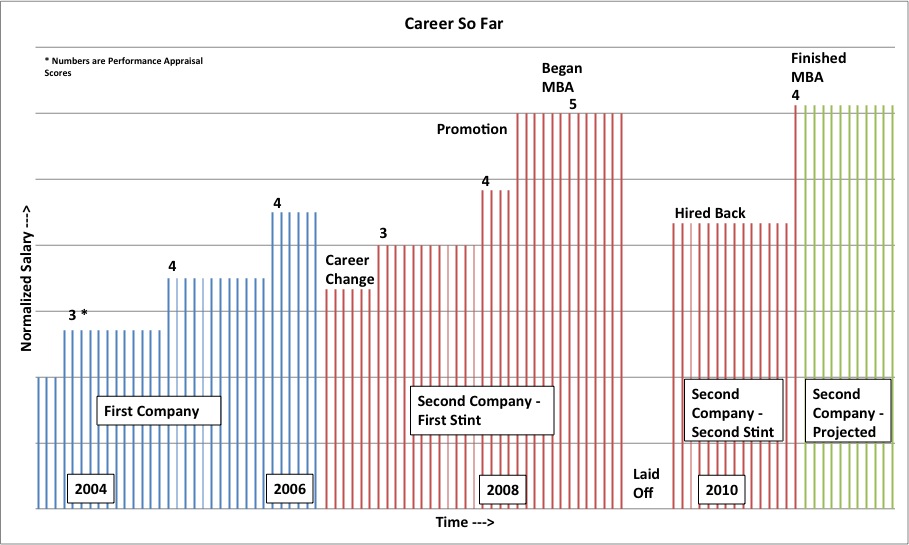
What am I leaving behind?
Even if I saved up enough money and had a list of things to occupy my time, I still had to decide whether to leave my job. Continue reading
[Josh’s note: This is Part 2 of a 2-part post. Part 1 is here.]
What am I leaving behind?
Even if I saved up enough money and had a list of things to occupy my time, I still had to decide whether to leave my job. Continue reading
[Josh’s note: This is Part 1 of a 2-part post. Part 2 is here.]
A year ago, I wrote a three–part series on how I prepared for losing my job and then how I adapted to maximize my minimal savings and enjoy my time out of the rat race. The story ended when I accepted a job at the company that had previously laid me off. Continue reading
I am the Oobleck of emotional catharsis: the harder you try to get through, the more I resist; but if you’re gentle and patient, I will listen. Many shows, books, movies, songs, whatever, just bounce right off me because they’re trying too hard to get through. But occasionally a show will quietly, persistently talk to me until I hear what it’s saying. This is one of those shows.
Freaks and Geeks is a message in a bottle that landed ashore after drifting about in its creators’ minds for 20 years. The cleverest thing about the message inside is that it’s unwritten until the bottle finds a reader – it’s the Schrodinger’s Cat of TV shows. Once the bottle is found and opened, then a message appears on the scroll, tailored to the bottle’s discoverer.
To twenty- and thirty-somethings, the message is a love letter, a nostalgic au revoir to adolescence. “Remember high school? It wasn’t so bad, right? There were things you liked about it. Go ahead and admit it – you’ll feel better. Remember when you discovered music? Your first kiss? Remember lockers, gym class, goofing off during study hour? There were some good things about those times, right? Comfortable things; peaceful things. No, it wasn’t awesome, but it wasn’t all that bad either.” Not only does it provide a glimpse into the transition from the 70s to the 80s – the death of disco, console TVs, steel cars – but it manages to provide a complete look at the high school experience, start to finish, through the eyes of its characters.
To parents, it’s a comforting letter from the future: “Your kids will be ok because you care enough to wonder if they’ll be ok. Yeah, they’re probably off doing what you’re afraid they’re doing, just like you did when you were their age. Can you blame them? Take it easy and tell them you care.” There are several types of parents on Freaks and Geeks – good, bad, involved, detached, loyal, cheating – yet all of the kids seem to turn out ok, or at least offer up a glimmer of hope.
To freaks, the predecessors of modern-day hipsters, it’s a cautionary tale suggesting focus and practice. The Freaks seem the most lost, and the most at risk of being lost and never finding their place in the world. Daniel, Nick, Lindsay and Kim are all sort of meandering off into the sunset. Lindsay, the poster-child for typical academic success, is forsaking all that for the aimless life of a freak. We don’t know if she’s just trying it on, or if she’s buying the outfit, but she’s obviously thinking hard about her next purchase. “Freaks, you are not hopeless, nor is life. You can do this, but you have to focus and try. Yes, you’ve been conditioned to believe that trying is for the Geeks, but you’re only hurting yourselves.” The Freaks aren’t hopeless, but it’ll take some work to keep them moving.
To jocks, it’s a tale of woe, for they will eventually serve the Geeks, the tortoise to their hare. With the rare exception, the Jocks are the dolts. Their one moment of decency is when Todd sticks up for Sam in “The Little Things”. Otherwise, the jocks mostly terrorize the geeks and hang out in a clique. “Enjoy it while it lasts because it’s all downhill from here. Remember these times. Never part with your Letterman jacket, or you’ll regret it.”
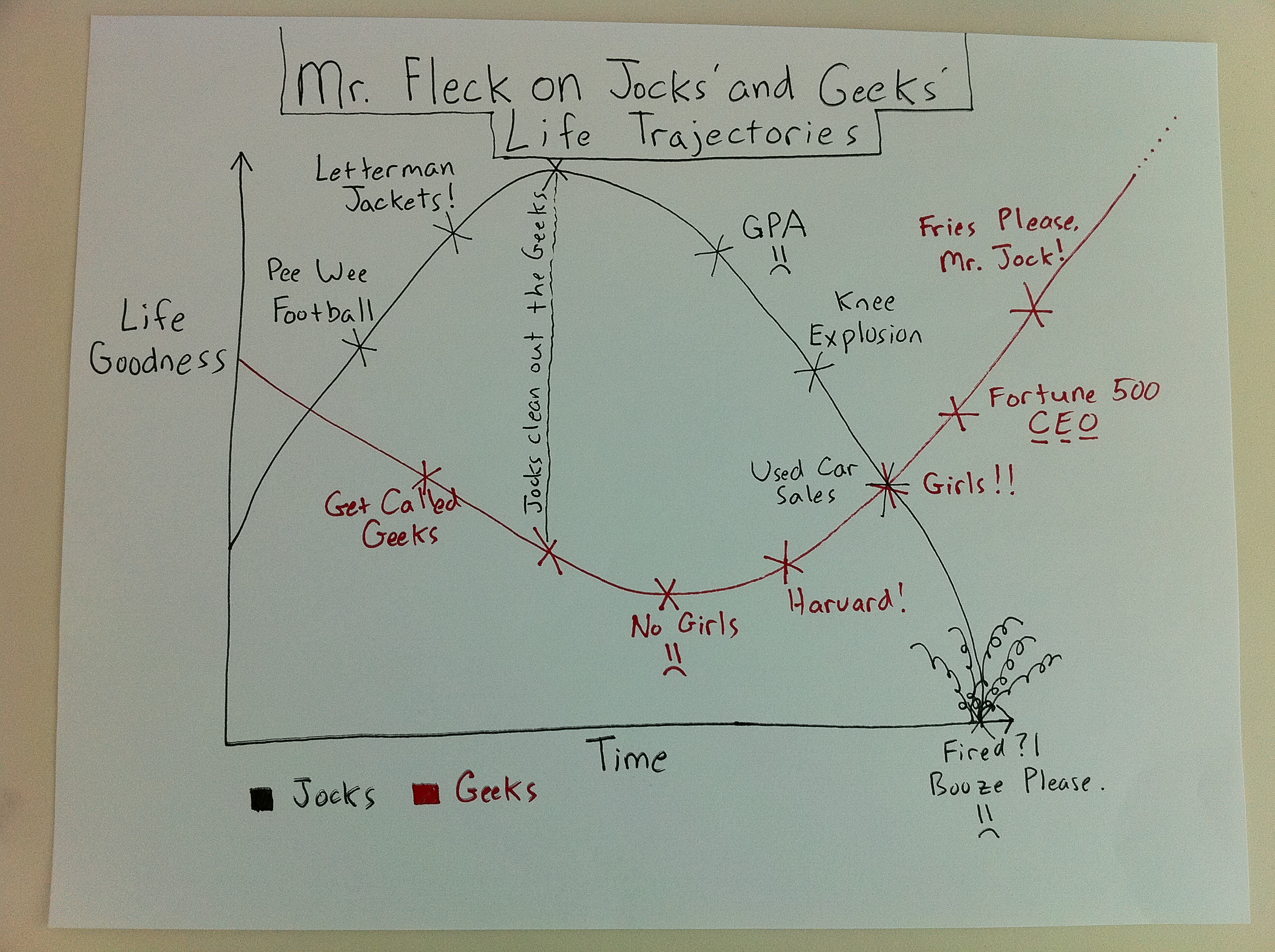
But at its core, it’s a letter to the Geeks, a note of optimism, exhorting patience, patience, patience until the world is theirs. It’s really all about the Geeks and Lindsay, who is a Geek trapped in a Freak’s body. Much like the guys in Stand By Me, the Geeks grow and learn big life lessons throughout the series. And they take those lessons to heart. Their message is spoken explicitly by Mr. Fleck in his speech after they were just cleaned out by the Jocks in “Discos and Dragons”, the series finale:
The wonderful thing about the show is that it says all these things without being heavy-handed or obvious. It constantly avoids cliches and cheap tricks, almost as if to say that you don’t have to be like everyone else; that not every situation culminates in a big, dramatic moment; that yes, life is sort of a slog, but if you keep at it you’ll be ok; that it’s our relationships that will get us through.
If there’s one message it wants to share with all its viewers it’s that, in the end, “The Geeks shall inherit the earth.”
[If you’re wondering where you can watch Freaks and Geeks, it’s tricky. It only ran for one season on NBC, and they didn’t even air the entire season before it was cancelled. But don’t let that scare you – I think it was cancelled because people just didn’t get it, not because it was a bad show. It’s nothing like Arrested Development, but it was probably cancelled for similar reasons. The cast is stacked: Seth Rogen, Jason Segel, James Franco, Linda Cardellini and several other people you’ve seen around. You can buy the DVDs on Amazon, and Netflix also has the DVDs. Otherwise it’s pretty tough to find, but it’s worth it. Have you already seen it? What did you think?]
Last night, I rented “Waiting for ‘Superman’” from a Redbox kiosk near my house. This was my first Redbox experience.
I would normally just wait for it on Netflix Streaming, but I wanted to see the movie right now since it’s relevant to stuff I’ve been writing and discussing a lot lately. A friend had mentioned Redbox, and I had to go to the store anyway, so I checked to see if Amazon or iTunes could compete with the $1 Redbox price.
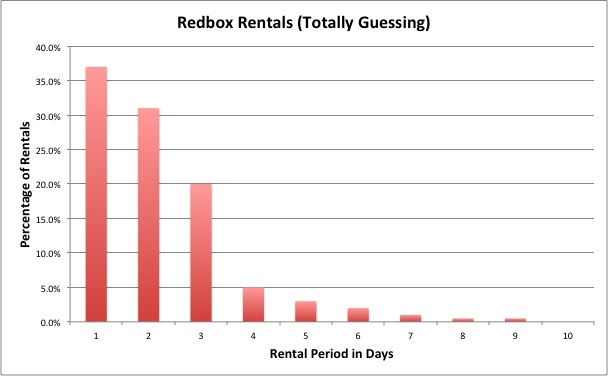
I ended up going with Redbox because I didn’t want to pay the premium being charged for rental by both Amazon Instant Video and iTunes. Here’s the breakdown:
Redbox – $1.06
Amazon – $3.99 (276% more than Redbox)
iTunes – $4.99 (371% more than Redbox)
What’s interesting is that it would seem that renting physical media would be more difficult and expensive than renting digital media. Someone has to service the kiosks, the physical media can be lost, stolen or damaged, etc. The rental terms are very similar – a 24-hour rental is standard. So why is it so much more expensive to rent from Amazon and iTunes than Redbox?
There could be a few things at work here:
What else could be behind the steep premium for renting movies online?
[Note: If you’re short on time, just click through and read the broken window fallacy Wikipedia page. It could change the way you think about economics and how you evaluate government policy. Also, I’ve put a couple disclaimers at the bottom of this post. I had to move them down there because it was just too much non-content leading the post.]
The latest episode of the Planet Money podcast – Why Japan Will Bounce Back – may have been misleading. A few weeks ago, I wrote the following tweet, but did not publish it (there are actually two drafts here – yes, I write drafts of tweets):
Well, apparently the economic stimulus bug has hit Japan! They’ll need to create hundreds of jobs to replace all that infrastructure!
What we call a disaster in Japan, Keynes would call phase one of a stimulus program.
I didn’t publish it because I was afraid it would be misread, and people would think I was making light of the devastation in Japan. I was really making light of the tunnel vision that many have regarding government’s ability to directly improve the economy through spending. Then, I heard the economist Planet Money booked to discuss the Japanese recovery flirting with the idea that Japan’s economy could see a net benefit from the disaster.
At first, they were just discussing economic resilience of industrialized countries. But they took it a little further from “Can Japan bounce back?” to:
Question from interviewer: Is it possible to come out with a net economic positive for Japan?
Economist: In terms of GDP and production flows you might be able to say that, except for the loss of wealth. You could’ve been using that same money – those same resources – for doing other things other than rebuilding.
In writing, this doesn’t seem quite so outlandish. But pretty much everything starting with “except for the loss of wealth” was said almost as a throwaway. It sounded like the economist thought the loss of wealth and redirection of resources would be insignificant relative to the overall “stimulus” provided to the rest of the economy. (At one point, he did compare Japan’s recovery to the economic recovery resulting from the stimulus in the States, so I know “stimulus” was on his mind when he gave the previous answer.)
I think what may have happened was the Planet Money team got caught up in the hook for their story: countries like Haiti and other impoverished countries do not bounce back catastrophe in the way that developed superpowers like Japan can. That’s true, but they got a little carried away and started veering towards the idea that the disaster could ultimately be a benefit to the Japanese economy.
Another quote (my emphasis added):
You could say, possibly over the next year or two, we’ll see some strong positive benefits including the construction of new highways, new railroads, new cell phone towers and telecommunications networks, new housing for people to replace the old stock. So we could end up with more modern, more productive, more efficient amount of capital out there than we have at the moment.
The problem is they are flirting with the broken window fallacy. Of course the result is “strong positive benefits” and newer infrastructure to “replace old stock”, but that doesn’t mean the Japanese economy will see a net improvement. In order to think that, we have to ignore all of the “old stock” that was lost. That infrastructure had value, and the new infrastructure will cost money to build. This is a net loss to Japan unless all of the infrastructure lost was essentially value-less before it was destroyed. All the old stuff was still there because it still had economic value, not because they just couldn’t get around to building more modern stuff. I’m sure there were some condemned buildings or whatever, but most of the stuff they lost was economically useful and so represents substantial economic loss.
I will note that they led with a discussion about how GDP doesn’t capture lost assets that were previously created or acquired. The example they gave was a bridge built 10 years ago: if the bridge disappears, GDP doesn’t take a hit even though there has been economic loss. So it’s possible that the quotes above were said in light of this idea that GDP could look better once Japan starts the recovery (it will). But it didn’t sound that way to me. It seemed like they acknowledged the shortcoming of the GDP calculation and then the rest of the conversation – including the quotes above – were about the economy in general (not in terms of GDP).
Ironically, most people would read this and think, “Duh. Of course there was a loss. All that stuff got wiped out.” In this case, common sense rules the day. If there is a building, and then the building is gone, that building has been lost. But economists sometimes like to get fancy and out think themselves. Hence the broken window fallacy mentioned earlier.
The disaster will result in economic benefits, just not to Japan as a whole. My guess is that geographically proximate countries will benefit as they will likely need to supply Japan with materials and goods while Japan bounces back. Competing economies will be able to sell more of their own goods (and possibly at higher prices) while Japan is offline. Even within Japan, smaller parts of the economy will benefit at a cost to the overall economy. The construction industry will surely benefit, as will other industries whose services will be required to rebuild. But the bottom line is that Japan lost a lot of its still-useful infrastructure, and that represents an economic loss. Estimates are that it will cost $100 billion to hundreds of billions of dollars for Japan to rebuild, and that’s a good estimate for how much wealth Japan has lost as a result of the disaster.
What do you think? Am I just seeing monsters under my bed?
Disclaimers
Karl Smith of Modeled Behavior wrote a quick post about why he isn’t afraid of the big bad AT&T and T-Mobile merger. He quotes Annie Lowery on the merger, saying that AT&T-Mobile will have a 42% market share in the US. A few of my own thoughts on this:
The one thing that makes me a tiny bit skiddish here is that wireless bandwidth is still somewhat scarce thanks to the wireless spectrum limitations. As long as the wireless bandwidth is even a little scarce, there’s “extra” profit to be made, and having too few players in the industry could mean higher prices. But I don’t think we’re to the “too few players” point yet, and I think the higher price already exists since resource scarcity already exists. I’m not actually sure how scarce the bandwidth is, but Martin Cooper (among others) has been calling for more bandwidth to be dedicated for internet access, so wireless access could still use fatter wireless tubes.
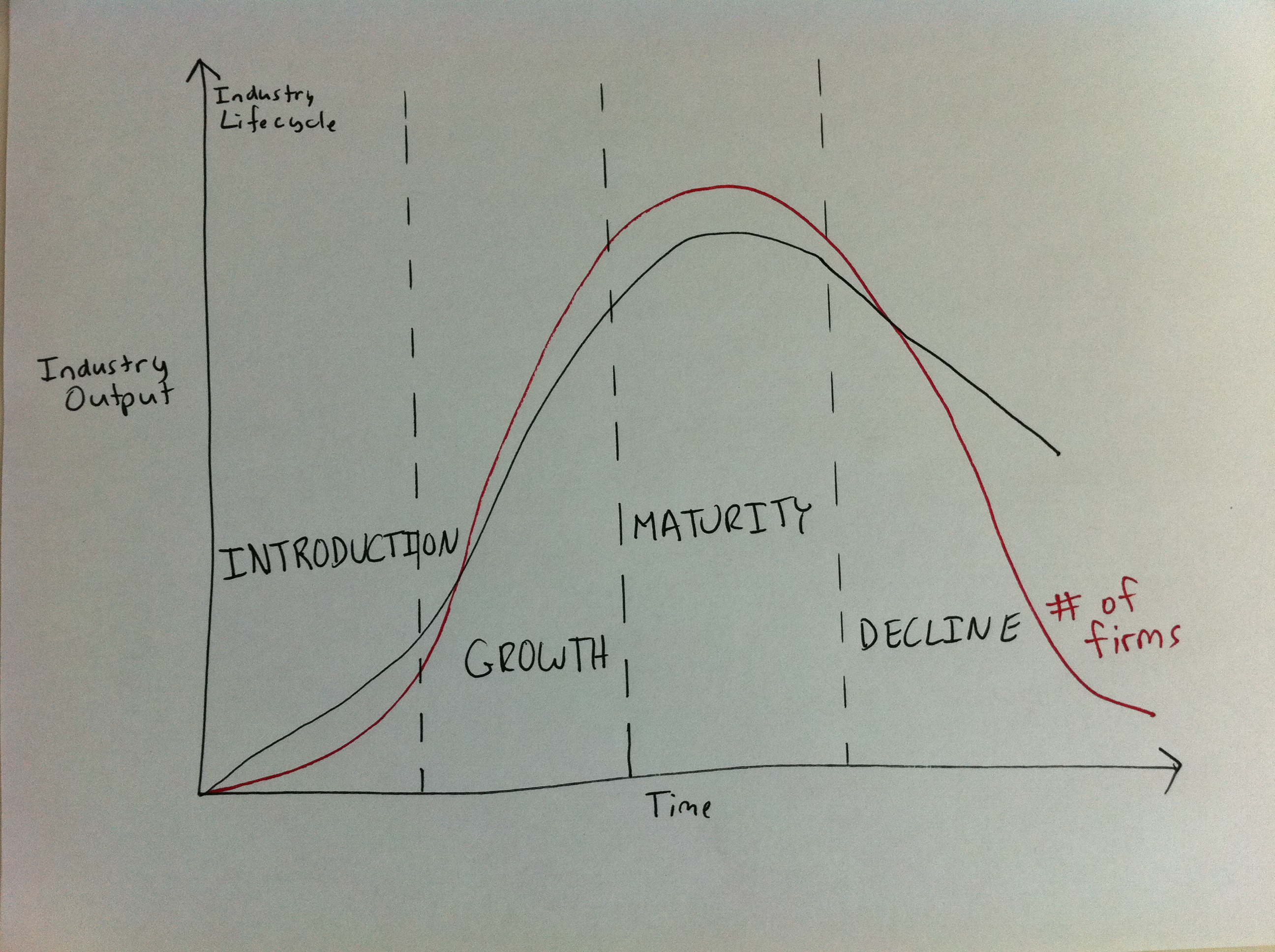
Anyway, here’s what the generic industry lifecycle looks like, and I’ve drawn the number of firms in the industry in red. Typically, the number of firms spikes and then eventually falls pretty quickly as firms consolidate in response to commoditization. How these curves look will vary by industry, but my guess is that the number of firms in wireless telecom in consolidating earlier than what I show in this graph (so the red line would scrunch to the left a bit, probably so the peak is in the mid-to-late portion of the “growth” phase). Seem like wireless telecom is into “maturity” phase* although there’s still some innovating going on (LTE, 4G, etc.).
*That’s not to say that handsets and other complementary technologies aren’t still growing. But wireless telecom seems to more or less be settled into moving data around the airwaves and is simply trying to find faster ways to do it.
I’ve seen rumblings, mostly con, on Twitter and Facebook about Florida’s current educational reform. I’ve had quite a bit of trouble actually finding a summary of the reform plan, although I found a lot of articles about it. So I’ve tried to cobble together what seem to be the basic tenets of the plan, and I’m going to try to address them, mostly from an economic perspective.
If you just want to see the Cliffs Notes version, jump down to the Conclusion.
Eliminate Tenure – Tenure in academia and secondary education appear to be totally different animals called by a common name. In a university setting, I understand that tenure is designed to allow proven, experienced academics to pursue research and teaching methods that may be considered risky or controversial. It’s also seen as a draw for quality professors who are looking for job security. Secondary (used here to mean “primary and secondary”) educators don’t do research – on controversial topics or otherwise – and aren’t really known for trying out new teaching methods. So tenure really seems to be more of a reward for having stuck it out for some number of years. “You’ve put in some years, so we’re going to make your employment extremely stable.” In academia, it appears to be designed to draw quality professors and encourage risk taking and innovation. In secondary education, it seems more like a perk rewarding teachers for working in the profession and encouraging them to stick around.
I’m having trouble wrapping my mind around the benefit to society provided by tenure in secondary education. I definitely see the benefit to teachers – job security and regular pay increases – but I can’t quite see how that benefit necessarily translates into better-educated students and a better society. There are very few professions that will guarantee pay increases and erect barriers to termination just because a person has been in a job for a while. This is because “years on the job” doesn’t guarantee that a worker will produce a superior work product, and it can be very expensive to continue employing ineffective employees. In the case of teaching, employing an ineffective, tenured teacher means that society is paying a premium for poorly educated students. Not only is this expensive, but it ultimately damages society and prevents us from hiring good replacements due to budget constraints.
I hope that most tenured teachers are superior to their un-tenured colleagues, but what about the ones who aren’t? They are the most expensive teachers, and their cost prevents hiring younger, cheaper teachers to give them a shot.
Merit-based Pay – As I understand the Florida secondary education tenure system, the primary data point used to determine merit increases is years on the job. There is a performance appraisal, but I understand it’s mostly a formality. The economy may affect pay, but only if the state or county determines that things are so bad it can’t afford to give raises this year. If this happens, the unions go to work, defending their constituents, making it difficult for government to deny raises, and deterring government from even trying to do so. (NOTE: This post isn’t about unions. But I think it’s silly to try to decouple unions from a discussion of education reform, so I’ll allude to unions a few times here.) The result seems to be almost-certain pay increases based almost exclusively on years on the job. It’s also extremely difficult to fire a teacher unless the teacher does something particularly egregious. Producing poorly performing students doesn’t seem to be considered egregious so much as a result of externalities like student home life or poorly designed standardized tests. As a result, teachers are generally not fired for producing bad results – they’re either left alone or possibly moved to another school if local parents make enough noise.
The plan seems to address this by replacing tenure with merit-based pay. If tenure were totally eliminated, teachers would be evaluated annually, and their contract would need to be renewed or discontinued every year. Right now, their three-year contracts auto-renew. This switch from tenure to merit-based pay makes sense to me in general, although it seems that we’re very short on the details of how merit will be assessed.
In most professions, a performance appraisal and measurement against some metrics is about all that is necessary. Typically, the metrics are called “goals” or “objectives” for the employee. At the beginning of the year, the employee’s manager helps the employee define the goals or the goals are simply disseminated from company management. At the end of the year, the employee receives a performance appraisal where he is evaluated qualitatively by his manager and quantitatively by comparing his actual performance to his goals. The results of the performance appraisal are typically used to determine what, if any, merit increase the employee will get that year (better performance means potential for a greater merit increase and poor performance often means no merit increase). A lot of other factors will contribute to potential increases as well: the economy, how the employee is paid relative to what the market is paying (often handled in a separate “market adjustment”), the company’s performance in the previous year, etc.
Merit-based pay for teachers is tricky because there don’t seem to be well-defined metrics. We also don’t know the market rate for teachers because teaching isn’t really a “market” per se. That basically leaves us with the economic climate to help determine teacher pay. But, as mentioned before, teacher unions typically resist allowing a poor economy to affect teacher pay. From an outsider’s perspective, it looks very much like the unions aren’t interested in finding ways to evaluate teacher performance and create a good product (viz, well-educated students), but in protecting teachers’ jobs and pay. Of course, this is totally intuitive: unions don’t exist to improve the quality of products, they exist to protect their own constituents.
Merit-based pay seems to be a good alternative to tenure in that in enables administrators and local governments to identify, reward and retain the better teachers, and weed out the poorer teachers. The trick is determining how to evaluate teachers accurately. Whether the new plan will provide reliable ways to evaluate teachers remains to be seen.
Vouchers – But teacher pay really only tackles the supply side of the equation: how do we encourage teachers to produce a good product and retain those who do? Evaluating pay and incentive structures, budgeting, and allocating teaching resources are all top-down approaches to evaluating education. Markets also consist of a demand side: who consumes the product and how do they determine which version to consume if there are substitutes? This lack of a demand side in secondary education is a big reason there isn’t a real market for teachers or education. Enter vouchers.
What if we gave a student the option to spend his money at the local school, which is known to be a crummy school, or at any number of other schools including private ones? Now does the local school and its teachers have an incentive to provide a better education? Yes, because its customers now have access to substitutes that were not available before. Vouchers are ultimately good because they promote competition. They actually create a market for education and subsequently provide a better education and may lower education costs by introducing efficiencies.
If we look at things from the local school’s perspective, I think this becomes more obvious. Without vouchers or some other form of competition, a local school has a more or less guaranteed customer base. The kids who grow up within a certain radius of the school must go there unless they can go to a magnet school or their parents can afford to send them to private school. So the school knows that it will definitely get a certain number of kids every year just because it exists. All it has to do is collect its funding from the county, hire some teachers and the rest pretty much takes care of itself. What incentive is there for the school to improve its performance? Where will its customers (the students) go if it performs poorly?
When there’s a market offering equally-priced substitutes, customers will choose the best substitute. If I go to McDonald’s and get a bad hamburger, I’ll go next door to Burger King and see what they have to offer. If Burger King stinks, I’ll try Wendy’s. If Wendy’s stinks? I might just decide not to spend money on a hamburger. What happens if a student goes to a school for an education and the education his school provides is poor? Not only is there no Burger King or Wendy’s (unless his family can afford private alternatives), but he must spend his money at that school. Even parents who pay for their kids to attend private school still have to pay into the public education kitty. The student is forced to buy a product from a single provider and he has no alternatives. The school is a local monopoly whose product is secondary education. What incentives does the school have to provide a better product when it has a captive customer base? Sure, we can try to provide indirect incentives like threatening to cut funding if they don’t produce better test scores, but there is no direct way for the consumer of the product to choose substitutes and punish the school for a poor quality education.
But if we allow the student to spend his money at any school – public or private – the schools must compete for that student’s money. Competition forces producers to make better products and use their resources more efficiently because they can’t rest on their laurels and just assume that their current customers will be their future customers.
Conclusion
It seems like the plan might also involve some tax deduction shenanigans and other smaller items, but most of the chatter I’ve seen doesn’t focus on these. I couldn’t find enough information to even describe the other factors, so I’m just going to leave them alone.
What’s really baffling about all this is that, at the macro level, there is an ongoing, decades-long discussion around how we can improve our educational system – how we’re falling behind other countries in educational output, how our students aren’t as prepared as students from other countries – and yet we refuse to evaluate the quality of our educators in order to promote the good ones and replace the bad ones. This conversation was going on for years before Milton Friedman wrote about the need for education reform in his 1979 book “Free to Choose”, and yet all the talking doesn’t seem to be affecting actual student performance. We seem to be asking how we can improve the quality of our country’s education product (and typically the answer seems to come back, “spend more money”) while refusing to evaluate the producers of that product.
Other groups need to step in and give it a shot. Modern technology should make this relatively easy by offering an “educators” version of Consumer Reports, or a website for parents to rate their kids’ teachers, or a peer evaluation system or some other way of identifying those teachers who are doing good work. The LA Times attempted to do this, but that attempt was strongly rebuffed by the unions as they called for a boycott of the Times:
The Los Angeles teachers union president said Sunday he was organizing a “massive boycott” of The Times after the newspaper began publishing a series of articles that uses student test scores to estimate the effectiveness of district teachers.
As the LA Times discovered, there is a lot of data out there, but it can be difficult to evaluate that data and determine how to proceed without more science to help us understand how to identify good teachers. Just looking at data doesn’t tell us anything – we need to know what we’re looking for and we need to be prepared to act on what we find.
The current reform in Florida seems to be heading in the right direction. Merit-based pay seems to be a more transparent and effective way to evaluate our teachers, identify the good ones and reward them for their good work. Although the metrics and methodology required to actually evaluate teachers’ merit don’t seem to be well defined, that may be because they weren’t previously required for teacher evaluations, and because the unions have been resisting this kind of evaluation. If these metrics and methods for evaluation haven’t happened organically to this point, it seems unlikely that they’ll ever happen without some burning platform. Vouchers seem like a no-brainer to me as they would create a competitive market for education, improving quality and potentially reducing cost.
What do you think? Am I misunderstanding the proposed reforms? Overestimating the value of competition in education?
A lot of my friends are getting iPhones now, and they often ask me for app recommendations. When the iPhone 4 came out in 2010, I wrote up a list of my favorite apps and emailed it over to my friends who were new adopters. I’ve updated it a few times since then, emailing the latest version to the latest adopters. After a few iterations, I realized it would be easier to just put it online so I can update it when I find new stuff and so anyone can get to it.
There are many sites that will review and recommend apps, so what’s unique about this particular list? It’s what’s on my phone right now. And since friends tend to cluster around common interests, it makes sense that friends want to know what other friends are using.
You should know that I have a thing about never rarely paying for an app. I don’t know why. It’s almost irrational and my friends always give me crap about it. That being said, this is good news for you – I will recommend a bunch of excellent apps that will cost you nothing, and I try to identify apps as “(Free)” whenever possible.
I didn’t include everything (but most of the stuff on my phone right now is listed here). I’ll try to format this so it’s easy to read…
I organized my phone as follows (using folders):
In my dock, I keep Messages, Phone, Mail, iPod.
Stuff from first screen that’s not Apple default stuff:
Dropbox – (Free) Awesome file sharing software that’s free. You have to sign up for an account, but then you get 2GB free storage. It’s awesome and convenient.
Pandora – (Free) I’m sure you know about Pandora. Pretty great, and it got moved to my home screen after iOS4 made it possible to stream music while doing other stuff.
NPR News – (Free) This app let’s you stream NPR shows (my favorites are Car Talk and Planet Money).
Facebook – (Free) I think it’s the top rated app. Useless if you’re not on FB.
Dictionary.com – (Free) Very handy for quick reference. I use it a lot when reading DFW. But it also comes in handy in general conversations (turns out, “contemplative” has several pronunciations – the app was the final nail in the coffin in a debate with a friend, who had never heard it pronounced “con-TEM-pluh-tiv”).
Skype – (Free) Obvious. Currently allows free 3G calls over Skype. So, basically free VOIP. Awesome. Also rumored to be adding video calling soon.
Twitter – (Free… see a trend here?) This is the official Twitter app and I like it best of the free ones. It used to be a $3 app called “Tweetie” (which is what I still use on my Mac).
Stuff in folders on my second screen:
Search
IMDB – (Free) Want to know when a movie was released or whose cameo was on that episode of Scrubs? This app is great for finding movie and TV info quickly.
Wikipedia – (Free)
bing – (Free)
SoundHound – (Free) Another song-search app. I’ve never actually used it.
Yahoo! – (Free)
Wikipanion – (Free)
Shazam – (Free) This app is AWESOME – it listens to music and tells you what the song is.
Zillow – (Free) Good use of location services to tell you what houses are on the market, recently sold, etc. around you.
News
AP Mobile – (Free)
Pokernews – (Free)
Pulse News – (Free) Sort of an RSS reader and aggregator for iPhone. Aggregates news feeds visually and has a pretty slick interface that lets you move through several sites and recent articles quickly.
HuffPost – (Free)
NYTimes – (Free)
Economist – (Free)
Instapaper – (Free) Let’s you mark articles and web pages to read later. A pretty handy way to flag stuff that you want to read, but don’t have time right now. Also good for saving stuff to read for when you may not have an internet connection.
Food
Yelp! – (Free) Great app for food reviews and finding stuff near you.
OpenTable – (Free) Lets you make reservations at local restaurants via iPhone.
Restaurants – (Free) Nutrition info for a lot of restaurants (occasionally talks me out of getting unhealthy stuff, but usually just reminds me how terrible I eat).
UrbanSpoon – (Free) Search for food near you using type, price and location variables.
epicurious – (Free) Helps with grocery shopping, recipes, etc.
Shopping
eBay – (Free)
Amazon.com – (Free)
Fandango – (Free)
Mobile Card – (Free) The Starbucks app that I use as my Starbucks card. Shows current balance, how many stars I’ve earned (for my Gold Card – 15 stars means I get a coupon for a free drink), and can be used to pay with my card in lieu of the actual card.
Utilities
Evernote – (Free) This is a pretty powerful service that I haven’t gotten into yet. It’s on my list, and I’ve heard really good things about it. It’s cloud-based and lets you upload notes, photos, URLs, etc., for easy organization and accessibility.
Glyphboard – (Free) Web app that lets you copy/paste special characters.
Dragon Dictation – (Free) Voice recognition app that converts speech to text.
Boxcar – (Free) A notification aggregator (a single app that can handle notifications for various services like email, Twitter, Facebook, etc.).
Opera Mini – (Free) Web browser.
Atomic Lite – (Free) Web browser.
PixelPipe – (Free) File transfer assistant to help get media files posted to social media sites.
Flashlight – (Free) Pretty straightforward app that just turns your phone into a light so you can see in the dark.
Finance
ETrade – (Free)
Discover Card – (Free)
Fidelity – (Free)
Bank of America – (Free)
Mint.com – (Free) Cool financial planning, analysis, tracking tool. Aggregates all of your financial accounts into one place, shows total net worth, value of savings, cash on hand, etc.
Yahoo! Finance – (Free) For reading news and checking stocks.
Social
LinkedIn – (Free)
fring – (Free) Video chat and IM client.
Sports
ScoreCenter – (Free) ESPN.
Sportacular – (Free) Yahoo! Sports.
SI.com – (Free)
NBC Sports – (Free)
FOX Sports – (Free)
CBS Sports – (Free)
Local Info
Layar – (Free) Funky augmented reality app that uses the rear-facing camera to overlay local businesses, restaurants, etc. on screen.
AroundMe – (Free) Helps to find stuff that’s nearby.
MapQuest – (Free)
skobbler – (Free) Turn-by-turn navigation app.
Now Playing – (Free) Find movies, check Rotten Tomatoes scores
The Weather Channel – (Free)
WeatherBug – (Free)
The Scoop – (Free) New York Times app that tells you all of the NYT’s favorite stuff to do in NYC – restaurants, shows, etc.
LivingSocial – (Free) Daily deals and coupons.
Groupon – (Free) Daily deals and coupons.
Photography
Gorillacam – (Free) Camera app with timers, anti-shake, etc.
Chromacam – Developed by a friend of mine. ALlows some pretty cool photo tweaking like emphasizing a single color in a photo that’s otherwise B&W.
PS Express – (Free) Photoshop app for tweaking and editing photos.
Instagram – (Free) Social networking, photo sharing and editing.
Entertainment
Netflix – For managing my Netflix queue and searching for new stuff, also lets you stream stuff over 3G. Netflix account required
YouTube webapp – (Free)
NPR Music – (Free) NPR frequently has free previews of soon-to-be-released albums, and you can get a lot of cool, NPR-exclusive live shows by different bands.
Flixster – (Free) Lets you look for movie times and get Rotten Tomatoes scores for movies that are out.
RunPee – (Free) Tells you when good pee break opportunities are coming up in movies so you don’t miss the action.
Books
Kindle – (Free)
Barnes & Noble eReader – (Free)
Bible – (Free)
Apple (actually, the Apple trademarked symbol, thanks to Glyphboard – see Utilities above)
All the standard apple stuff that comes on the phone that I pulled from my homescreen (this is just personal preference, obviously)
Remote – (Free) Awesome app that lets you control iTunes on your PC/Mac from your phone over WiFi – super duper awesome for DJing a party at your house or something b/c you can change playlists, volume, songs, etc. from your phone even if the stereo isn’t in the room with you.
Apple Store – (Free)
iBooks – (Free)
iMovie – good for editing the sweet 720p video the iPhone 4 can shoot – cost is $5
Games – I don’t have many. I just kinda download random stuff that’s “on sale” as “free” temporarily. I’m a game troll. Well, my friend Jesse tricked me into buying some games and now I have tons of them (the iPhone is a really good gaming platform). Most of the games I’ve bought are $.99.
Angry Birds – Evil pigs have stolen the birds’ eggs. The birds try to defeat the pigs by being fired from a slingshot. It was game of the year for iPhone in 2010
Peggle – Puzzle game sort of like Snood, if you remember that.
Osmos – Puzzle game where you’re some kind of blob and you try to absorb other blobs before evil blob(s) absorb you.
Cut The Rope – Puzzler where you try to get the frog the candy he wants. You cut ropes strategically to help the candy get to him.
Poker 1-on-1 – A friend of mine developed this with another friend of mine. The game’s intelligence has been designed and improved with Vanessa Rousso’s help. It’s a fun app that teaches heads-up poker and helps kill time.
Tiki – Puzzle game where you’re trying to destroy blocks on the screen without allowing certain blocks to fall over.
Cat Physics – Puzzle game where you have to figure out how to get the ball of yarn from one cat to another.
Plants vs Zombies – Technically a “tower defense game”. Really, really fun and pretty addicting – one of the more popular iPhone games.
The Creeps! – Also a tower defense game. You gotta’ keep the baddies from getting to the sleeping kid. Really fun and addicting, also pretty challenging and well worth $.99 just for the time I’ve gotten out of this one.
Trainyard EX – Another puzzle game that will strain your brain. You’re trying to lay track so that the colored trains can find the appropriate color-coded station.
Paper Glider – (free) Good for killing time. Keep the paper glider in the air as long as possible.
Cover Orange – (free) Physics-based puzzler. Strategically drop the boxes, barrels and wheels to protect the oranges from the nasty raincloud.
Fruit Ninja – Sort of like skeet shooting, only you’re destroying fruit with a sword.
Tiny Wings – My current addiction. It’s like Paper Glider meets Angry Birds.
Wireless
FCC Broadband Test – (Free) FCC app for testing the speed of your data connection.
Speed Test – (Free) Another one to test your upload/download speeds.
myWireless – (Free) Monitor data usage, billing, etc. on AT&T.
Mark the Spot – (Free) Allows you to report trouble spots in coverage where you drop calls on AT&T.
Health
TripIt – (Free) Travel organizer. Helps keep track of itineraries, etc.
RunKeeper Pro – (Free) Fitness and run tracker.
Travel
GateGuru – (Free) Tells you what stuff is near you in the airport so you can find good food, etc. with reviews.
TripTik – (Free) AAA app for finding good local tuff while traveling.
WordLens – (Free) Augmented reality app. You hold your phone up so it sees text on a sign or something, and it translates the text in real time. The app is free, and you pay $5 for a language pack (ie, Spanish to English). It actually works and I expect it to get a lot better pretty quickly as people use it.
Google Mobile – (Free) Sort of a catch-all for Google. This app contains several Google apps like Gmail, Calendar, Buzz, etc.
GoogleVoice – (Free) If you have GoogleVoice, you should get this app so you can use it on your iPhone. It’s basically free call forwarding to wherever you are.
Translate – (Free) Translate words into other languages.
Shopper – (Free) Uses the rear-facing camera to identify products to make price comparisons and locating substitutes easy.
My phone is Jailbroken, so I also have a few Jailbreak apps that I’ve downloaded from the Cydia Store.
Cydia
MyWi 4.0 – Lets me use my iPhone as a mobile hotspot using my 3G connection.
My3G – Some apps are specifically designed so they’ll only access data if the phone is on a WiFi network. Specifically, anything over 10MB will trigger the WiFi-only restriction. This app removes this limitation.
SBSettings – (Free) Gives me a quick way to access common settings with one or two taps/swipes (as opposed to several). Some settings I change a lot are BlueTooth On/Off, WiFi On/Off and Airplane Mode On/Off.
MobileNotifier – (Free) Far and away the best notification app I’ve seen for iPhone. It usurps the native iPhone notifications with a sleek, easy-to-use notification system that makes a lot more sense than the native solution. Hopefully Apple will work something like this into iOS5.
Stuff on third screen (random stuff):
Mirror – (Free) Uses the front-facing camera as a mirror – you never know when you might find something in your teeth.
Constitution – (Free) For quick reference when I’m wondering “is that constitutional?”
FindiPhone – (Free) Apple made this free with version 4.2 of the iPhone software. You can set it up online at MobileMe.com – you can find your iPhone if it’s lost or stolen.
HeyTell – (Free) Like text messaging meets voicemail. You can push a button and send a quick voice message to other HeyTell users.

Last January, a friend of mine asked if I would recommend buying Apple stock. This was after my piece at TUAW.com predicting big things for Apple in 2010 and beyond. In March (8th) I wrote this email recommending a “Buy” for AAPL. This was my first official stock recommendation (in 2003, I suggested to a friend that Netflix and TiVO would be good buys, but that recommendation didn’t really have any teeth and I didn’t buy anything at that time), and it generally worked out pretty well.
I thought it would be fun to review my recommendation (and logic) to see where I was right and where I missed the mark. Here’s an unedited version of the email I sent:
TO BE CLEAR, I’m not an expert. This is just my opinion based on what I’ve seen buzz-wise online, along with my own speculation about potential iPad/iPhone success.
Big reasons I feel like Apple stock is due for a nice jump over the next six months or so:
1. I think iPad is going to sell very well. The analysts seem to believe so as well. There have been several articles written* comparing the pre-sales polls of iPhone and iPad, and it appears that consumers have more of an appetite for iPad than they did iPhone before iPhone was released in 2007. While I don’t think the iPad will sell nearly as many units as iPhone, I think it will sell very well, and will sell better than most have predicted. Obviously, better sales translates to rising stock price. iPad is going to be an e-reader killer – I think this is certain. But iPad offers a lot of other functionality and Apple has been very clever about building partnerships with content providers for this device. Kindle, Nook and other e-readers are about to get massacred by the iPad. This device basically will do for data sharing and consumption what the iPhone did for call-making and web-surfing devices.
2. The 4th generation iPhone is rumored to be coming out in June/July. I think it’s going to be a pretty big redesign** (I will explain this opinion below), but what’s interesting is that there are very few rumors/leaks regarding the new version so far. This is an advantage to current would-be investors because I’m pretty sure their stock will see a nice uptick once they announce the new phone and its features.
The iPad goes on sale like first week in April. The new iPhone specs/features should be announced about 6 weeks later, and it should go on sale at the time or within four weeks of the announcement. So, from first week in April (when iPad goes on sale) until probably late July (when new iPhone will likely be on sale) there will be an overlap of TWO big, new products that I think will be recieved very well. This bump should last a couple months after the new iPhones go on sale, and then will likely abate. I think this will result in an unusually big uptick for Apple stock since TWO technologies will likely be doing very well for them in this window. I’m considering buying a few shares (I don’t have much cash, and they’re trading at about $220 right now, so they’re not cheap) myself. But I don’t know if I’ll actually pull the trigger.
*Links to articles:
http://digitaldaily.allthingsd.com/20100223/initial-ipad-demand-greater-than-initial-iphone-demand/
http://news.cnet.com/8301-13506_3-10458459-17.html
**Why I think 4th gen iPhone will be a big redesign:
1. The 3GS was NOT a significant redesign. It was an incremental update, and it definitely improved the product, but very few people upgraded or switched (as opposed to the 1st gen iphone to iPhone 3G, where a lot of people upgraded, finally bought iPhones or switched from other carriers because the 3G price was so heavily subsidized by AT&T and reduced by Apple to a lower baseline).
2. This is the big one: Other manufacturers are finally starting to catch up to the functionality and specs of the iPhone. Google’s DROID phones are nipping at iPhone’s heels. Pretty much every handset manufacturer is finally trying to replicate iPhone. To iPhone’s credit, it has taken competitors THREE YEARS to ALMOST catch up. Apple knows this, and Apple knows that they are dominating the handheld device market right now, and they want to continue improving market share. They do this by re-reinventing the mobile phone with a 4th gen iPhone.
SUMMARY:
When we spoke in January, I was a little skeptical as to whether AAPL was a good buy. The chart from then to now reflects my skepticism:
[AAPL’s January to March chart was referenced here.]
They dipped right after that conversation, and they appear to be on the upswing now. I think this upswing will continue for probably 5-6 months because of iPad/iPhone releases. I think now is a good time to buy some AAPL.
So how did I do? Here is AAPL’s chart for the past year. I ended up buying some shares of AAPL, but not until May 11, so I bought in at $250 a share, and AAPL is at $336 as I write this.
What I got right:
Where I messed up:
I’ve been thinking a lot about Apple in 2011, and my intuition tells me that 2011 won’t be as good as 2010 was. I think Apple will have a strong year in 2011, but 2010 was a big, big year for them.
If I’m able to formulate enough opinions to justify a blog post with some predictions this year, I’ll be sure to put them up.
The Obama Administration is filing suit against Arizona for its new illegal immigration law. As far as I can tell from skimming the Arizona State Senate Bill, the purpose of the bill is to enforce the existing federal immigration laws. So, the “Arizona immigration law” is really just a declaration by Arizona as to how it will enforce federal immigration laws.
Ultimately, this means three things: First, the Arizona legislature does not feel that the federal government is doing an adequate job of enforcing its own immigration laws; Second, Arizona has determined that it should do its best to enforce the federal immigration laws within the state; Third, the federal government, instead of enforcing its own immigration laws, will sue Arizona for trying to enforce the federal immigration laws.
The issue has been hot and cold for many years now, but no progress has really been made in all that time. My guess was that Arizona had identified illegal immigration as a real problem, but that the problem was too expensive to fix on its own. Also, Arizona’s border is also the US border, so they figured the US should kick in to help protect it.
Here’s a summary of the bizarre pieces of this situation:
When the story about the Arizona immigration law first hit the mainstream, I immediately suspected it was an attempt to goad the federal government into action on the illegal immigration issue:
Arizona was basically saying, “Well, we tried doing everything through diplomatic channels and several consecutive presidential administrations have ignored us, so we’re going to try something a little more direct to see if we can get some action out of the federal government.” I don’t think they anticipated this kind of action, but it isn’t necessarily a bad result for them. If the federal government is going to sue Arizona for its new immigration law, it should also be willing to finally do something about the issue.