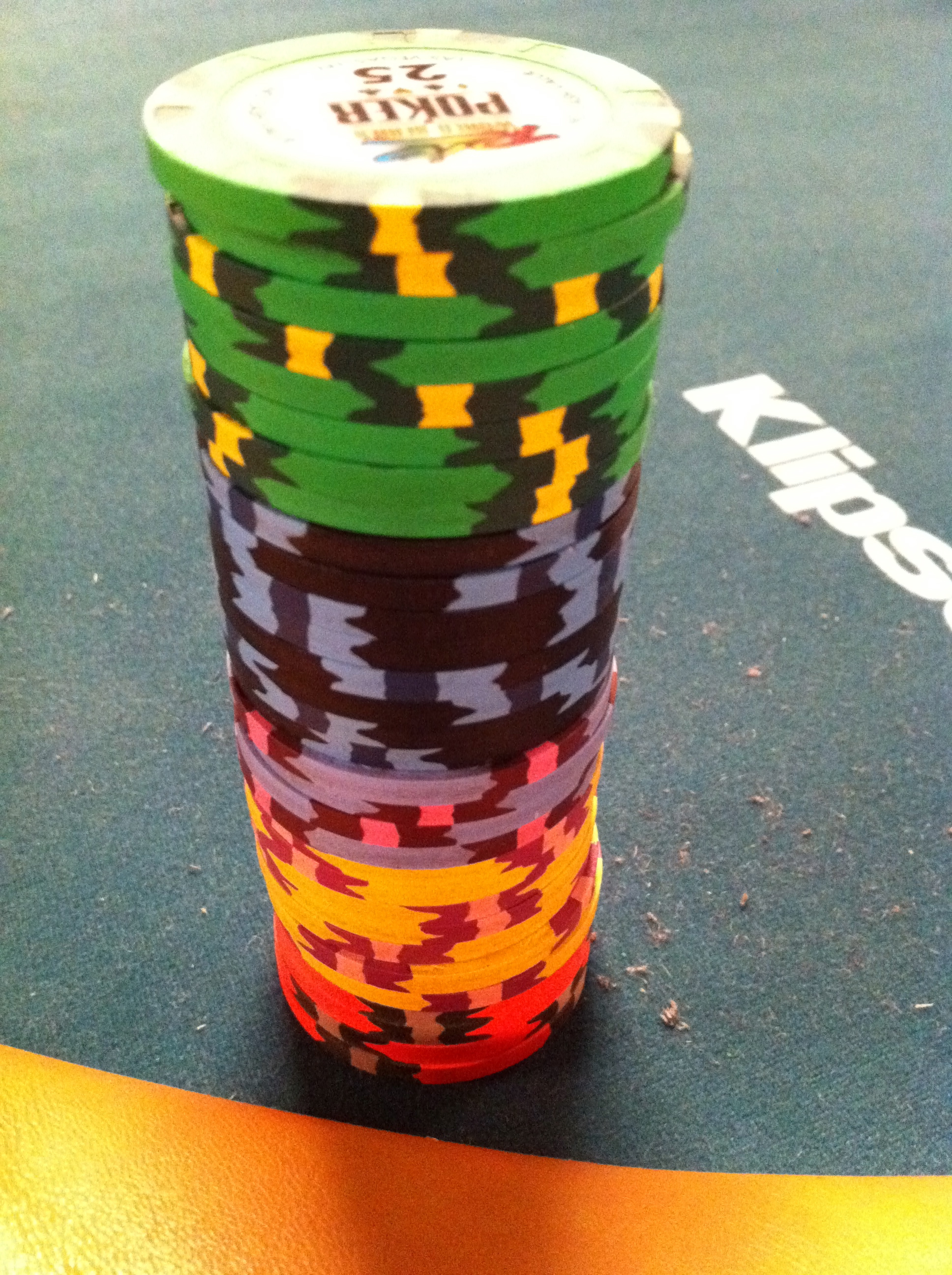
2011 WSOP Diary: Week 3

Day 12 (July 4): I did end up playing the Wynn re-buy yesterday, and min-cashed again. Here are my results for the trip so far:

  • (+$231) Rio – $235 – 964 entrants – finished 79 – $466
  • (-$625) Wynn – $625 ($225 plus two $200 rebuys) – 111 entrants, finished around 45 (15 paid)
  • (-$1k) WSOP 43
  • (+$560) Wynn – $425 ($225 plus one $200 rebuy) – 156 entrants, finished 20 – Ran T8o into QQ in the blinds
  • (+$394) Wynn – $425 ($225 plus one $200 rebuy) – 128 entrants, finished 15 – Ran 82o into AKo in the blinds
  • (+$752) Wynn – $425 ($225 plus one $200 rebuy) – 131 entrants, finished 11 – Lost flip w/ 99 < AKo
  • (-$425) Wynn – $425 ($225 plus one $200 rebuy) – 125 entrants, finished 21 (15 paid) – Lost flip with 66 < AQs
  • (+$666) Wynn – $425 ($225 plus one $200 rebuy) – 139 entrants, finished 15 (16 paid) – Ran 84s into KJo

A few thoughts on these results:

  • Overall, I’ve cashed 5/8 tournaments for the trip. Over the long run, 2/8 would be considered “good”, and 5/8 is pretty sick. I’m obviously sort of on a heater.
  • But what these numbers don’t show is that I’ve actually be running bad and not catching cards. The last non-cash at the Wynn (finished 21 when 15 paid), I lost a very big pot with about 40 people left: I had QQ and lost a three-way all-in to TT and 66 (66 won the main pot and I chopped the side pot with TT). Had I won that pot, I would’ve had good chips approaching the money and could have gone to work building my stack. Instead, I was crippled and ended up bubbling in 21st when I lost a coinflip.
  • For my last five tournaments, I’ve listed my bust out hands. I’m running bad in those spots. I got all-in totally dominated once, but otherwise got in on the better side of a coinflip twice, and lost two 60/40s. A big component of my style is that I am rarely all-in and called (at risk to bust from the tournament), so it’s not like I’ve been all-in 10 times before these hands come up. In some cases, this is the first time I’ve actually been at risk in the tournament. I will only lose all four of those hands about 7% of the time, and if I win any of those hands, I’ve doubled up and have a very good chance at making the final table.
  • I’m playing the short stack very well right now. Most of the time I’m on a short stack (such is the nature of this tournament structure), and sometimes very short (like eight big blinds or fewer). Normally, I wouldn’t let my stack get this short, but I’m able to find so many spots to steal blinds and get all-in with the best hand that I’m being more patient than normal. In my last cash, I had under seven big blinds with 21 players left and managed to finish 15th without catching any real hands. Playing the short stack is like that scene in “Indiana Jones and The Last Crusade” where Indie has to walk across the stones that will fall out from under him. (I spent way too long trying to find a good screencapture of Indie stepping across the stones, but just couldn’t find it.) I have to step very carefully and pick each move very wisely or I’m out of the tournament. I’m doing this well right now.

Enough about poker. Today is the 4th of July, and that means… well, I’m not exactly sure what it means. Hopefully the annual party at Mandalay Bay is happening, but I really haven’t heard one way or the other on that. If it’s not happening, I might take my first shot at a $550 mega satellite at the Rio – I need to start trying to win a Main Event seat. It’s kind of a long shot, but the good news is the Wynn has been prepping me to play a super short stack, and that’s what winning megas is all about.

I’m heading over to do some book work with my co-author this afternoon. It’s great to be making real progress while I’m out here. We’re about to wrap up a major section that is the foundation for the entire book, so I’m looking forward to getting that done.

Day 13: Turns out the Mandalay Bay party didn’t happen this year. That was pretty disappointing because I always look forward to seeing old friends and having a nice view of the fireworks on The Strip. Of course, since Vegas sneakily moved fireworks to July 3rd this year, we wouldn’t have had anything to watch anyway.

Since there wasn’t a Mandalay Bay party, a bunch of us went to Mesa Grill at Caesar’s Palace instead. That’s one of my favorite restaurants in Vegas, so I was happy to finally have a meal there. I forgot to get a picture of the spread, but it was ridiculous and delicious.

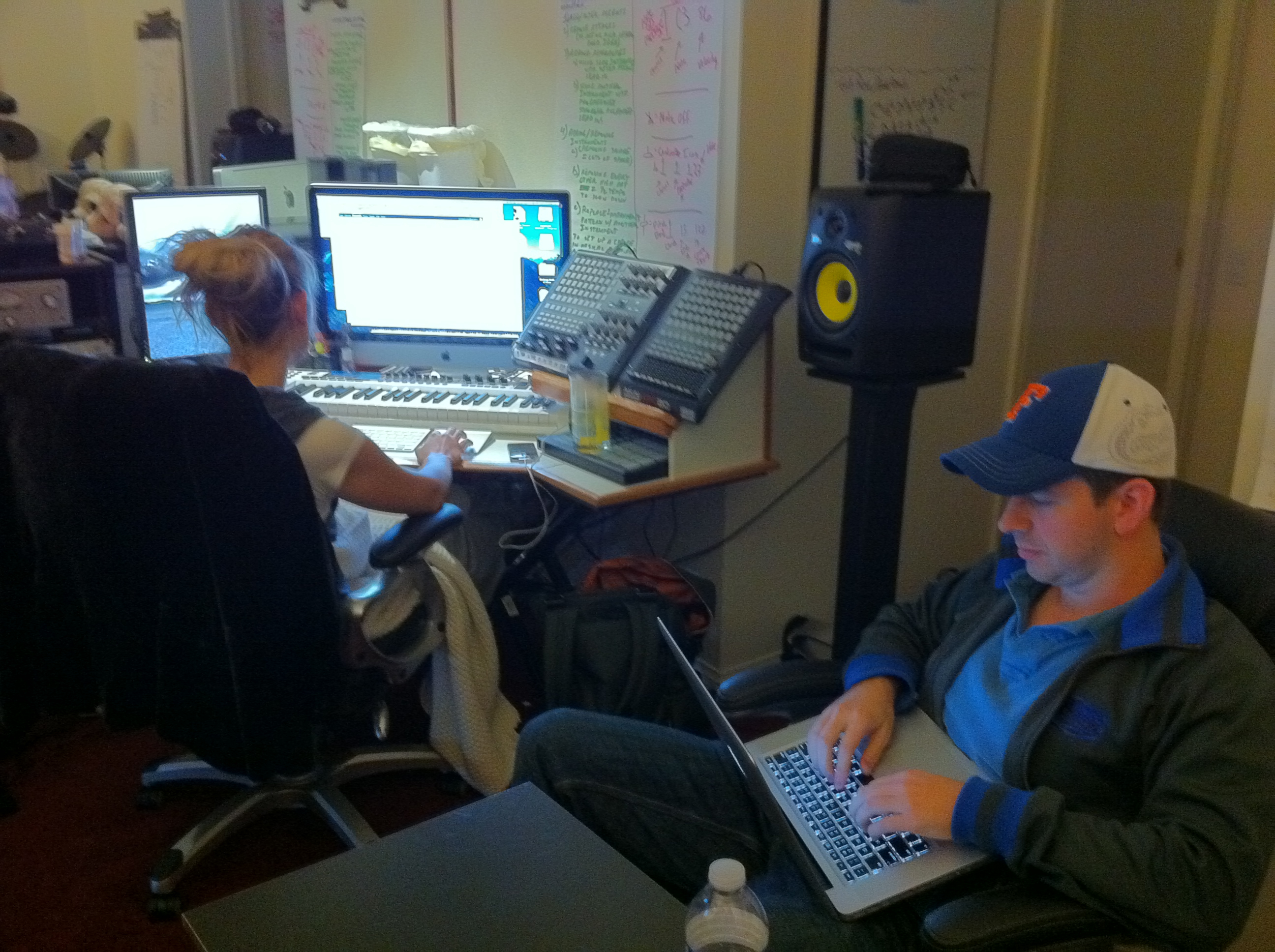
This morning, I met with my co-author (@VanessaRousso) and her friend Annie (@AnnieDuke) for a few hours to talk about writing and poker. They even discussed a couple interesting hands that Vanessa has encountered at this year’s WSOP. It was really fun to sit and listen to two great poker minds work through hands. (I’m not intentionally name-dropping here, but since I already mentioned this meeting and its attendees by name on Twitter, I figure it would be awkward if I started talking anonymously all of a sudden.) Anyway, it was a very good meeting that clarified some of the unkown parts of the writing process for us.

After that meeting I tried to hoof it over to the Rio for the $1,500 WSOP event to late-register, but by the time I got there the tournament was already an hour in, and the line was too long to justify registering. So I went to the Wynn and started 30 minutes late there. I actually played pretty well, but didn’t cash (finished 32 and 13 paid). I busted making a pretty risky move, but I saw it as a good chance to pick up dead money, and it just didn’t work out. Sometimes there’s a good spot to make a move, but you run into pocket Kings.

I busted out, then went to dinner with Luckbox Larry and wife at a pretty nice Indian place called Mint. We hadn’t been there before, but we all liked it a lot and will probably go back. We’ll be more inclined to return if we can find more coupons, of course.

I ended up turning in early because I was feeling under the weather again. I think I actually got a cold or something this time, so I figured the best thing was to take it easy. I ended up sleeping for like nine hours, which is a long time for me.

Day 14: Today I was going to do my normal routine of waking up, going to Starbucks to read the news and catch up on writing. But after about 20 minutes Luckbox Larry texted me to let me know there was a 10:00 AM $550 Mega Satellite to the Main Event. I decided to go ahead and play that so I could get some poker in without making me miss the Rally to End Cancer kickoff party hosted by my friends Vanessa and Chad at MGM. Turns out I made it exactly one hour into the stupid thing when I ran QQ into AK and lost the coinflip.

I spent the middle of the day sleeping off my cold. Then went over to MGM for the kickoff party. It was a good time. Vanessa’s husband Chad was recently diagnosed with and underwent treatment for a very rare form of cancer, so they have a real stake in cancer research and they’re aggressively pursuing ways to further cancer research. It was cool to see people coming together to talk about raising money for cancer research, and I think the event they’re planning is going to be pretty neat.

(Note that pic was just before the party started – the place eventually filled up, but I forgot to snap a pic.)

Day 15: Today was pretty unfun. I decided to play the Wynn re-buy and busted out of that pretty early when I ran AJo into AA against a very aggressive player who 3-bet me from the button at a 6-handed table. With our stack sizes and respective images, this is the equivalent of a cold deck – he has Aces almost none of the time in that spot, and I’m often raising hands I can just fold there. But AJ was probably ahead of his range, and I could get him to fold some hands that had me slightly beat (77/88). Even the way he turned over his Aces basically said, “Yeah, I know. But I actually have them this time.”

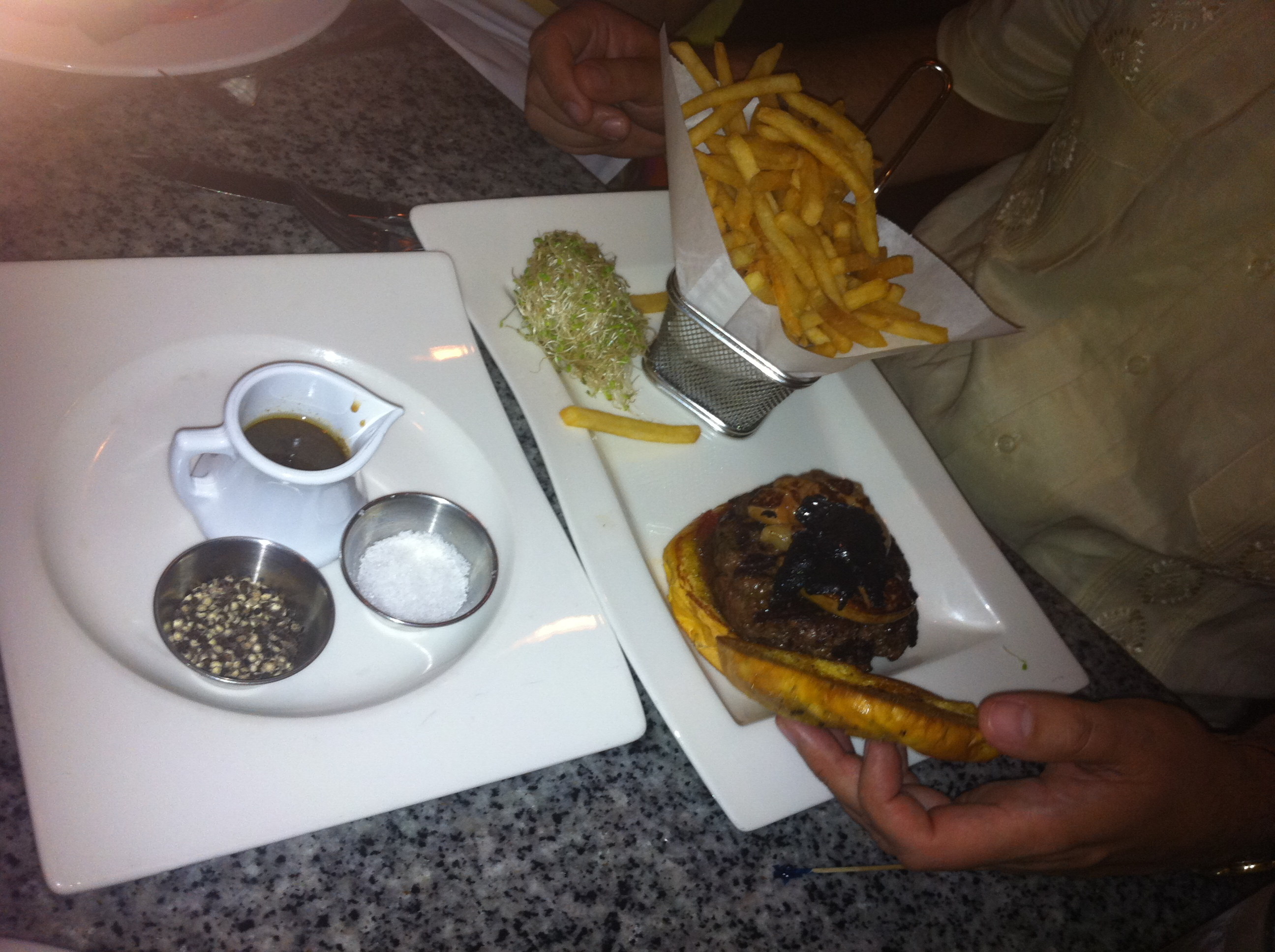
Later on, I went to dinner with some friends. Luckbox Larry won a bet so that Dan had to buy him a $60 burger at a place at Mandalay Bay. So we went over there and had good burgers and shakes while Luckbox Larry ate his foie gras burger with shaved truffle. I understand that’s supposed to be an awesome burger, but the smell of truffles kind of grosses me out.

It looks like I’ll be playing the Main Event this year (the details are still not nailed down, but it seems likely), so I’m started to try to get mentally ready to play that event. The WSOP Main Event is totally unique in that it’s a very deep structure (you start with 30,000 chips at 50/100 levels, and the levels are two hours each) and there are thousands of entrants, most of whom really don’t know how to play poker. It’s basically the optimal structure for me as I’m very comfortable in slow, deep stacked tournaments. But I also need to get my head right because I’ve been running pretty bad, and I’ve been playing really, really fast tournaments since I got here.

Day 16: I took it easy today to try to get my head right for the Main Event. I think I’ll probably play, but I’m not entirely sure. There are still some things that need to fall into place for it to work out. I’d really like to play, but I won’t be devastated if I don’t get to play.

Anyway, I got a good workout in today, and spent the rest of the day reading and watching TV and stuff. Netflix on iPhone/iPad/MacBook is keeping me sane out here. I’ve watched most of “Dead Like Me” Season 1, and I’m almost finished with Cheers Season 2. Both are pretty good shows for very different reasons.

I’ve been reading Annie Duke’s book “Decide to Play Great Poker” (Amazon link below), and it’s pretty good so far. It’s a high-level book focusing on concepts and ways to think about the game rather than a step-by-step guide to playing poker. I’ve already seen a few ways to think about stuff differently, so that’s been helpful. I think one thing it does well is focus on high-level concepts – it stays out of the weeds of math and really technical discussions. So far, so good. (Jump to the bottom of the post for a link to the book on Amazon.)

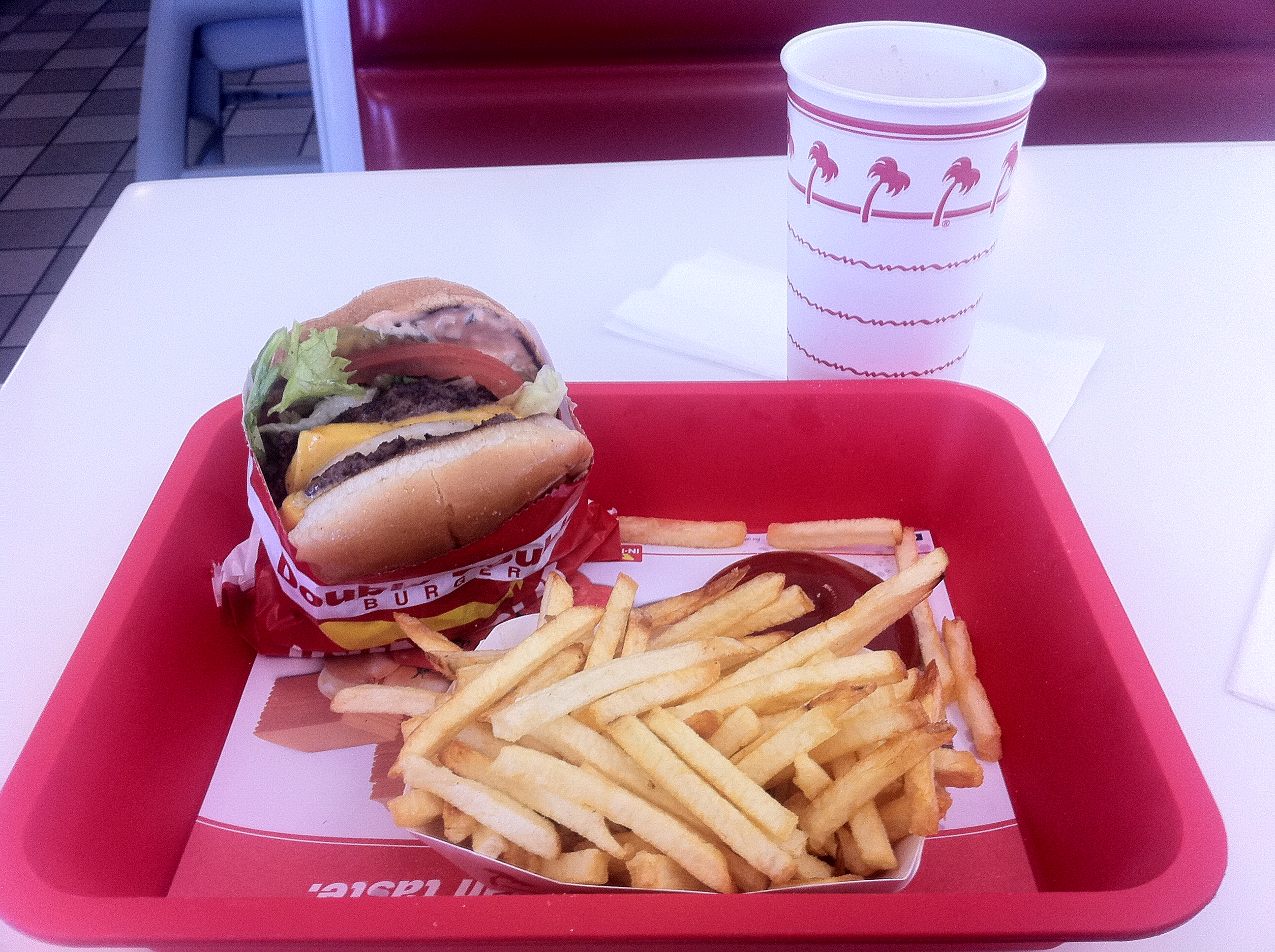
I had In-N-Out again tonight. We went at like 9:00 PM, expecting the place to be mostly empty. It most definitely was not empty. I couldn’t believe how many people were getting burgers late at night. That place must be printing money.

Zooming out a little bit, I realized I haven’t really described like my overall schedule out here. It’s actually pretty simple and repetitive. I think that’s actually kind of obvious in my recent posts, which are shorter and less detailed. I’m basically doing the same thing over and over again each day. Occasionally something will jump up and change the routine, but I’m more or less living a strange version of Groundhog Day.

I generally wake up between 8:00 and 9:00 AM, get ready for the day and head to Starbucks to catch up on reading and update the diary. I hang at Starbucks for a couple hours and then start trying to find some lunch around noon. Sometimes I just go back to the hotel room and make a PB&J, but I’ll also go meet friends for lunch or whatever. Then I try to figure out if I’m playing poker, writing or relaxing for the rest of the day. Most of the time, I’ve played poker, and I’ve probably had an even split of relaxing and writing for the rest of the time. If we’re writing, we usually break around dinner and then take it easy the rest of the evening. If I’m playing poker, I’m hoping to make the dinner break and then head to the final table (which hasn’t happened for me yet). Then it’s back to the hotel to read and watch Netflix. Then time to sleep and start over again.

It’s pretty unexciting except when I go to a new restaurant or have a meeting or something to break up the routine. Sometimes a friend will be making a deep run in a tournament, or a friend of a friend will be at a WSOP final table and I’ll head over to watch them play and provide support for a while. “Support” can just be hanging out, watching them play (it’s always encouraging to know some friends are keeping an eye on you when you’ve been playing for 10 hours and you’re starting to get tired). “Support” can also be doing reconnaissance around the bubble, and as they approach a final table.

On the money bubble, it’s helpful to know where the short stacks are and to get a sense of how long the bubble will last. When we’re playing online, we can just go look at the leader-board for that stuff. But it’s tougher to get that information when we’re playing live. So the person doing the recon might wander off, then stop by and say, “Two micro-stacks on that table over there. And on that other table, a stack shorter than yours will take the big blind in the next hand.” This information can help shape the correct strategy at that moment, so it’s very helpful. Occasionally, we’ll have a history with some of our friend’s opponents, or we’ll spot tells on people, and we can share that info.

Day 17: It’s 10:15 PM and I still don’t know if I’m playing the Main Event tomorrow. Some of the pieces have fallen into place, but some haven’t. So, I’ll find out for sure tomorrow morning. I’m ready to play if all of the pieces fall into place, but I’m content to pass on it if things aren’t just right. The Main Event has happened every year for a few decades now, and I’m sure it’ll go on happening every year for several more decades, so there’s no rush.

Today was a relaxing day. I didn’t do much but sleep, eat and read. I met some friends for dinner, but otherwise stayed pretty close to my hotel room for most of the day.

As of this writing, Luckbox Larry has put together a pretty big stack in the Main event. He has 77,000 chips and average is probably somewhere around 40,000. It’s too early to know how significant this is, but he’s a good player and having a big chip stack can only help him.

I’m going to watch some TV and then get some sleep. I could have a pretty big day tomorrow.

Day 18: It’s almost 10:00 AM on the final Day 1 (Day 1D) of the WSOP Main Event and I just confirmed that I’m playing it. A quick overview of what this really means:

  • There will probably be about 6,000 players. Maybe 1,000 are good players. Another couple thousand are decent. The rest are just people looking to have a good time and take a shot.
  • I’m well above average in this field. That doesn’t guarantee anything, but this structure is basically made for my style. I think it’s reasonable to expect I’ll cash about 25% of the time (which is well above a “normal” cash rate in normal tournaments, even for a good player). Of course, that means 75% of the time I probably won’t cash. This isn’t pessimism, it’s just how tournaments work.
  • I probably won’t be on TV. It’s possible, but there will be about 2,000 people in the field today and there is one feature table. There MIGHT be a second feature table, so maybe 20 people will be on TV. The deeper I go in the event, the more possible it is I could be on TV, but it continues to be unlikely.
  • There will be eight days of play before the final table. Those days won’t happen consecutively because there are so man players. My first day is today (July 10), and Day 8 will be July 19 (they’ll play down to the final table that day). So this could be the beginning of a very long poker tournament. Here’s the structure sheet.

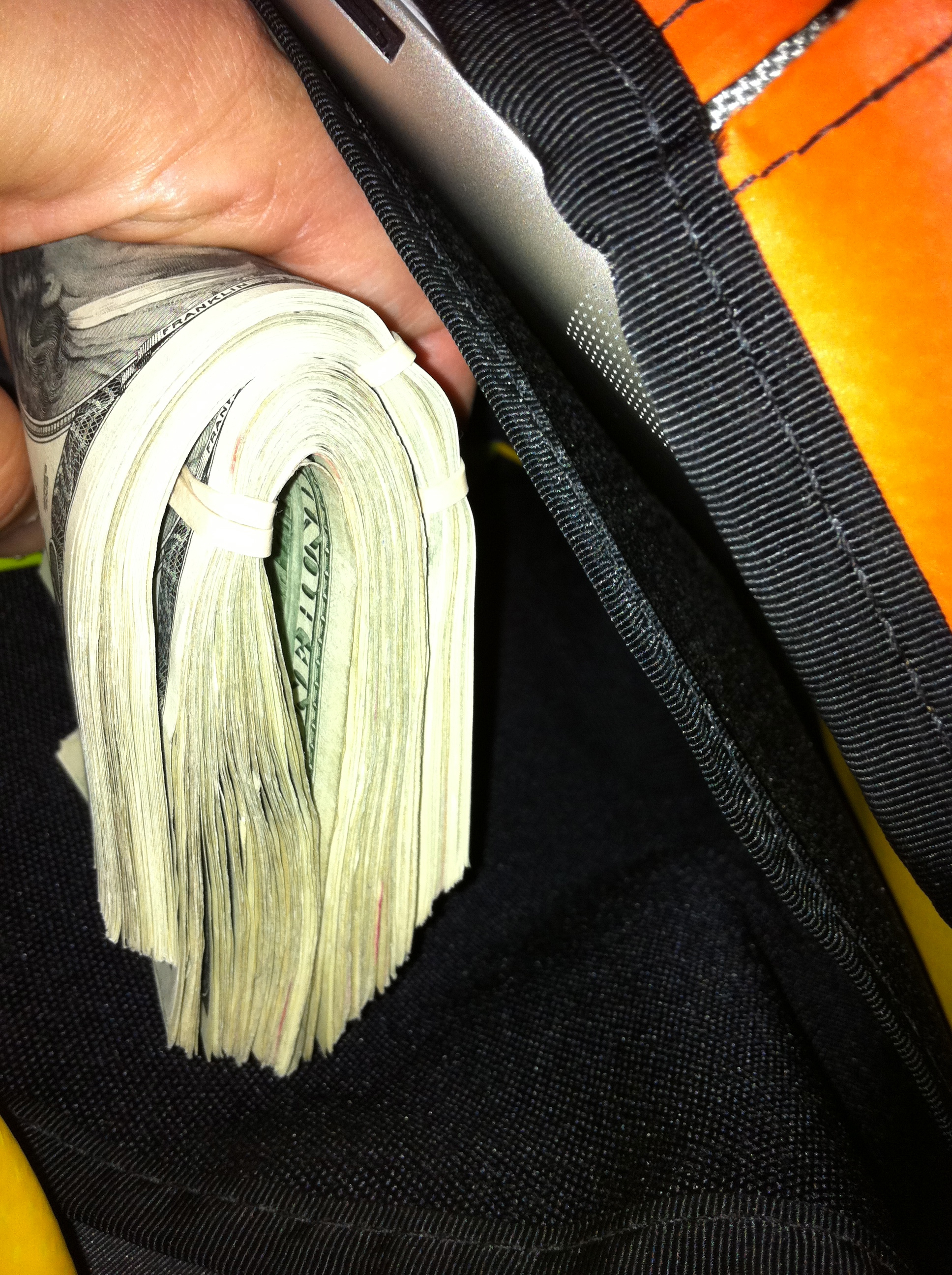
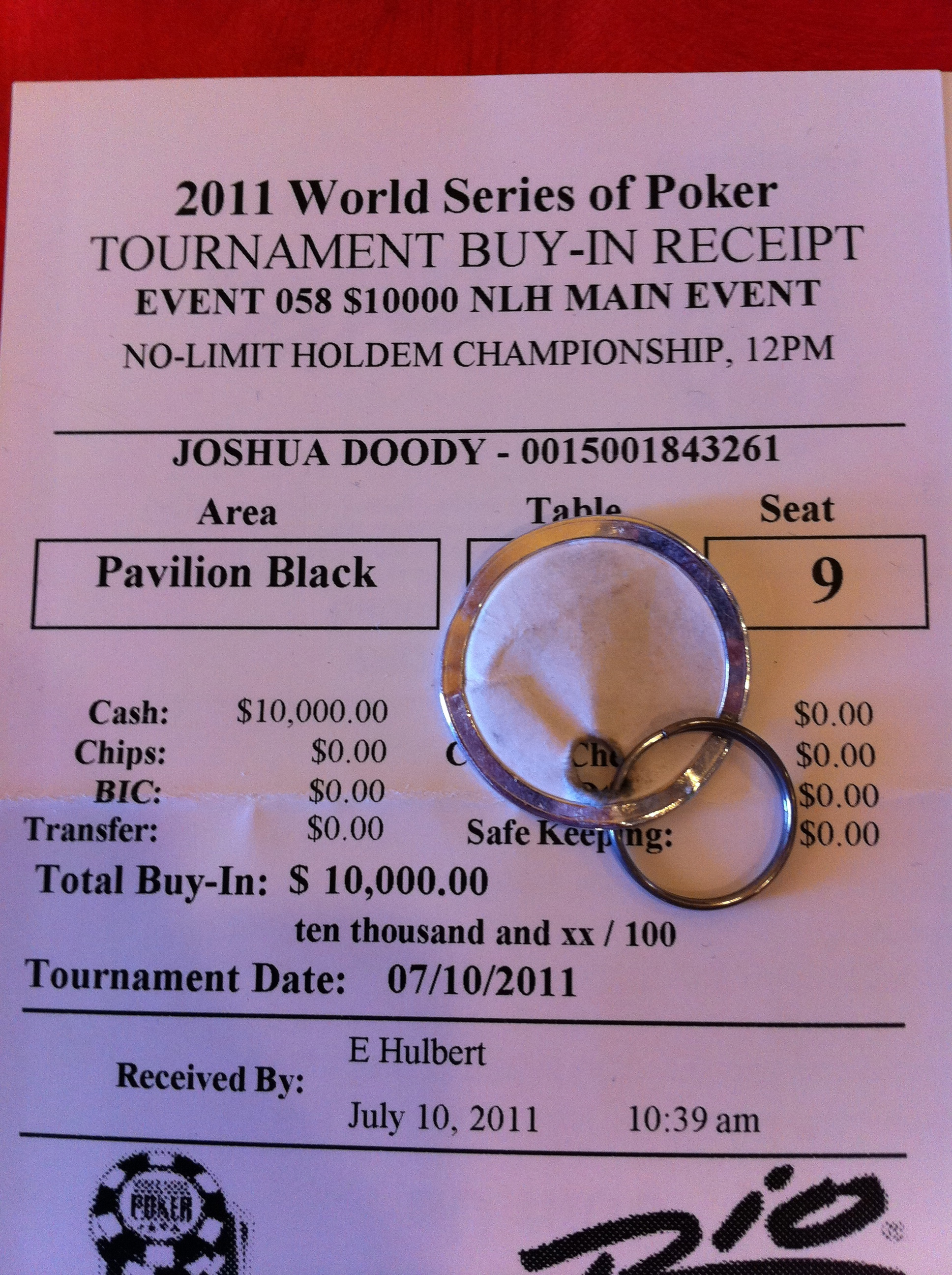
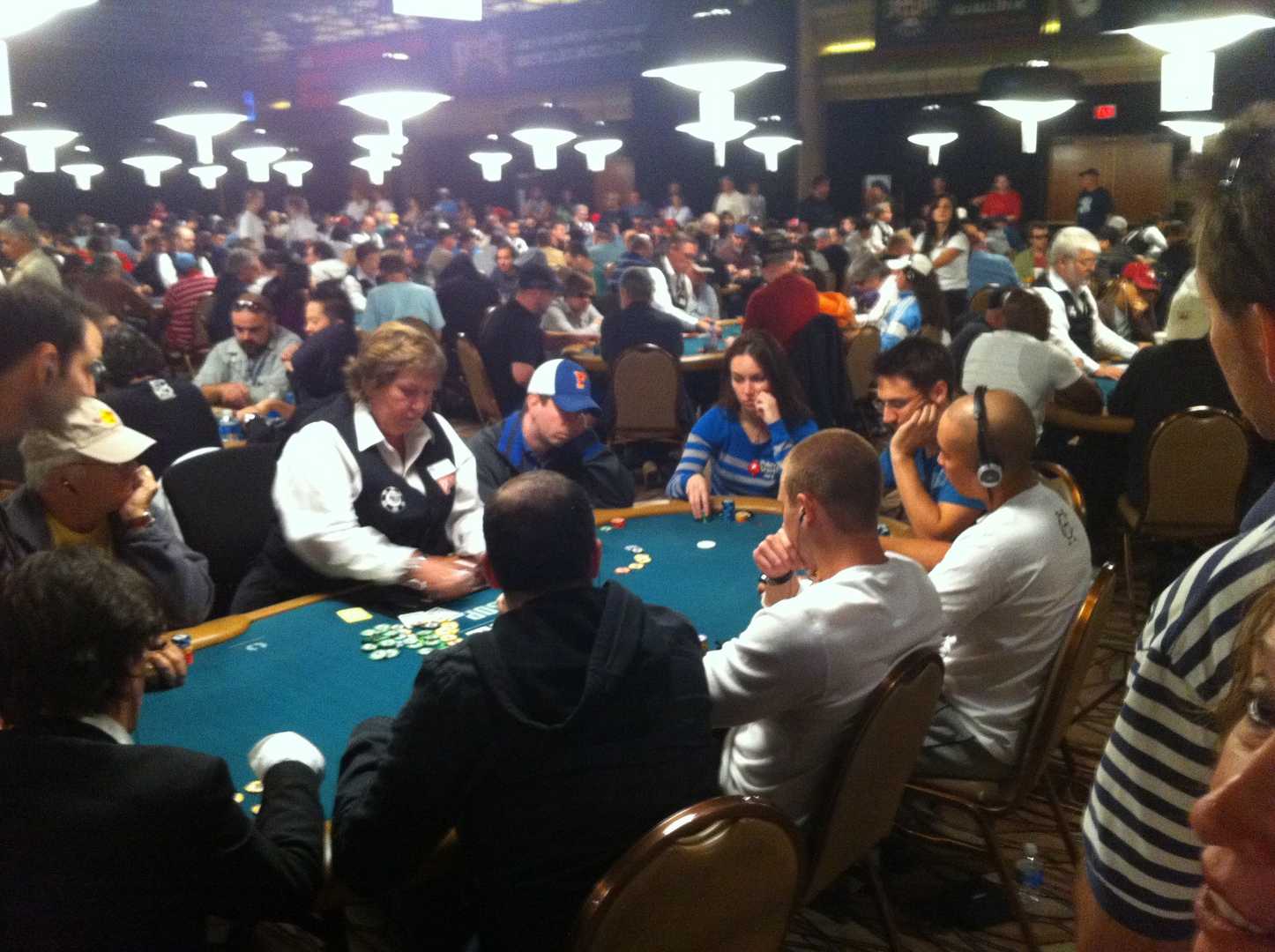
Ok, time to go register. Hopefully I’ll update this post with good news in about 15 hours (when Day 1D is over). Until then, here’s what it looks like to turn cash into a seat at the Main Event:

UPDATE: Sure enough, I made it through Day 1D with about average chips. We started the day with 30,000 chips and I finished the day with 50,025. I’m VERY satisfied with this result for a lot of reasons. I made a bad call during the first level and finished that hand with 23k (my low point so far). But I also had a VERY difficult table today, and managed to chip up despite my bad table. There were three well-known pros at my table for most of the day, and there were a couple other guys who I suspect were pros (probably online pros). All three of the initial known pros (Brandon Cantu, Adam Schoenfeld, John O’shea) ended up busting before the end of the day, and I managed to grow my stack to 60k at one point. Considering how soft the WSOP Main Event field is, this was a pretty unlucky table for Day 1.

I should say I also caught some hands today. I had Aces three times in one level (but only won three small pots, all pre-flop). I also had Kings a couple times and Queens a couple times. So, I did catch some cards, but they didn’t do me much good at my tough table. (Of course, I’ll take cards whenever I can get them.)

So, we start back Tuesday morning and I’ll have an average chip stack. My next goal is to make Day 3.

WSOP 2011 Diary: Week 2

Day 5 (June 27): Today was pretty simple. I did my usual couple of hours at Starbucks, then met a friend/co-author at the Rio (she was playing the $10k 6-max Championship so I caught up with her to touch base before she played). Then I went to the Wynn to play the $200 re-buy. I’m thinking a little differently about this tournament, and the more I think about it, the less I like taking the add-on. The problem is that the add-on is $200 and you get 5k chips (the same as the starting stack in the tournament), but you get that 5k chips when the blinds are at 200/400. So, 5k chips really doesn’t do much there (12 BB isn’t nothing, but it’s not really something either). If the add-on was 10k chips, I think it would be good value.

I also decided to try playing it with just the original buy-in. The blinds start at 25/50, so 5k chips is 100 big blinds, which is a decent stack to work with. As it turned out, I ran top two pair into a flopped straight and ended up going broke and having to re-buy anyway (hence I was in for $425 today). I ended up min-cashing (20 places paid and I finished 20th) for $985. I was very, very happy with this result because I was on a short stack literally all day. I just never really had much to work with, so I just had to keep picking spots, stealing blinds and occasionally doubling up. So, 20th of 156 was a good result.

Tomorrow morning, I’m working on the book and tomorrow afternoon I’ll probably head back to the Wynn with Luckbox Larry to take another shot at the re-buy.

Day 6: This morning I went to my co-author’s place and did some work on the book. We made great progress, and I’m really excited about the material we’re creating. I’ve read a lot of poker book (probably 40+), and I’ve never read one quite like this. We’re going from about a 10,000-foot view (where most tournament poker books hang out) up to about 30,000 feet, and we’re stopping every 5,000 feet or so along the way. This is either like a genius analogy or a terrible one. Anyway, we’re covering a lot of ground, most of it new, and I can’t wait to see this book in print.

I played the Wynn again today and min-cashed again. I’m now 3/5 cashing in tournaments since I got to Vegas (one of those in a 1,000-person field), so I’m way ahead of expectation (in a tiny sample) there. Luckbox Larry has also been cashing at the Wynn a lot – we’re a combined 5/8 for cashing there, and he has two final tables. So that’s the good news. The bad news is I have basically min-cashed in all three tourneys. This is typically a bad sign for a tournament player. Consistently min-cashing is a good way to eventually go broke because even a very good player will cash 20% of the time or less. A min-cash is usually about double the buy-in, so min-cashing 20% of the time will leave about -60% ROI for the player. That being said, The first two cashes were despite terrible cards for almost the entire tournament.

Today’s min-cash was a little unlucky because I put together a good stack early, playing good poker, and then just got unlucky to run into a trap in a blind versus blind battle. (It was folded to the player to my right, who called in the small blind, and I was very short, so I just moved in from the big blind, and he was “trapping” with AKo. I hate his play with AKo there, but I guess it worked out for him and I ended up busting. You’ll note I didn’t say what my hand was – that’s because it didn’t matter in that spot as I would move in with any two cards – but I had 82o for the record. If you’re thinking about how crazy this sounds, consider that a player who limps there is almost always weak and will fold to a shove, and if I pulled that off, I would add 25-30% to my stack without a showdown. As it was, I got all-in as a 60/40 dog with a chance to double up and I was the raiser, not the caller. It’s necessary to do this sort of thing to stay alive in tournaments. After a certain point, playing short-stacks becomes almost exclusively situational and this was a good situation to get some chips.).

Tomorrow, I’m going to do a little writing and then I’ll probably end up back at the Wynn. It’s just too good a field to pass up. They’re playing this same tourney ($200 re-buy at 1:00 PM) every day for 20 days (there are 14 days left) with a $50k guarantee. Sometimes there’s an overlay, which is great, but even without any overlay the field is so soft that it’s great value (I actually think it’s reasonable to cash in this thing like 33% of the time over the long-run).

Day 7: I just realized it’s Wednesday and not Tuesday.

Anyway, I played the Wynn re-buy again today, and cashed again. This time it wasn’t a min-cash (I avoided that by one pay jump), but I did manage to finish 11th and bubble the final table, so at least I still kind of have the streak going. I’m now 4-of-6 cashing in tournaments since I got here. Yesterday, I actually caught some cards in the middle of the tournament, but otherwise I’ve been pretty card dead and just playing well on a short stack. I’m very, very happy with my play and I just need to get some breaks. Also, my cash at the Wynn today made me profitable at poker for the trip (the “at poker” caveat means I’m no where near covering my expenses).

The nature of tournament poker is to be frustrating. I’ve mentioned before that good players can expect to cash about 20% of the time (in normal tournaments – this tourney I’m playing at the Wynn is an exception and I think it’s possible to cash 33% of the time), which means disappointment can be expected about 80% of the time. In my case, I’m cashing a lot, but just can’t quite make the final table. It will happen eventually, but I have to continue playing my A-game so that I’m ready to win the tournament (and make the real money) when the cards fall my way.

I think I’m going to take the day off tomorrow because I doubt I’ll be able to play my A-game. Today, I actually started off a little tilty, getting frustrated when I lost with top pair, good kicker in three hands during the first level (30 minutes). I will sometimes get frustrated, but the other players often can’t see it. By the third time I lost with top pair (AQo on a Queen-high board), I was visibly frustrated. Fortunately, it didn’t affect my play and I stuck with it to get down to 11. I’m concerned that if I play tomorrow, I won’t be able to keep playing well, so I’d rather take the day off than set fire to a buy-in.

It was pretty nice in Vegas last night – breezy and cool – so the walk to Harrah’s to catch the shuttle to Rio wasn’t too bad. I’ve probably made that walk a total of five or six times now, and it’s a tough one. When I want to go from the Rio to Wynn (or vice versa), and I don’t have a car or a ride, I have to take a shuttle to Harrah’s, then walk about 15 minutes to the Wynn. The walk is literally on The Strip, so it’s very congested and touristy (complete with dudes snapping night club ad cards at you), which makes it even longer. People like to walk in groups, like three wide, very slowly so they bock the entire sidewalk for anyone wanting to get somewhere quickly. The good news is I think I’m burning a ton of calories, so no need for cardio while I’m out here.

Day 8: I started feeling a little gross at the Wynn yesterday, and I had a little trouble sleeping last night. I’m not feeling sick per se, but just feeling sort of weak and tired. I was thinking about taking the day off from poker today anyway, so this doesn’t really change much. I’m just hanging around the hotel, reading, watching Netflix and generally bumming around.

I had In-N-Out for lunch today and it was awesome. I really like In-N-Out. The food is delicious, and it’s generally a pleasant experience to visit their stores. Also, my meal was only $6. Luckbox Larry and I also went to Vons (apostrophe apparently omitted intentionally by them?), which is owned by Safeway. We needed to stock up on snacks and supplies in general. Also, we ran out of makings for PB&J, which is my go-to food for a quick, cheap meal. On The Strip, everything is basically twice as expensive as it should be, so a mediocre sandwich and fries is like $13 or so. Hence I need to conserve money by eating PB&J and stuff.

Day 9: I took it easy yesterday and I think that was the right thing to do. I felt much better when I woke up this morning and decided to play the Wynn $200 re-buy again. That is probably one of the best tournament values in Vegas this summer, so it’s tough not to play. I ended up bubbling and finishing 21 when 15 paid. I took a really nasty beat with about 45 players left:

I had QQ and got all-in against a short stack with 66 and a big stack who had TT. The 66 hand made a flush on the turn (so he tripled up), and then the river was another flush cards, so I split the remaining pot with TT because we both had a flush. The worst part is I also flopped a set, so I could’ve still won the whole pot if the river paired the board.

If I had won that pot, I would’ve had a pretty large chip stack with 45 left, and that could’ve made the difference. As it was, I was bumped down to a really short stack and still managed to survive and even chip up down to 20 players when I lost yet another coinflip to bust. In general, I’m running bad on this trip. There’s not much I can do about that except to keep playing well and hope I stop getting unlucky so I can make a deep run and finally get paid.

After I busted from the tournament, a couple friends (who had both been in and busted earlier) and I went to a pretty nice restaurant at the Wynn for dinner. We had some comps to burn, so we figured we’d use them for a nice meal. It was nice to just relax and eat a nice meal. I’m trying hard to save cash while I’m here, but it’s tough. I need to start eating more PB&J.

After dinner, I went back to the hotel (we’re at the Gold Coast again) and watched some Netflix before turning in pretty early.

Day 10: Today should be a pretty relaxed day. I’m planning to go work on the book with my co-author, and hopefully I’ll be able to do some laundry while I’m there. I should also be able to avoid spending too much money on food today, so that’s nice for a change.

My co-author and I have scheduled a meeting with another published author for Tuesday morning, and I think we could learn quite a bit from her. She’s already published on one of the publishers we’re looking at, and her book is also a poker book.

Day 11: Yesterday turned out to be pretty uneventful after all. We worked on the book for about six hours and made good progress. When we began writing the book, I knew it would be a big project and a long process, but I don’t think we really understood the magnitude of what we were getting into (at least I didn’t). It’s a very big project and is taking a lot of work.

Anyway, I’m planning to play the Wynn re-buy again today. I would really like to make the final table in that tournament – I just need a few breaks and I’ll get there. I just realized it’s already July 3rd, which means tomorrow is the 4th. I’ve heard rumors that the annual 4th of July party I attend (some friends of friends always get a Mandalay Bay penthouse with a view of The Strip, where they have several fireworks show) is happening, so that will be fun. The hosts are a lot of fun and do a great job putting the party together and just being good hosts. This particular party usually gets a pretty motley crew and I almost always meet someone new and interesting.

But that’s probably happening tomorrow. Today will be a slow day and I’ll start the publishing process for this week’s diary entries. If it isn’t already obvious, I’ve more or less settled into the Vegas/Summer/WSOP routine: hang out, play poker, write the book and repeat. I still have a few restaurants I need to get to, but I’ve mostly gotten the highlights out of the way now.

I love technology probably at least as much as you, you see…

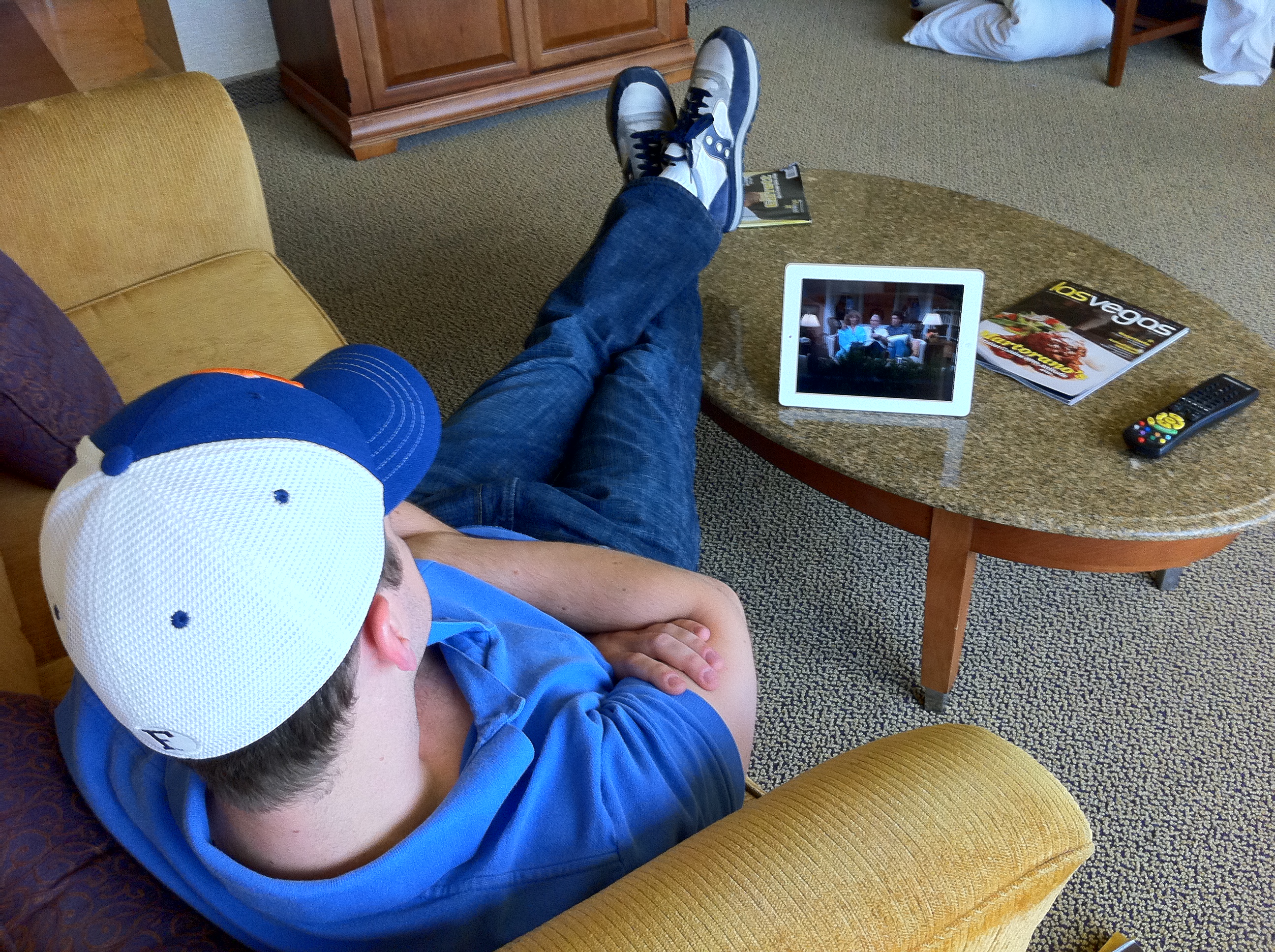
Yesterday night, I busted from a tournament at the Wynn (I min-cashed), but decided to stick around because a friend was still playing and I wanted to offer support (known as sweating or railing in the poker parlance). Fortunately, I had my Burro Bag with me, and the Burro Bag holds many ways to kill time: Books, iPad, Macbook. I usually read when I’m just sitting around, sweating a tournament, but I decided to watch TV instead.

The iPad came out, and I watched the final episode of This American Life Season 1 on Netflix, then watched an episode of Cheers (I’m mid way through Season 2), then switched over to the HBO GO app to see what I could find there. I decided to watch a documentary called “Hot Coffee” (a good documentary about tort reform, our litigious society, etc.) from their series of documentaries that’s airing every Monday night.

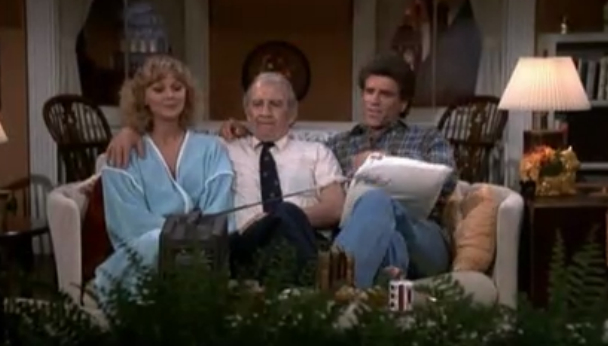
As I was watching that episode of Cheers, it hit me: I’m watching HD TV on a portable device that’s smaller than a Dr. Seuss book. There’s a scene in the episode (Coachie Makes Three) where Sam and Diane finish eating dinner, then Sam decides to watch some TV. So he pulls out this big, clunky portable TV that plugs into the wall. I’m guessing the screen on it was something like 7″. He plugs it in, plunks it down on the coffee table and kicks back on the couch to “check some scores out on the tube”. Of course, then Coach shows up because “Thunder Road” is on TV, and Sam and coach never miss Robert Mitchum when he’s on TV.

That’s when it hit me that I could do that now, only I don’t have to plug it in, I’m watching HD TV, and I can choose from a giant catalog of shows whenever I want rather than choosing between the five or six channels Sam probably got in 1984. Today, it’s not a problem if I miss something when it first airs – I can always just go watch it online later. It sort of blew my mind a little, and I saw this coming in 2009. Sort of.

In 2009, I definitely expected Apple to make the iPad. I also expected it to be used a lot as a portable media player. But I envisioned people mostly loading up movies and TV shows into iTunes, syncing the iPad and then taking it with them. I didn’t think we’d be streaming HD TV OTA less than two years later. Yes, I was using the Wynn’s WiFi network (which is hi-speed and free to anyone at the Wynn), but when I went back to my room at the Rio a little later, I continued watching “Hot Coffee” tethered to my iPhone 4, over 3G. If I weren’t so cheap, I could’ve cut out the middle man and just bought the 3G iPad, which would let me stream directly to the device without an iPhone. What?!

Ten years ago, it was a big deal to check email on a cell phone. Eight years ago, it was a big deal when ESPN Motion was “streaming” highlights on ESPN.com. (That’s where I first saw streaming video online.) Six years ago, it was a big deal to stream low-quality video on YouTube. Three years ago, it was a big deal when Netflix and Starz teamed up to start offering streaming movies, on demand. But all this required some kind of PC with an internet connection.

Up to this point, there were ways to stream video over the air, but they were tricky, unreliable and definitely not mainstream. Then, about a year ago, Netflix came out with an iPhone and iPad app that would let subscribers stream content over 3G. No more land-based internet connection required. Not only that, but (assuming the 3G connection was solid), it was high quality video. Over 3G.

The rate of innovation is stunningly fast to me. When I first saw ESPN Motion, I thought, “This is awesome, but how will they eventually stream real content? Live content? Decent quality video?” I thought it was a very big technical challenge because video was just so data intensive, and streaming audio over the internet was still pretty new. Compressed audio (MP3s) would stream, but it was a little unstable and required patience. Video took up much more bandwidth than audio, and I didn’t see how the tubes would get fat enough to squeeze that much data into a connection.

It was a significant technical challenge, but what I didn’t anticipate was a convergence of technologies: faster, more efficient internet connectivity and better and better compression and buffering algorithms for streaming video. I’m still not actually sure how video is compressed and high quality. But some engineers figured it out and instead of waiting for the bandwidth to catch up with the data requirements, we managed to simultaneously increase bandwidth and reduce data requirements by compressing video.

And now I can sit around anywhere watching TV on my iPad to kill time while my friend wins a tournament. Pretty cool, right?

WSOP 2011 Diary: Week 1

[I’ve decided to put these up once a week or so to save publishing effort and avoid annoying people on Facebook and Twitter. Give me feedback in the comments as to whether it would be better to do daily or if weekly is good. Anyway, the result is these will be long posts.]

Day 1 (June 23): The trip from Gainesville, FL to Las Vegas is pretty rough. There are no direct flights, so I have to connect in either Atlanta or Charlotte, which means layovers and delays. This time, I was scheduled for a 2.5-hour layover in Atlanta, but ended up taking half of it in Gainesville because of weather delays. I ended up getting to Las Vegas at about 12:20 AM local time (3:20 AM back in Florida), and then had to find a shuttle to the hotel because my ride fell through. (Tip for visitors to Vegas – if you’re going to the strip, go find a shuttle instead of a cab. The shuttle is $7-10 and a cab will be at least $20.)

Any time I’m heading to Vegas, I try to get in late at night and sleep very little on the plane. I figure this is the best way to beat jet-lag and adjust to the new timezone. It usually works, but I was up till 3:00 AM Vegas time chatting with a friend, and ended up waking up at 7:15 this morning. So the bad news is I’ll be tired all day. The good news is that if I can get through the day without sleeping, I’ll definitely be adjusted to Vegas time by tomorrow.

My strategy when I’m here is to maximize convenience and minimize cost. In English, this means I end up schlepping my stuff back and forth from hotel to hotel as I chase the lowest room rates. This time, I’ve managed to book rooms at the Rio and Gold Coast, so I’m only bouncing back and forth between two decent hotels. I’m sharing rooms with a friend of mine, and he’s particularly good at finding cheap hotel deals for us. I’ll end up paying about $700 for a month of staying in decent hotels within walking distance of the WSOP. Not too bad.

Today, we’re moving from the Rio to Gold Coast, then we’ll grab lunch and decide which tournaments are the best to play today. My guess is I’ll end up playing a $235 tournament at the Rio to tune up since I haven’t played live poker in about 10 months. The Rio field will be big (700 or so), which means lots of bad players and a decent prize pool for a $200 tourney.

There is a lot of stuff to consider when I start playing tournaments again after a layoff. I have to be comfortable both physically and psychologically. Basically, I have to psych myself up so I feel like a good poker player, and I have to have some sort of game plan going in. My game plan today is basically, “Be super hyper aggressive and pull the trigger every time I sense I should be making a move.” This sounds simple, but it can be tricky after a layoff. I obviously want to win the tournament, but I don’t want to bust after only a couple hours since I need to get back in the swing of things. This will often cause me to play more passively than I should, passing up opportunities to last longer in the tournament while not really giving myself a chance to win.

So the plan today is to get settled into the Gold Coast, get a good lunch and hopefully crush the $235 tune-up at the Rio.

Day 2: Yesterday was a long day, but not much happened. My friend and I moved from the Rio to the Gold Coast and then played the 2:00 PM $235 “deep stack” at the Rio. I use the quotes because it’s not REALLY a deep stack unless you compare it to the normal, super-turbo structures most casinos use for the daily tournaments they run. There were 964 entrants and I finished 79th, for a couple hundred bucks profit. I was happy with my play because I didn’t catch many cards for the final four hours of the tournament. My best hand of the day was a nut flush, and I made two straights (both on three-flush boards) and didn’t make a set or two pair. So, all in all, I’m pretty happy with cashing.

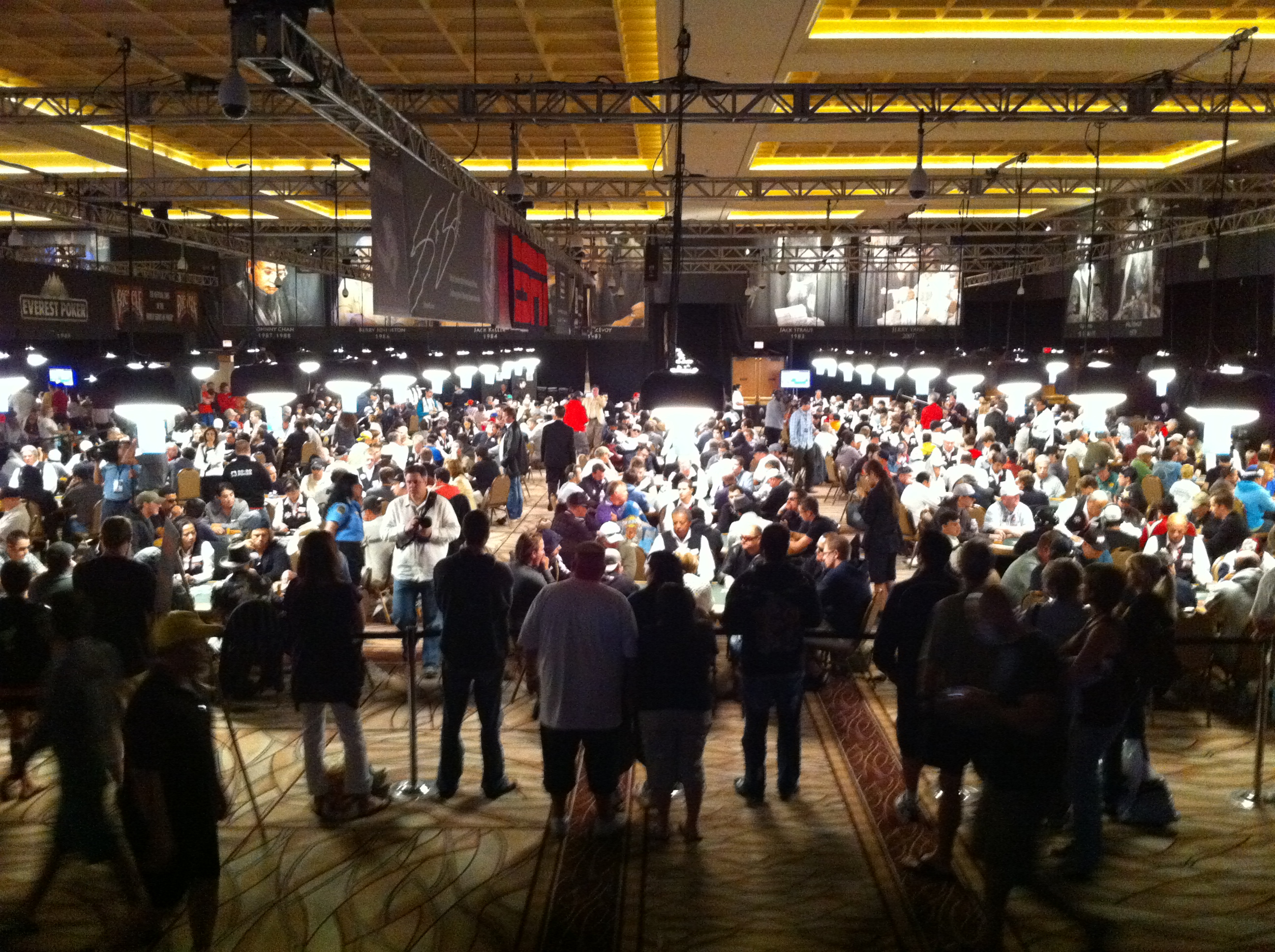
After I busted from the Rio deep stack, I joined some friends who were sweating the $10k HORSE Championship Final Table. My friends are friends of Daniel Ospina, who eventually took 4th (outlasting Tom “Durrr” Dwan by one spot). Here’s a terrible picture of the “Featured Table” where ESPN films final tables and will film the main featured table of the Main Event for TV. It’s terrible because they have bright blue lights focused on the crowd, and those lights apparently wreak havoc on my iPhone’s camera. C’iest la vie. (On a related note, I can’t wait for iOS 5 to let me snap photos with the volume up button instead of the stupid soft button on the screen. It’s really difficult to take a good picture when I’m holding the phone and trying to tap the edge of the screen to snap a photo.)

Today I’ll just take it easy, do some reading and writing and probably hang out watching TV in the hotel room.

Day 3: Actually, instead of taking it easy and hanging in the hotel room, I ended up playing a $200 re-buy tournament at the Wynn. I was in for $600 (initial buy-in, initial re-buy and the add-on), but didn’t cash. It was very frustrating because that tournament is very soft, and it’s very winnable for me. But what was more frustrating was that I made two mistakes (one medium and one big) that cost me the tournament. But this is why I’m playing tune-ups before I jump into $1k+ tourneys: I expect to make mistakes. So, hopefully I’ll think more clearly and be more focused the next time I play.

The tournament director (and possibly the guy who runs the Wynn poker room) stopped Luckbox Larry (@hugepoker on Twitter) and me on one of our breaks and asked for input on the tournament. Overall, we both think the tournament is setup very well, but we made a couple of suggestions to make it better and to encourage people to stick around and build the prize pool. We recommended adding a level after the add-on break and giving more chips for the add-on. He gave us each a $10 comp, which I used to buy a giant gelato banana split to console myself for making mistakes in the tourney.

While I bombed out of the Wynn tournament, Luckbox Larry actually went pretty deep and bubbled the final table. It wasn’t a huge score, but he did what he could do to win the thing. I got some pictures of him (below), but they’re a little blurry because I was having to like run around trying to snap a clean shot when I could get it because there were a bunch of Europeans crowding all around the table and jumping in front of me (despite repeated requests by the tourney director that they keep out of the tournament area). For some reason, Europeans really love the Wynn daily tournament.

I think I’ll go back to the Rio $235 today and give that another shot. I’ve played about 11 hours of poker so far, and I’ve basically run bad. I think I’m something like 0-for-7 on coinflips and 60/40s, I’ve flopped one set, I’ve flopped two pair once (it was top two, and lost the minimum against a flopped flush when we were both in the blinds), I’ve flopped three straights (all on two- or three-flush boards), I’ve turned one flush, and I’ve had AA, KK, QQ, TT once each (JJ twice). I think I’ve had AK once and AQ a few times. So, if I start catching some cards I think I could make a deep run if I avoid mistakes like I made yesterday.

My co-author has been playing WSOP events since I got to Vegas, but I think she’s taking it easy next week so I’m hoping to get some writing done. Until then, I’ll keep tuning up in small tournaments, trying to avoid making mistakes like the plague.

Day 4: I didn’t end up playing yesterday. They moved the 2:00 PM rio tourney back to 4:00 PM because there was a $1,500 WSOP event that typically draws a lot of people. So they try to stagger the tournaments to avoid confusion. I basically ended up bumming around and reading all day, and it was kind of nice. I went to see Super 8 last night and really enjoyed it. It was a fun movie, well done.

Today, I played the $1k WSOP No Limit Hold ’em event. I managed to last about 3 2/3 levels before I finally busted out. I’ve been running really, really cold so far this world series. Yesterday, I tallied all the hands I’ve had so far. To that tally, I can add another AK, a couple of 99 hands, 88 and that’s about it. So, I’ve been on the bad side of the card distribution so far this series. I actually played well today and made some difficult, but good decisions. The problem was I just never got any cards to work with and all the short-stack strategy in the world isn’t any good unless I eventually get something to play and double-up. I ended up busting on a Stop-N-Go, which was the right idea pre-flop, but it may have been correct to abort it on the flop. I’m still mulling it over.

[The following is a little poker rambling where I describe what a “Stop-N-Go” is. If you’re not into poker, skip to the next paragraph.] I guess I should explain that. A Stop-N-Go is a short-stack move where I’m in the big blind (blinds were 75/150) and I have a short stack (I had 1,500 left after posting the blind). The point of the move is to basically re-steal the pot from a late-position raiser by taking control of the pot and moving in on the flop, forcing my opponent to make a tricky decision. The player four seats to my right (in the hijack seat) opened to 375 and before I looked at my cards I knew I had a good stack for a Stop-N-Go. I decided I would Stop-N-Go any pair 66 or lower, and any Ace A9 or lower and possibly a hand like KQ or KJs. (The rest of my range was something like this: re-raise all-in with pairs 77-QQ and AT+; flat-call with AA/KK and check-raiase all-in on the flop regardless of what it was; possibly flat call with KQ or KJs and check-raise all-in on the flop if I made a pair or better; fold everything else.) Anyway, I looked down at A6o, which meant it was time to Stop-N-Go. Here’s how the move works: I call his raise and then move all-in on any flop (because I’m in the Big Blind, I’m first to act after the flop). I know this player is a reasonable player, so he’s opening a normal hijack range: Big cards, most pairs and probably like JTs and maybe T9s. The flop came down KK8, I moved in and he called with 99. This was probably a mistake on my part. The problem is that my goal is ultimately to get my opponent to fold all those hands in the range I described above. On flops like T84, J85, KT2 most of this range either misses the flop completely or doesn’t really like it (66 and 77 don’t like either of those flops, AK, AQ, AJ don’t like most of those flops for instance). But on a flop like KK8, most of his range is still pretty safe. Small and medium pairs don’t mind it because it’s unlikely I have an 8 or King. Big cards don’t mind it because they’re still pretty strong hands (AQ, AJ, AT all feel ok about still having a pretty good hand post-flop, and they can draw out to a pair against smaller pairs). Hands like QJ, JT, QTs don’t care for it and will fold. So, this particular flop isn’t scary enough for the Stop-N-Go to work and I probably should’ve just aborted and check-folded, aborting the move.

Now I’m heading off to the Wynn to meet Luckbox Larry on his dinner break in the Wynn $200 re-buy. He has a pretty good chip stack, so hopefully he’ll make a run. Hopefully I’ll start running better pretty soon. I’ve played something like 16 hours of poker and basically gotten no cards yet. It’d be nice if that trend ends soon.

I’m back (just got over to the Wynn – it takes about 45 min door to door, and about 20 of that is fast-paced walking in the Vegas heat). On my way over to the Wynn, I had a couple thoughts. First, I realized that Vegas is packed full of people doing really, really crummy jobs. I won’t list those jobs because I don’t want to offend anyone, but there are a lot of people doing jobs that I just can’t imagine doing every day. It’s profoundly depressing. At the same time, I realized how fortunate I am. I voluntarily quit my own job almost two months ago, and now I’m hanging out in Vegas for a month, playing poker, writing a book, relaxing and hanging with some friends. There’s some stress involved (today my bank account reduced by another $50 or so, and it won’t be replenished until I start working again), but I’m ultimately living Peter Gibbins’ dream of doing nothing for now. At the same time, I miss my friends and family back home, but I’ll be seeing them plenty in about 25 days.

And Luckbox Larry ended up taking second (after losing an all-in with AK < AJ) for right about $10,000. Unfortunately, he was in for $1,200, so the “steak dinner for five-figure score” clause wasn’t activated this time.

Off to Vegas for the 2011 WSOP!

You may know that I’ve gone to Vegas once a year for the past several years. I think I’ve been every year since 2006, but I’m not positive about that. In 2009, I spent six weeks there. The other day, I realized that Vegas is the city I visit most frequently (aside from Jacksonville, which is 90 miles away and is where my family lives). This really doesn’t make sense at all – Vegas is essentially the opposite of all things Josh. Of course, it helps that there is some incredible food to be had (if one doesn’t mind visiting some super sketchy neighborhoods).

But here I go again, drawn to Vegas to play poker and visit friends. Before I go, I’m posting about what I’ll be doing (so my friends and family know what’s up). I’m also soliciting suggestions on how I can share the experience with all three of you that read this blog. (Haha, just kidding! There are at least 10 of you.)

What I’ll be doing

I’ll mostly be playing poker and writing “the book”. The WSOP is going on right now, so I’ll play some of the smaller No Limit tournaments and try to win a satellite for a seat into the $10,000 Main Event (the one they show on TV every year). The smaller WSOP tournaments I’ll play will range from a $1,000 to $2,500 buy-in. I’ll also play some other tournaments around Vegas, ranging from $200 to $1,000 buy-ins. I’ll start with the smaller ones to tune up since it’s been a while since I played live poker (or poker at all, really). I’d really like to play the $10k this year – that tournament is almost customized for my style, and I could make a deep run with a little luck.

“The book” is a poker book I’ve been co-writing for about 18 months. It’s about how to use game theory to build a dynamic tournament strategy that can be adjusted as the game changes over time. It’s a lot about the underlying principles and the “whys” of winning tournament poker. A friend of mine is a professional poker player, and she asked me to co-author the book with her because I know her strategy and style very well, and because I’m comfortable writing. I’m hoping we can do some serious work on the book while we’re both in Vegas this summer. It’s a very big project that simply requires time and coordination to keep it moving.

Give me some feedback – what can I do to share the WSOP experience with those who aren’t there?

I get a lot of questions about the WSOP: what it is, what it’s like, and all that. I think it would be fun to use the blog (and Facebook and Twitter) to share a little of the WSOP experience (and maybe my Vegas experience), but I’m not exactly sure how to do that. [Wow, that sentence is terrible.] I could blog, take pics and maybe shoot some video. I’m sure there are other ways I could share the experience as well.

If you want to see what it’s like to at the WSOP, leave me some comments with suggestions on ways I can share. I’ll see what I can put together!

Why I’m ok with Apple’s WWDC 2011 Keynote

The annual WWDC Keynote is a pretty big deal for Apple fanboys like me. Apple typically makes several big announcements throughout the year, but this is usually the big announcement. (Maybe I’m biased because iPhone and iOS are my favorite Apple products.) It’s typically pretty easy to anticipate what’s coming, but this year’s keynote seemed different. No one really seemed to know what to expect. What we got was iOS 5, iCloud and Lion, but no new hardware. In case you missed it, here are some links to help you catch up:

  • Here is the Keynote in 120 seconds
  • Here is a brief roundup from MacStories.net
  • If you want to read more in-depth about each part of the announcement, 9to5mac.com did a good job of covering each segment of the keynote. If you search for “WWDC 2011:“, and scroll through, you’ll see a series of posts starting with “WWDC 2011: …” that hit the highlights.

No iPhone?! AH! … Wait. Nevermind, it’s cool.

The conspicuous omission this year was a new iPhone. It looks like we’ll be waiting until September this year, and that’s about two months longer than most people want to wait. A lot of people are pretty frustrated with this. I’m not because, as a single device, the iPhone 4 is still the best smartphone there is. As a single package, its Retina display, look and feel, specs and its functionality, can outshine any other smartphone on the market right now. Android fanboys and Apple haters will disagree, but the bottom line is Apple is still selling a ton of iPhone 4s because people love it.

That said, a lack of iPhone announcement at WWDC isn’t a definitive statement that there won’t be a new iPhone soon. WWDC is a developer’s conference, after all – they’re focused primarily on software and then on hardware.

iCloud is pretty cool, if a little late

The only hardware tweak I’d really like for iPhone is more storage, but Apple is addressing that indirectly by introducing iCloud. I want more storage because I have more music than my phone can hold. Of course, there’s no way I can listen to 32GB of music at once, but I’d rather not have to decide what to sync and what to leave behind. It’s also a little annoying to have to try to keep free space for videos, new podcasts and voice memos. But once iCloud is up and running, I won’t really have to worry about that anymore. I can use iCloud plus iTunes Match for most of my music, leaving the rest of my iPhone 4’s storage free for the other stuff.

Major OS updates on the way with iOS 5

So the iPhone hardware is not really what needs the boost. But the software could use some modernization and that’s where Apple is focusing. They’ve built such a big lead in the smartphone hardware war that they can afford to skip (or at least delay) a hardware refresh cycle to focus on major software improvements. And major software improvements are on the way in iOS 5. They’re revamping notifications, adding Over The Air (OTA) software updates, multi-device syncing via the cloud, deeply integrating Twitter and making other improvements that will make iOS 5 one of the best (possibly the best) mobile operating systems out there.

My iPhone has been Jailbroken for about eight months now. Here are the major reasons I’m jailbroken in order of importance to me:

  • Free tethering – I rarely need to tether, but I’m occasionally stuck without internet or just can’t find WiFi. I’m already paying for unlimited data. I’m just not going to pay AT&T an additional monthly fee to use the data I’m already paying for (especially since I use very little data as I’m almost always on WiFI). MyWi cost me $20 one time and has been a nice fallback when all else fails.
  • Better texting – I don’t like having to tap like 10 times to go from viewing an incoming message notification to actually replying to the text. BiteSMS and some other apps make this much better.
  • Far better notifications – There’s really no other way to say it: iOS notifications are awful. They were ok a few years ago, but they’re way behind the times now. MobileNotifier drastically improves notifications on iOS.

iOS 5 addresses most of these. Tethering has already been addressed by Apple in iOS 4, and my main issue with this is that AT&T wants to continue charging a premium for the service (so this isn’t on Apple). Notifications are being specifically addressed in iOS 5 (Apple even hired Peter Hajas, who designed MobileNotifier), and they’re sort of addressing texting with the notifications updates. So most of my major frustrations with iOS are either being addressed by Apple in iOS 5 or are out of Apple’s control (tethering).

So, all in all, I was pretty happy with what we got at WWDC 2011. And I admit I’m still crossing my fingers for a new iPhone in September.

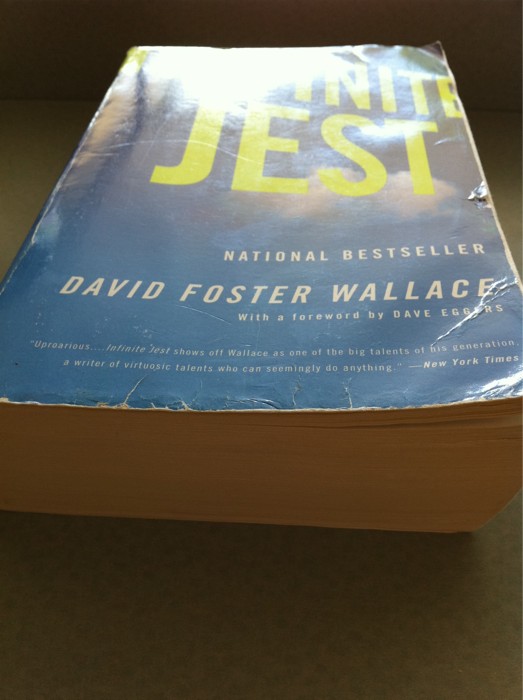
Should I read Infinite Jest?

Infinite Jest is David Foster Wallace‘s best-known novel. It’s not so much something you read as a project you do, so deciding to read it is a pretty serious commitment. Not only is it just long and dense, but DFW uses footnotes as a major part of his story-telling process, so the reader spends a lot of time bouncing back and forth between the main text and the footnotes at the back of the book. I eventually began using two bookmarks – one for the main text and one for the footnotes. There are like 80 pages of footnotes, all of them in tiny font, some of them in really tiny font. Many of the footnotes have footnotes.

A few of my friends have asked if they should read it too. Normally, I would have an answer ready to go. I’m not shy about making recommendations or saying that something stinks. But with Infinite Jest, it’s just not that simple. So instead of saying yes or no, I’ll make a list of the cons and pros of reading it (this is spoiler-free) so each potential reader can make his own decision. Note that these are sort of dependent on one’s perspective and book preferences – some of the pros could be cons and and vice versa.

Cons

  • It’s freaking huge. It’s over 1,100 pages and it took me about 10 months to finish. I’m a slow reader, and I was working on a lot of other stuff during that time, but I also spent a lot of time reading. This isn’t a book you pick up at the airport so you can read it on your five-hour flight to NYC.
  • It’s not even remotely a typical novel. The story isn’t as buttoned-down as other novels and DFW often goes on and on about the minutia of various topics using multi-page paragraphs. It doesn’t have a clearly defined timeline. The characters take forever to develop.
  • The subject matter isn’t always family friendly. In particular, DFW seems to have a near-encyclopedic knowledge of all things drugs, and he writes a lot about substance abuse. He also spends substantial time on other unsavory topics.

Pros

  • There’s nothing else like it. It’s a story, but it’s also just a beautifully written thing.
  • It’s amazing how much he knows about so many subjects. When I said “near-encyclopedic” earlier, I meant it. I’ve never read anyone else who writes about so much, so well.
  • The way he writes is totally unique and captivating. He manages to be one of the more relaxed writers I’ve read while also being one of the most technical. He almost overtly scoffs at normal usage and basic rules of writing, and he totally pulls it off.

Some critics have said that Infinite Jest could’ve used more editing, but I’m not so sure. In a way, it’s sort of like DFW gave us as much as he could give. And given that he’s not around to write anymore, I think he left Infinite Jest as a pretty substantial gift to the literary world.

So, should you read it? Yes, if you’re not looking for a nice, tight story to read. Yes if you have a lot of time to invest in this sort of project. Yes, if you don’t mind reading detailed portraits of seriously messed-up people. Yes, if you want to read something unlike anything else. No, if you don’t have much time to read. No, if you want a nice, clean storyline with three acts. No, if you don’t want to have to work while you read.

But yes, you should read it.

I’d love to hear what other Infinite Jest readers think – let me know in the comments!


PS If you decide to read it, and you buy it from Amazon, I make a buck or something if you use this link. And if you were thinking about reading it and then thought, “Well, if he’s just plugging this book so I’ll buy it and he’ll make a buck, I won’t read it!” then don’t click the link and go buy it somewhere else and read it anyway.

Connecticut House trying to legislate decreased pay, lower employment rate for hourly employees

@ModeledBehavior (the Twitter account for a group economics blog, ModeledBehavior.com) shared this on Friday night:

Because what we need right now are more labor market regulations http://nyti.ms/ivdMwq

Obviously, @ModeledBehavior was being sarcastic here, but the Connecticut legislators are totally serious. Their plan is to mandate that hourly employees in the services sector will be given one hour of sick time for every 40 hours they work. There’s a lot of good stuff here that illustrates how little politicians understand about economics.

Here were my replies (first, second) to @ModeledBehavior:

@ModeledBehavior New Wage = Old Wage – 2.5%. Or, for minimum wage employees: New Employment Rate (NER) = Old ER – 2.5%. #Winning #Recovery

@ModeledBehavior Total wages paid won’t change. It’s a mandate for service sector employers to withold 2.5% of pay in sick-pay savings acct.

What’s tricky about this sort of thing is that it sounds so nice. But it takes a lot of effort to really understand what this legislation would do, and what it means. This sounds really nice because hourly employees typically just have to call in sick and miss a paid work day when they’re not feeling well. Too many missed days and the employee’s job could be in danger. This way, they’ll still get paid for that day when they’re sick.

But not really. As I replied to @ModeledBehavior, one of two things would happen: either the employers would lower the hourly wages they pay or, for minimum wage employees, they’d simply hire fewer employees. I’ll break down each case below.

Before I go on, let me set up the analogy I’ll use for the rest of the post:

Tommy works at a grocery store and gets paid $10 an hour. The proposed legislation says the following to Tommy’s employer: “Tommy is going to work 40 hours this week, but you have to pay him for 41 in case he gets sick later. Just hold back that extra hour’s pay and bank it so he can use it when he needs it.”

Two possible results

Let’s say Tommy’s 40 hours of work is worth $400 to the employer ($10 per hour). The employer can afford to pay Tommy $400 for every 40 hours of actual work Tommy does. This new legislation says the employer has to give Tommy one hour of sick time for every 40 hours he works. This will happen one of two ways (remember the employer is not making any more money when Tommy is out sick – his revenue is the same, or possibly less since Tommy can’t help sell or bag stuff when he’s out sick):

  1. The employer will reduce Tommy’s hourly wage so that he’s now paying Tommy $400 for 41 hours instead of 40.
  2. OR If Tommy is already at the minimum wage, the employer will raise Tommy’s total wage to $410, which means the employer now has fewer dollars to spend on “salary” and will be able to hire fewer employees.

New wage = old wage – 2.5%

This is the most likely, but it assumes Tommy is making more than minimum wage. We’ve already said the employer values Tommy’s 40 hours of productive work at $400. So, when Tommy bags groceries for 40 hours, that’s worth $400 to the employer’s store. If Tommy is out sick, he’s not bagging groceries and therefore isn’t adding value to the store. So, Tommy’s value doesn’t change – it’s still $400. Only now the employer has to pay Tommy for 41 hours of work. What to do? Reduce his hourly rate so that the total cost is still $400. If Tommy was getting paid $400 for 40 hours of work, the employer will simply continue paying Tommy $400, only now it’s for 41 hours (40 hours of productive work and one hour for the sick bank). Tommy’s hourly wage will drop from $10 to $9.75.

$400/40 = $10 per hour
$400/41 = $9.75 per hour

Will the employer actually reduce Tommy’s pay by $.25 an hour? Maybe. But it’s more likely that the employer would just reduce Tommy’s hours and hire another employee at $9.75 an hour. Eventually, he’d just cut Tommy and move the new guy up to 40 hours.

For minimum wage employees: New Employment Rate (NER) = Old ER – 2.5%

But what if the employee were already making the minimum wage? Let’s call him Ralph and say he’s also making $10 an hour to make things easy? (In Ralph’s universe, $10 an hour is minimum wage whereas in Tommy’s universe, $10 an hour was well above minimum wage.) The employer can’t reduce Ralph’s hourly rate because it’s already at the minimum, and he can’t hire a new guy to do the work at a lower hourly rate. What to do? The only thing to do is hire fewer people.

Let’s say this particular store had 100 Ralphs. Each Ralph is being paid $10 an hour, so each Ralph is worth $2400 for 40 hours of productive work. Together, all 100 Ralphs are worth $40,000 for 40 hours of productive work, so that’s what the employer pays all the Ralphs to do their work.

$10 per hour * 40 hours = $400
$400 * 100 Ralphs = $40,000

The new legislation dictates that each Ralph now has to get paid $410 for 40 hours of productive work (minimum wage of $10 an hour at a total of 41 hours). But we know the employer has only budgeted $40,000 for Ralphs, so he’ll be able to employ fewer Ralphs.

$40,000 budget / $410 per Ralph = 97.5 Ralphs
100 Ralphs – 97.5 Ralphs = 2.5 fewer Ralphs
2.5 is 2.5% of 100 Ralphs

So, the number of Ralphs employed dropped from 100 Ralphs to 97.5 Ralphs, which is a 2.5% decrease. Each Ralph will now be banking one hour of sick time for every 40 hours he works, but there will be 2.5 unemployed Ralphs.

But what about these other options?

I would expect people to respond to this by saying that these aren’t the only two options, and they’d be right. But the other options aren’t great either. Maybe I’ll cover some of those in a separate post. Here are a couple options that might be suggested for handling this wage increase (with my response in parenthesis):

  • The stores could take less profit (and they could go out of business since profit margins are already pretty small)
  • The stores could charge higher prices (this could also cause them to go out of business, but would most likely lead to inflation, which would ultimately erase any wage increase)

What’s your point?

My point is that this legislation is a bad idea and it will ultimately hurt those who it is ostensibly trying to help. The original article talks about how other legislatures are considering similar legislation, and they’re looking to Connecticut to see how it works. This could negatively affect workers’ wages and even increase unemployment at a time when the labor force is already hurting.

Coda

I’ve been talking to some small business owners about this and I’m getting a better idea of how this sort of legislation impacts business owners in the real world (it’s not much different than what I’ve described here). I may follow up on this post if I get enough new information and insight in my research.

NPR’s Planet Money Podcast mistakes competition for thievery

The latest Planet Money podcast–How Many Jobs Has Scott Walker Created?–was about whether government and politicians can actually create jobs. The Planet Money team focused on Wisconsin’s governor, Scott Walker, and rightly pointed out that his plan doesn’t seem to be creating jobs so much as allowing them to be created by local businesses. He’s mostly doing this via small tax incentives for companies who hire new employees (we’re talking like net $300 for the company for each new job created). They correctly concluded that this tiny amount of incentive has little to do with actually creating jobs–if a company is on the fence as to whether to hire new people, then a $300-per-person incentive might get them off the fence, but it’s only a useful incentive in marginal cases.

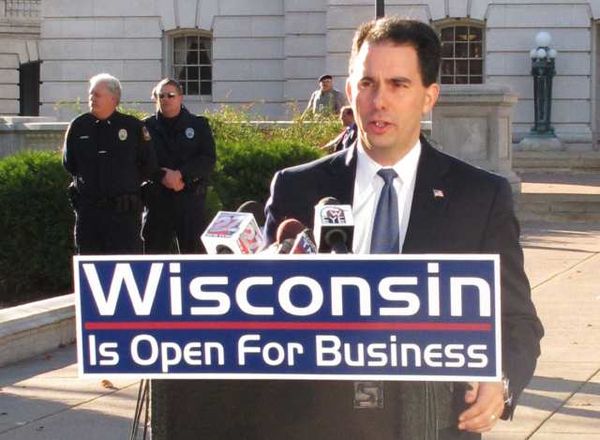
Wisconsin Is Open For Business

Then they moved on to Walker’s “Wisconsin Is Open For Business” slogan that he is using to try to entice companies to relocate to Wisconsin (image from here). Here are some excerpts I transcribed* from Chana Joffe-Walt‘s (CJW) interview with Scott Walker (SW):

CJW: Who specifically is going to be hiring because of your program?
SW: Catalyst Exhibits that was from Crystal Lake, Illinois… We gave them an incentive to come up to the state of Wisconsin. They get a two year reprieve from state income tax.
CJW: Is that creating jobs or is that just stealing jobs from some other state?
SW: …It’s moving jobs. We’re giving them an incentive to move to the state of Wisconsin.
CJW: You’re very aggressively promoting “Come to Wisconsin”, right? And that’s presumably jobs that would be created in other states nearby. So, there is some element of just taking them from other states and getting them for your state.

And here are some comments from Adam Davidson (AD):

AD: They focus a lot of attention on getting companies to move from some other state to their state.
AD: …that doesn’t make our national economy do better. That’s not adding jobs or creating new industries. It just moves the pieces around the chess board a little bit. And that doesn’t really make for an overall healthier economy.
AD: …there are ways to use the tax code to encourage short-term behavior for a small number of companies. But what the economists concluded was that really what government can do is long term. That’s where government has a shot at creating long-term job development.

So Chana and Adam are saying there’s no economic benefit (local or national) to incentivizing companies to relocate to Wisconsin. The problem is they’re assuming that “jobs” is a zero-sum game, and they’re conflating competition with thievery. (They’re also assuming the goal is full employment as opposed to full production, but that’s another subject for another time.)

The implication is that Wisconsin (via Scott Walker’s plan) would coerce or trick companies to move from their current state to Wisconsin because there isn’t actual benefit to them moving. Or maybe they’re saying there is a benefit, but only to the company itself and not to Wisconsin or to the economy (state or national). This is ridiculous.

Is there a benefit to the company?

What would it take for a company–let’s use a fake company called Novelty Oven Mitts (NOM) that sells novelty oven mitts (noms)–to uproot itself from its current state and move to Wisconsin? A two-year tax reprieve might help, but a viable company isn’t going to just up and move because “Two years with no tax?! That’s just too good to be true! Let’s go to Wisconsin, y’all!” They’re going to do a cost-benefit analysis that includes the two-year tax reprieve, but they’ll also look at the longer-term picture:

“Well, we’ll save $50,000 in taxes over two years if we move. But then we’ll be subject to Wisconsin’s normal tax system. How much will that cost or save us after the two years is up? What’s the cost of relocating this company? Will all of our employees move with us? How much will it cost to replace the employees who don’t move? How would that move affect our business? Would we lose customers? How many? What is each of those customers worth?”

Eventually, they’d have a ballpark range of numbers and they would use those numbers to make their decision to stay or move:

“We’ll save $50,000 in taxes the first two years, but it will cost us $10,000 more every year after that. And we’ll lose five employees who we’ll have to replace when we get up there. The cost just isn’t worth it. Thanks anyway, Wisconsin.”

Or

“We’ll save $50,000 in taxes the first two years, and we’ll save another $5,000 per year after that. We’ll lose two employees, but we think we can replace those easily in Wisconsin and it’ll cost about $10,000 to replace both of them. We’ll save money by moving to Wisconsin, and our customers don’t care where we knit their novelty oven mitts. Let’s go!”

So, if NOM decides to move from Illinois to Wisconsin, they must see some sort real benefit. But it’s possible that only NOM benefits from the move, and that neither the local Wisconsin economy nor the national economy benefit.

Are there national economic benefits when a company moves from state to state?

If NOM decides to move to Wisconsin, either they will save money and continue doing the same amount of business, or they’ll be able to operate cheaper and will therefore be able to do more business (assuming there is demand for their noms). In the first case, some of the savings will become profit, and some will be passed on to consumers as lower prices (consumer surplus). In the second case, more consumers will have access to NOM noms because they’ll be producing more noms with their newly found excess capital. NOM would either buy new equipment or hire new employees with the excess capital in order to boost production. Either way, consumers in the national economy benefit.**

Are there local economic benefits for Wisconsin when a company moves into the state?

It’s tough to say if Wisconsin’s economy will benefit from this program. Presumably, they would also have done a cost-benefit analysis to determine the benefit of offering a two-year tax reprieve for relocating companies:

“If we offer this two-year reprieve, it’ll cost us $50,000 in tax dollars. But we’ll have a new company in the state, hopefully they’ll hire some people and then when the two years is up, they’ll continue paying taxes at $25,000 a year. So after four years or so, we’ll be in the black with this deal.”

Of course, if Wisconsin continues to subsidize*** the new business (eg, by extending the reprieve), then the national economy would benefit at Wisconsin’s expense since NOM would be getting services paid for by other Wisconsin businesses and residents.

Is this stealing?

This is competition, not “stealing”. The states are competing for business, and Wisconsin is trying to undercut other states’ prices (of operating a business) to get more business. It’s good for the consumer and the national economy. And it’s probably good for Wisconsin’s economy in the long-run, too.


Notes:

* I transcribed this stuff manually, and I may have made mistakes. Most of the stuff I quoted comes from the 17:30 mark. As always, I encourage you to listen to the podcast for yourself.
** I’m making some assumptions here. Namely that if NOM moves to Wisconsin and is able to operate cheaper, but doesn’t translate some of this into consumer surplus (meaning they keep all the savings as profit), then another competitor will step in and undercut them to get a tasty piece of that profit pie. If no one else would do it, then at least we could count on Urban Outfitters to copy NOM’s noms and sell them cheaper.
*** I’m playing fast and loose with “subsidize” here. It’s technically not a subsidy because the government isn’t giving them money. But the government explicitly isn’t charging them money that it normally would. So it’s technically a tax incentive or tax break. Potato, potahto.

Why is Redbox so much cheaper than Amazon and iTunes? (contd.)

A while back, I wrote about the price differences between Redbox, Amazon and iTunes for renting movies. My friend Andy emailed me to point out that I had missed a pretty big component of Redbox’s pricing scheme: Late fees. This was a pretty big oversight since it’s obvious that there will always be some people who keep a movie for multiple days. So I’m going to revisit this to make a better comparison.

Amazon and iTunes both rent for a fixed price, and then the movie simply becomes unviewable 24 hours after the movie has been started. Redbox charges $1 for a DVD for the first day, but they also charge an additional dollar for each day after that. If you keep the DVD for 25 days or more, then you own it for $25.

The time that people keep a Redbox DVD is probably distributed something like this*:

Redbox’s 10-Q for Q1 2011 says the Net revenue per rental was $2.20**. So the average renter keeps the DVD for 2.2 days and pays $2.34 (which is $2.20 plus tax in Gainesville).This is for all kiosk rentals, so it’s not just DVDs. But the point is that I’m guessing almost everyone will return the DVD in the first three days, but a few will hold onto it for several days.

So here are the price comparisons (from the average renter’s perspective) updated to account for typical rental times at Redbox kiosks:

Redbox – $2.34
Amazon – $3.99 (71% more than Redbox)
iTunes – $4.99 (113% more than Redbox)

These numbers make it more plausible that the difference in prices is mostly due to a “convenience premium”. Is it worth $1.65 to go to a Redbox kiosk instead of just streaming the movie to a TiVo or PC? For me it was, but for many it won’t be. Also, when I went to return “Waiting for Superman”, the kiosk was broken, which meant I had to go find another one. If I had known I’d have to make three trips to Redbox kiosks to save a couple bucks, I probably would’ve just rented the movie from Amazon.

iTunes is probably more expensive still because of the Apple brand and the additional convenience that an iTunes movie can be watched on Apple TV, a computer or synced to an iOS device (iPad, iPhone, iPod) and taken mobile.

* In case it’s not clear: I totally made this up based on the reported $2.20 “Net revenue per rental”. I’m assuming that people will either return the DVD in the first nine days, or they’ll keep it the full 25 days and end up buying it. I stopped the graph at 10 days to make it easy to read, and I assumed that one in 1,000 rentals would end up being bought after 25 days. Also, I’m being lazy here and not trying to tease out the actual DVD numbers since I’m using the $2.20 they reported, which includes Blu-ray and stuff.

** I’m a little confused by their terminology here. What I really want is the gross revenue per rental, but I can’t figure out what that is. I looked at the Notes to Consolidated Financial Statements, but I still can’t tell exactly what the “Net revenue per rental” number is. For Q1 2011, if I just take “Revenue” for the Redbox segment and divide by the “Total rentals”, I get $2.20. But this doesn’t work for Q1 2010 (I get $2.19, but they reported $2.16), so I don’t know exactly where that “Net revenue” number comes from. It seems like the gross number just isn’t being reported. The Redbox Wikipedia page claims (via the New York Times) $2 per transaction as of September 2009, so that makes me think the gross number is $2.20 and also makes me wonder why Coinstar is reporting it as a “Net” number. It’s also possible everyone else is misinterpretting the “Net” number as the gross per-rental number, so the gross per-rental number might be higher.